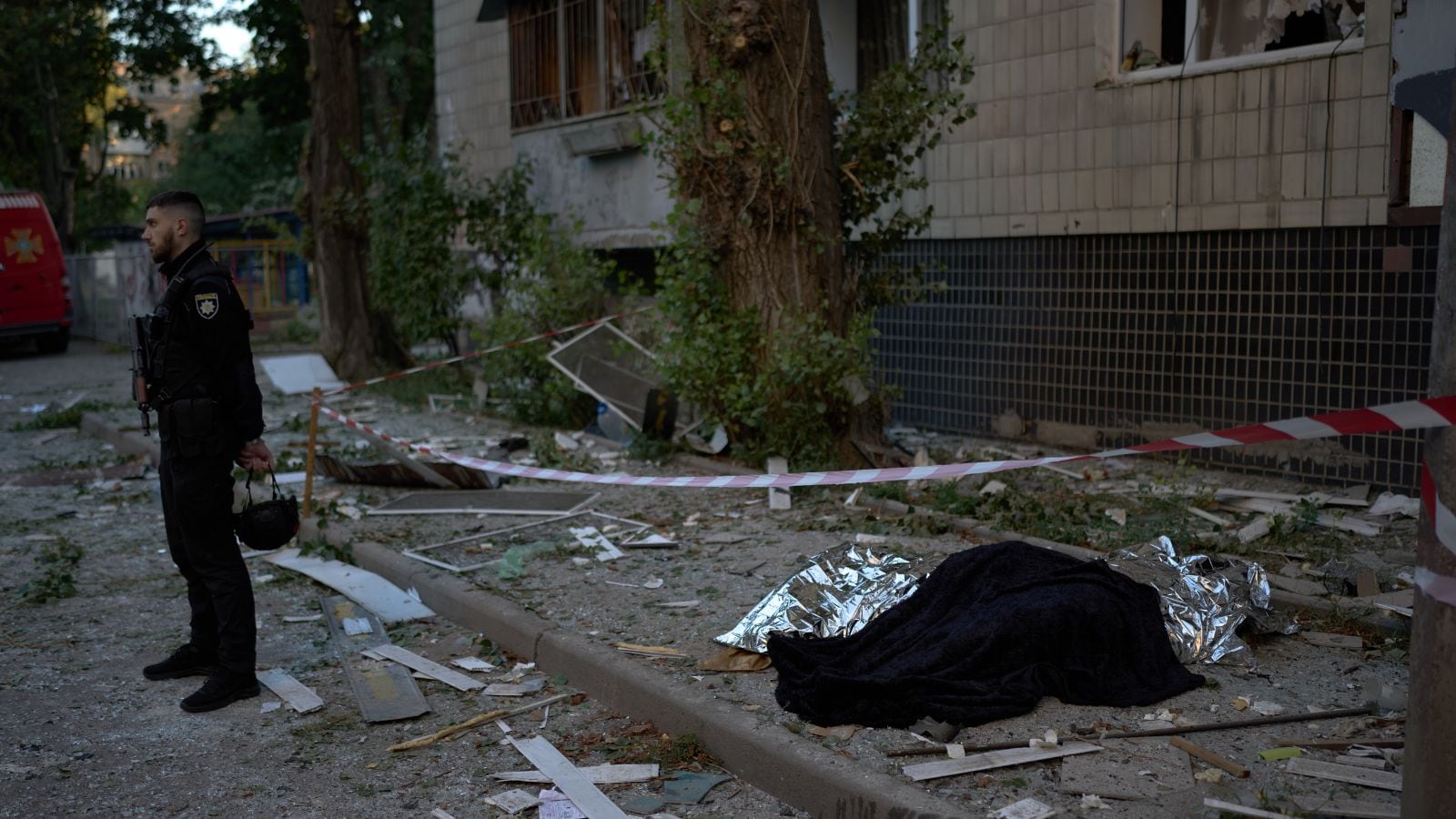
The siren wails in Kyiv aren't just background noise anymore; they’re the defining sound of a nation pushed to the edge. Overnight on August 20, 2026, Russia launched one of its most calculated aerial bombardments since the war began. By the time the dust settled, at least 16 people were confirmed dead and dozens more injured. Residential blocks, a school, and a children’s hospital were hit. The sheer scale of this assault reveals a brutal reality about the current state of the conflict: Ukraine’s air defense systems are running on fumes, and the gap in protection is becoming impossible to ignore.
The Math of Modern Defense
You’ve likely heard about the Patriot missile systems. They’ve been the gold standard for stopping incoming ballistic threats. But here’s the problem that most mainstream reporting glosses over: hardware is useless without the interceptors. Ukraine’s launchers have sat largely empty for months because Western partners are hesitant—or unable—to keep up with the demand.
In this latest attack, Russia combined ballistic missiles, cruise missiles, and fast-flying, jet-powered drones into a single wave. They aren't just firing randomly. They're testing the math. By saturating the sky with cheaper, high-speed drones, they force the remaining air defense units to burn through their few remaining high-end interceptors. Once the cupboard is bare, the heavier ballistic missiles slip through.
The numbers are grim. Kyiv has intercepted almost none of the ballistic missiles fired this month. When you consider that roughly 4 million residents are huddled in shelters while these systems sit idle, you start to see why officials have stopped publicly disclosing interception rates. It’s a strategy of silence to prevent total demoralization.
Beyond the Headlines
The human cost of this strike is visceral. In the Solomianskyi district, a nine-story residential building lost its top two floors. For people like Larysa Bondaruk, who watched her apartment be shredded by debris, the conflict isn't a geopolitical exercise. It’s the sound of a roof collapsing. It’s the realization that a school shelter, once thought to be a place of safety, is now just another target.
This isn't just about Kyiv. The attack hit 28 locations across the country, affecting gas infrastructure in Chernihiv and border crossings near Moldova. Even neighboring NATO members felt the heat. Poland had to scramble aircraft, and a drone crash in Romania served as a stark reminder that this war doesn't respect borders, even if there’s no intent to trigger a direct conflict with the alliance.
Why the Status Quo is Failing
There's a dangerous narrative that the conflict is deadlocked. It’s not. It’s evolving. Russia is ramping up production of jet-powered drones that are inherently harder to track and destroy than older, propeller-based models. Ukraine is trying to respond by hitting Russian logistics hubs and oil depots deep inside Moscow's territory, but these are tactical trades, not a solution to the defensive crisis.
The real question isn't just when the next wave comes; it's how long a civilian population can endure this level of attrition without a credible shield. Ukraine has submitted potential peace proposals to U.S. negotiators, but on the ground, the reality is defined by fire, not diplomatic paper.
If you're following this closely, stop expecting the defensive situation to improve on its own. Unless there is a massive, sudden influx of interceptor stocks, the strategy for residents remains the same: stay near verified bunkers, monitor official channels for every alert, and keep a go-bag packed. The reality of 2026 is that the sky over Ukraine is no longer a neutral space. It is a front line. And for millions, the next siren is just a matter of time.


