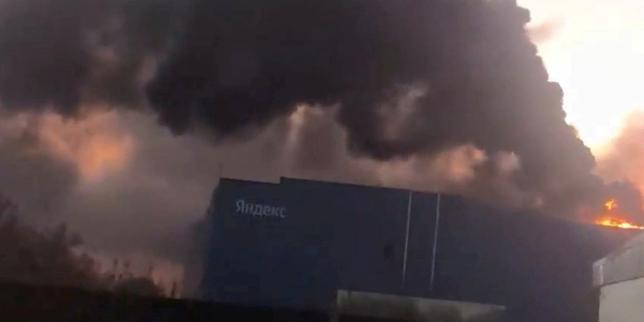
When people picture modern warfare, they still think of trenches, artillery, and captured towns. That picture misses half the story. Physical strikes on data centers and the power substations feeding them can knock banking apps, logistics portals, and media sites offline in minutes.
Ukrainian strikes on data centers disrupt online services in Russia because servers need three unglamorous things to stay alive. Steady grid power. Cool air. High-capacity fiber links. Hit any one of those hard enough, and racks of expensive hardware turn into very heavy paperweights.
I've spent years watching how cloud clusters behave under stress and how quickly "redundant" setups unravel when real-world faults stack up. On paper, distributed architecture sounds nearly indestructible. In practice, physical damage to power feeds, cooling loops, and regional hubs exposes every shortcut an operator took to save money.
How Ukrainian Strikes on Data Centers Disrupt Online Services in Russia
A server farm doesn't just sit quietly humming in a concrete box. It breathes thousands of cubic meters of conditioned air, drinks megawatts of electricity, and pushes terabits of traffic through tightly coupled switching gear.
When long-range drones or artillery hit an industrial zone or nearby electrical infrastructure, the blast wave isn't the only thing causing outages. Voltage sags, abrupt breaker trips, and smoky air can force automated shutdowns across entire server halls before a single rack catches fire. Even if the main building escapes a direct hit, losing a primary substation or a key cooling chiller can send temperatures spiking in minutes. Modern processors throttle hard and then shut down automatically to prevent permanent silicon damage.
Once a facility drops offline, the ripple effects hit user-facing applications fast. Payment gateways time out, delivery trackers stall, municipal portals throw errors, and internal business tools lock people out of their daily workflows. To an ordinary user staring at a spinning wheel on a phone screen, it looks like a random app glitch. Behind the curtain, engineers are scrambling to reroute traffic, check diesel generators, and figure out whether storage arrays survived an abrupt power cut.
Power Grids and Cooling Matter More Than Server Racks
Here is a mistake plenty of non-technical commentators make. They assume an outage requires blasting a server building to rubble. Not even close.
Data centers are thermodynamic puzzles first and computing hubs second. High-density racks pack kilowatts of heat into tight spaces. If cooling pumps lose power or chilled-water loops rupture, indoor temperatures climb fast. You can't just leave high-density servers running while the room heats up like an oven. Operators have to shed load or shut down systems to save the hardware.
Diesel backup generators help, sure. Nobody who has actually run or audited a large facility treats generators as a magic wand, though. Fuel logistics under wartime conditions get messy, transfer switches sometimes fail to engage cleanly under sudden grid disturbances, and generators have maintenance limits. A facility designed for brief commercial brownouts behaves very differently when grid instability drags on or supply lines face pressure.
Why Cloud Redundancy Isn't Always Magic
You'll often hear that cloud services can just "fail over" to another region automatically. Sometimes they can. Often, they don't—or they fail over partially and slowly.
True high availability takes deliberate engineering and real money. Many organizations host databases in one primary location, keep backups nearby rather than hundreds of miles away, or rely on DNS configurations that take hours to propagate cleanly. When a regional hub takes a hit or loses transit links, stateful databases can lag, queues back up, and authentication services get overwhelmed by retry storms from thousands of disconnected clients trying to reconnect all at once.
Honestly, retry storms are brutal. When fifty thousand devices lose connection and all try to reconnect every two seconds, the surviving servers can get swamped just handling connection handshakes. That turns a localized hardware problem into a wider service slowdown.
The Hidden Fragility of Regional Digital Infrastructure
Big metro hubs get most of the headlines, yet regional facilities and transit nodes carry huge practical weight. Local businesses, regional banks, regional telecoms, and municipal services lean heavily on nearby infrastructure because latency matters and local budgets rarely stretch to multi-region active-active setups.
When a strike disrupts power or network paths in a specific area, local services feel it immediately. Even national platforms with multiple data centers can see degraded performance for users in affected regions if local fiber routes or edge caches go dark. Traffic has to take longer detours over remaining paths, adding delay and congestion elsewhere in the network.
There's also a practical reality around hardware replacement. Specialized networking gear, high-capacity optical transceivers, power distribution units, and enterprise storage drives aren't corner-store items. Sourcing replacements takes time, careful logistics, and vendor support. While damaged gear is being assessed or replaced, surviving capacity runs hotter and closer to its limits.
Misconceptions About Kinetic Strikes on Digital Targets
Let's clear up a few myths before they spread any further.
First, physical strikes on data centers aren't the same as cyberattacks. A distributed denial-of-service attack floods networks with junk traffic; a physical strike removes real-world power, cooling, connectivity, or hardware. Cyber defenses—firewalls, intrusion detection, zero-trust policies—won't stop a drone or a tripped high-voltage feeder. That sounds obvious when written out, yet organizations still conflate "cyber resilience" with "infrastructure resilience" all the time.
Second, a single damaged facility rarely erases an entire country's internet overnight. Large national networks have many autonomous systems, internet exchange points, and distributed hosting sites. What happens instead is patchier and trickier: intermittent outages, slower page loads, regional blackouts, and service degradation that forces workarounds.
Third, "in the cloud" never meant "nowhere." Every cloud instance lives on physical metal inside a real building connected to real wires. Treating infrastructure as an abstract fog leads to lazy assumptions about single points of failure—whether you're running a Russian logistics platform, a European retailer, or a small business app anywhere else.
What This Means for Digital Resilience Everywhere
You don't have to be in a war zone to learn something valuable from these disruptions. Severe weather, grid failures, construction accidents cutting fiber lines, and equipment fires knock data centers offline every year in peaceful countries too. Kinetic strikes just compress years of hypothetical stress-testing into a much harsher timeline.
Look closely at how fragile everyday digital life is when physical dependencies collide. A single missing link in power, cooling, or transit can ripple straight into customer support queues, payment failures, and stalled operations.
If you manage systems, advise leadership, or simply depend on digital tools to run work, focus on concrete basics instead of buzzwords:
- Map real physical dependencies. List which critical services rely on which specific facilities, power feeds, and network carriers—not just which cloud brand appears on the invoice.
- Test failovers under ugly conditions. A backup plan that hasn't been tested during a real or simulated outage is mostly wishful thinking. Check what happens when traffic spikes during recovery.
- Separate backups from primary blast radii. Keep critical copies offline or logically isolated and geographically distinct so a single facility or regional power event can't take everything down together.
- Watch hardware lead times. Know which specialized components would be hardest to replace quickly if damaged or worn out from overload.
Physical infrastructure reminds us that the digital world is still anchored in concrete, copper, glass, and megawatts. When those foundations shake, everything built on top feels it.