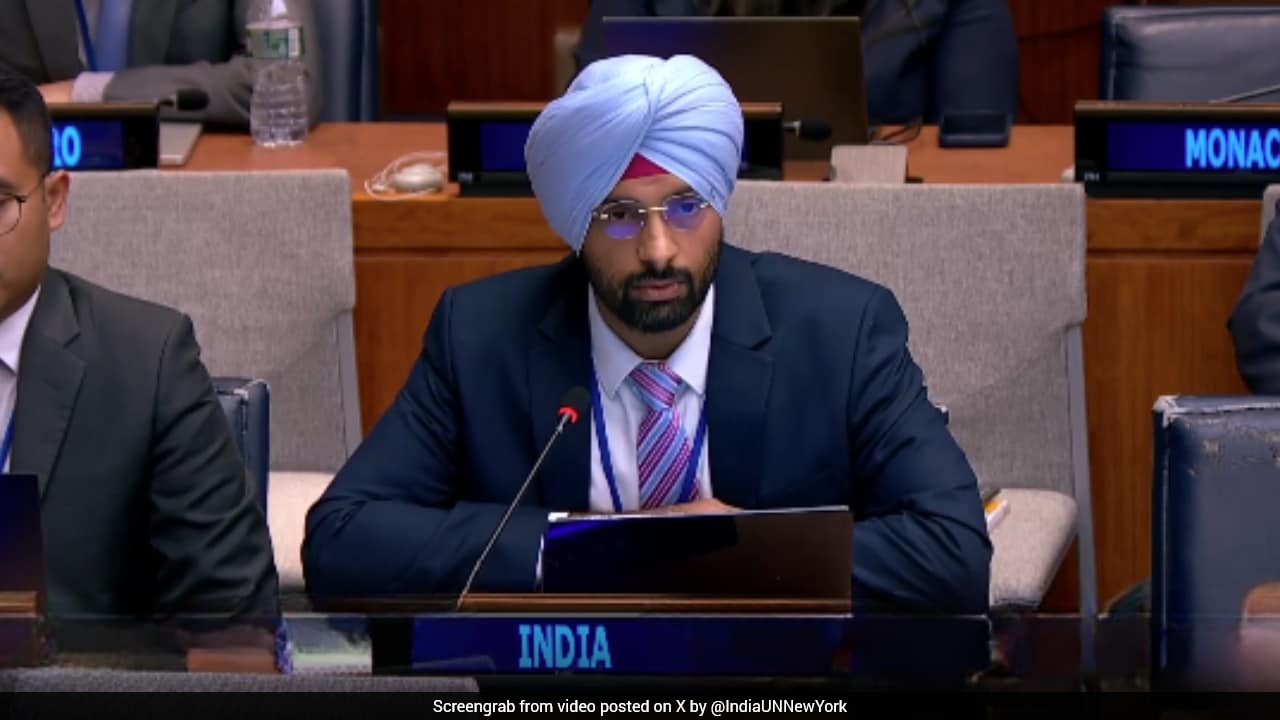
Every autumn, the United Nations General Assembly turns into a high-priced therapy room for South Asia. Delegations line up to trade predictable rhetorical missiles, and the media treats each salvo as a dramatic pivot in a decades-long rivalry. The routine is so mechanical you could set a watch by it. New Delhi steps up to the podium, labels Islamabad's posture as nuclear blackmail, and defends its red lines. Islamabad responds with warnings about asymmetric deterrence and regional instability. Commentators dissect the phrasing like ancient augurs reading sheep entrails, hunting for signs of an imminent thaw or a sudden escalation.
It is entirely performative theater, and pretending otherwise is an insult to basic strategic analysis.
The lazy consensus in international relations holds that these verbal clashes at Turtle Bay are diplomatic pressure points that actually constrain behavior or signal tactical shifts. That view ignores how modern deterrence works. Nuclear doctrines in weaponized states are not shaped by what diplomats say to an audience of half-empty chamber seats in New York; they are forged by war-gaming, military-industrial timelines, command-and-control infrastructure, and geography.
When Indian officials invoke the phrase nuclear blackmail on the global stage, they are playing to a domestic constituency and signaling alignment with Western counter-proliferation narratives. When Pakistani delegates retort with warnings about the fragility of the regional balance, they are performing for their own domestic audience and keeping international flashpoint anxieties alive to secure diplomatic leverage. Neither speech shifts a single warhead's targeting coordinates by a millimeter.
To understand why these UN exchanges are utterly toothless, look at the underlying mechanics of the subcontinental nuclear standoff. The conventional wisdom treats the India-Pakistan dynamic as a ticking clock waiting for a diplomatic intervention to defuse it. I have spent years tracking defense procurement cycles and command architecture in the region, and I can tell you that the real stability—or instability—lives in the boring, unglamorous details. It lives in forward-deployed tactical assets, response times, early warning sensors, and the terrifying delegation of authority down the chain of command.
None of these mechanical realities are altered by a sharply worded rebuttal in a UN debate.
Consider the core premise behind the conventional outrage: the idea that rhetorical restraint from either capital would magically cool regional tensions. This assumes that the conflict is driven by misunderstandings or a lack of communication. It is not. Both nations understand each other's red lines with chilling clarity. Pakistan's full-spectrum deterrence doctrine was explicitly designed to counter India's Cold Start conventional military strategy. India's no-first-use posture, flexible as it has become under modern strategic revisions, is designed to maintain moral high ground while maintaining massive second-strike credibility.
These are calcified doctrines. They are maintained by deep-seated institutional inertia and real geopolitical friction over Kashmir, cross-border militant networks, and rising competition in the Indian Ocean. A polished speech at the United Nations does not dismantle a single artillery brigade or alter a single submarine patrol route.
The danger of taking the UN rhetorical cycle seriously is that it obscures the real, structural hazards of the region. While analysts waste column inches dissecting diplomatic vocabulary, real threats compound silently. The compression of decision-making timeframes due to hypersonic missile development, the integration of artificial intelligence into early warning systems, and the persistent risk of conventional military miscalculation escalating out of control—these are the factors that actually matter. They do not get solved by a stinging rebuke or a well-crafted right of reply.
If you want to understand where South Asian security is heading, stop watching the podium in New York. Watch the defense budgets. Watch the infrastructure development along the Line of Control. Watch the quiet, unpublicized talks between intelligence chiefs, which occasionally achieve more in ten minutes of backroom pragmatism than a month of grandstanding at the General Assembly.
Diplomacy is vital, but performative diplomacy is a distraction. Until both capitals are willing to engage in structural risk-reduction talks that address the mechanics of accidental escalation rather than the optics of moral superiority, these UN speeches will remain what they have always been: noise masking a status quo that neither side has the political capital to change.
The next time a delegate steps up to denounce nuclear coercion, do not look for the nuance in the words. Look at the empty seats in the hall, and remember that real deterrence does not care about applause.