The wind across the Kazakh steppe does not blow; it howls. It sweeps over thousands of miles of flat, unforgiving earth, carrying the bitter chill of Siberia and the ghosts of the twentieth century. If you stand outside the Ulba Metallurgical Plant in the eastern city of Ust-Kamenogorsk, the air tastes of iron and old snow. On the surface, it looks like any other aging industrial complex left behind by the Soviet collapse. Heavy concrete. Stained brick. Plumes of steam rising into a gray sky.
But beneath this bleak exterior lies a subterranean fortress designed to hold something that could either light a metropolis or incinerate it.
Recently, diplomatic cables and intelligence briefs began buzzing with a quiet, high-stakes proposition. Kazakhstan, a nation that voluntarily gave up the world’s fourth-largest nuclear arsenal in the 1990s, offered to step between two of the world's most volatile geopolitical forces. The deal is straightforward on paper, yet staggering in its implications: Kazakhstan has offered to act as a custodian for Iran’s massive stockpile of enriched uranium.
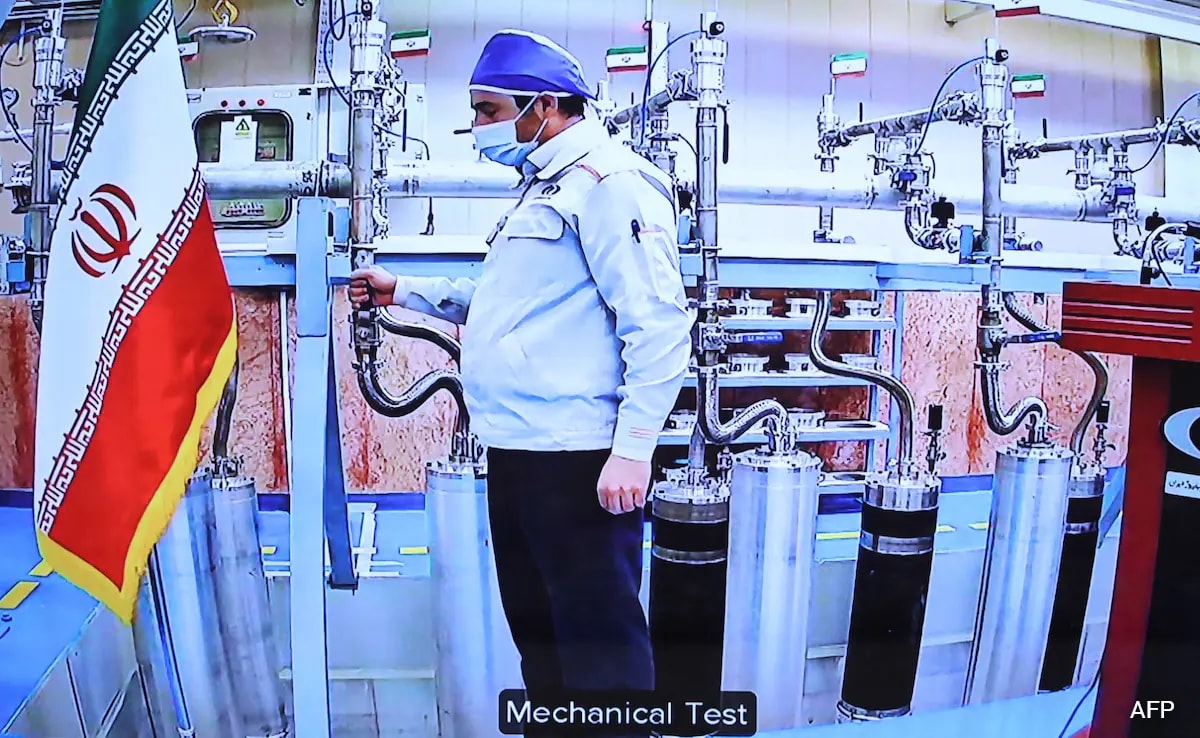
To understand why this matters, we have to look past the dense jargon of international treaties and focus on the sheer, terrifying weight of the material itself. Enrichment is a game of numbers. Imagine a microscopic lottery where only one specific type of atom matters.
Natural uranium dug out of the earth is mostly useless for power or weapons. It consists almost entirely of an isotope called U-238. The real prize is U-235, the unstable, fissionable variant that makes up a mere 0.7 percent of raw ore. To make a reactor work, engineers must spin this material in high-speed centrifuges, gradually coaxing that percentage up to about 3 to 5 percent. That is low-enriched uranium, the kind that keeps the lights on in Paris or Chicago. But if you keep spinning those centrifuges, pushing the concentration past 60 percent and toward 90 percent, you cross an invisible, perilous threshold. You enter the zone of weapons-grade material.
Iran has spent years spinning those centrifuges. International monitors watch the growing numbers with a collective intake of breath. The stockpile grows. The clock ticks.
Then comes Kazakhstan's offer.
The Quiet Power of the Steppe
The logic behind the Kazakh proposal is rooted in a unique historical legacy. This is not a random real estate transaction. It is an act of profound geopolitical muscle memory.
When the Soviet Union dissolved in 1991, the newly independent Republic of Kazakhstan suddenly found itself holding more than one thousand nuclear warheads. It inherited Semipalatinsk, a scarred expanse of land where the Soviets conducted nearly five hundred nuclear tests. The local population knew the human cost of the atomic age intimately. They had seen the cancers, the birth defects, the irradiated soil that glowed with silent malice.
The first president of Kazakhstan made a choice that shocked the global defense establishment. He gave them up. Every single warhead was dismantled, shipped back to Russia, or blended down into harmless fuel. The country chose a path of deliberate neutrality, transforming its identity from a nuclear launchpad into a global referee.
Now, look at the geography. Kazakhstan shares borders with Russia and China, and sits just across the Caspian Sea from Iran. It is the literal pivot point of Eurasia. By offering to house Iran's uranium, Kazakhstan is trying to repeat its own history on a global stage.
Consider a hypothetical diplomat sitting in a windowless room in Vienna, where the International Atomic Energy Agency (IAEA) meets. Let us call her Elena. For months, Elena has looked at charts showing Iran's escalating uranium enrichment levels. The lines on her graph curve sharply upward. Every gram of 60 percent enriched uranium added to the ledger shortens the "breakout time"—the theoretical window Iran would need to manufacture a nuclear weapon if it suddenly chose to do so.
Elena knows that standard diplomatic pressure has hit a brick wall. Sanctions are a blunt instrument; they hurt everyday citizens but rarely stop the centrifuges from turning. Military intervention is a nightmare scenario that could ignite a regional wildfire.
Suddenly, a third option appears on Elena's desk. Kazakhstan says, Bring the material here. We will hold it under lock and key. The IAEA can watch it twenty-four hours a day. Iran keeps ownership of the financial value of the asset, but the physical material is removed from the geopolitical chessboard.
It sounds elegant. It sounds safe.
But the real problem lies elsewhere, buried in the mechanics of trust.
The Chemistry of Suspicion
Nuclear diplomacy is essentially an exercise in managed paranoia. To make the Kazakh plan work, multiple adversarial nations must agree on variables that seem entirely irreconcilable.
First, there is the question of logistics. Moving tons of highly sensitive nuclear material across international borders is not like shipping cargo containers of electronics. It requires heavily armored transport, specialized cooling environments, and a level of security usually reserved for heads of state. The route would likely cross the Caspian Sea, a body of water closely watched by naval fleets and satellite recons.
Then comes the issue of enrichment levels. If Kazakhstan takes the uranium, what happens to it? Under previous iterations of nuclear deals, enriched uranium was traded for raw, natural "yellowcake" uranium. It is a chemical bartering system. Iran gives up the dangerous, highly processed material and receives a larger quantity of harmless, un-enriched ore in return. This keeps their domestic energy program alive while stripping away their ability to make a sudden sprint for a bomb.
But why would Iran agree to this now?
The incentive for Tehran is economic survival. The weight of international sanctions has crippled its currency, sparked widespread domestic unrest, and isolated its economy from the global banking system. Delivering its stockpile to a neutral third party like Kazakhstan could be the golden key that unlocks billions of dollars in frozen assets and restores oil revenues.
Yet, the skepticism in Washington and Jerusalem is palpable. Critics argue that moving the material to Kazakhstan does not erase Iran's technological know-how. The centrifuges remain. The knowledge remains. If the political winds shift in Tehran, they could simply start spinning new batches of uranium from scratch.
Inside the Bank
To understand where this uranium would actually go, we have to look at a highly secure facility that already exists. In 2019, the IAEA officially opened the Low Enriched Uranium (LEU) Bank at the Ulba Metallurgical Plant.
It is a physical manifestation of an abstract idea. The bank acts as a lender of last resort for the world. If a country relies on nuclear power but suddenly finds its fuel supply cut off due to political turmoil or commercial disputes, it can apply to the IAEA to buy fuel from the Kazakh bank. It ensures that no country has to build its own enrichment facilities just to keep its civilian reactors running.
The security at Ulba is legendary. The material is stored in massive, cylinder-shaped steel containers designed to withstand earthquakes, plane crashes, and direct military assaults. The entire perimeter is monitored by layers of biometric scanners, motion sensors, and elite security forces.
When you look at the physical reality of the Ulba plant, the Kazakh offer moves from a vague diplomatic gesture to a concrete, operational reality. The infrastructure is already built. The guards are already there. The expertise is baked into the very soil.
But housing Iran's specific stockpile introduces a massive complication. The LEU Bank is designed for low-enriched fuel—the 3 to 5 percent variety. Iran’s stockpile contains highly enriched uranium, up to 60 percent. Storing this material requires entirely different safety protocols, stricter critical-mass calculations to prevent accidental chain reactions, and an exponential increase in security.
It forces us to confront a uncomfortable truth: peace is incredibly expensive, logistically exhausting, and terrifyingly fragile.
The Balance of the Scale
We often view international relations as a game of chess played by grand strategists in capitals far away. We look at headlines about uranium stockpiles and treat them as abstract points in an ongoing argument.
But the reality is found in the silence of places like Ust-Kamenogorsk. It is found in the calculated risks taken by a country that knows exactly what nuclear devastation looks like and has spent three decades trying to ensure no one else has to find out.
The Kazakh offer is not a magic wand. It will not suddenly dissolve decades of deep-seated animosity between Washington, Jerusalem, and Tehran. It faces fierce resistance from hardliners on all sides who view any compromise as a form of surrender.
Consider what happens next: the proposal will be debated in quiet rooms. It will be picked apart by lawyers, analyzed by nuclear physicists, and weighed by politicians looking at their own electoral maps. The talks might stall. They might fail entirely, ending up as a forgotten footnote in a thick history book.
Yet, the offer remains on the table, a stark reminder that even in moments of seemingly unbreakable deadlock, human ingenuity still tries to find a crack in the wall.
The howling wind outside the Ulba plant continues its endless sweep across the steppe. Inside, the steel cylinders sit in the dark, cold, heavy, and perfectly still, waiting to see if humanity has the wisdom to leave them there.