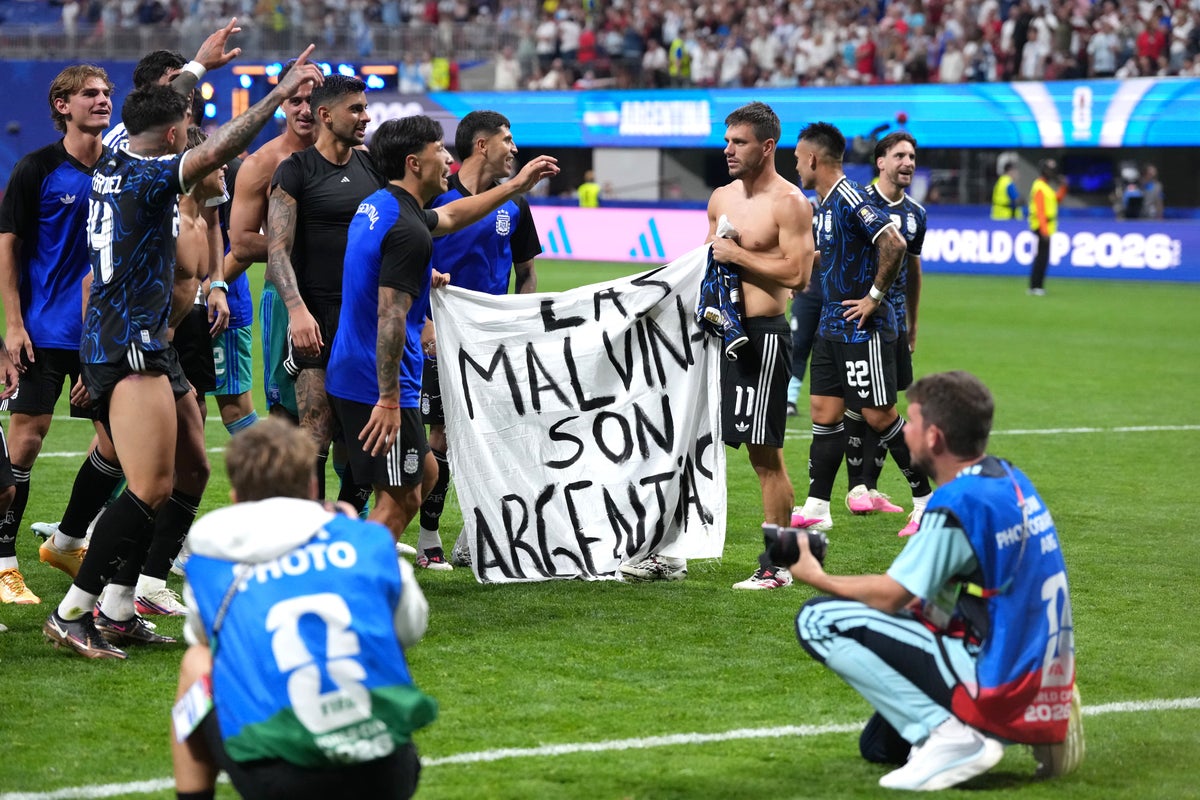
The FIFA World Cup final between Argentina and Spain broadcasts live globally on major networks including Fox Sports and Telemundo in the United States, and BBC or ITV in the United Kingdom, with streaming available on platforms like Fubo and Peacock. While casual viewers tune in to witness the romanticized narrative of Lionel Messi facing off against Rodri, the reality on the pitch involves a far colder calculation. This match represents a definitive structural collision between two entirely opposing philosophies of modern football. It is the ultimate test of individual spatial manipulation against automated system efficiency.
Behind the pre-match press conference platitudes lies an industry-wide anxiety. For the past decade, European football academies have spent billions engineering a highly structured, positional approach designed to minimize risk and maximize possession. Spain stands as the pure realization of this factory settings approach, anchored by Rodri, a midfielder who functions less like an athlete and more like a high-frequency trading algorithm. On the other side sits an Argentine squad that relies on an older, more intuitive style of play rooted in close-quarters improvisation and the preservation of an aging genius. Meanwhile, you can explore similar developments here: The Mechanics of Brand Polarization Quantitative Risk Assessment in Professional Sports Franchises.
To understand how this final will be decided, one must look past the highlight reels and examine the structural friction between these two models.
The High Press Versus the Walk
Spain operates on a principle of absolute spatial control. Under their current tactical setup, they look to suffocate opponents by squeezing the playing field into a suffocating thirty-meter block. Their forward line triggers a press the moment a defensive action occurs, forcing hurried clearances and winning the ball back within seconds. To explore the bigger picture, we recommend the recent report by ESPN.
Argentina counters this through deliberate, calculated passivity. Watch Lionel Messi during the first fifteen minutes of any match. He walks. This is not laziness, but a sophisticated scouting mission executed in real time. By physically removing himself from the active defensive phase, Messi forces the opposing left-sided center-back and defensive midfielder into a continuous series of micro-decisions. They must choose whether to step out of their defensive line to mark a player who is currently stationary, or maintain their shape and risk letting him occupy the exact pocket of space they are paid to protect.
When Spain presses high, they leave vast expanses of green grass behind their defensive line. If Argentina can bypass the initial wave of the Spanish press through quick, vertical combinations involving their midfield core, Spain faces an immediate existential threat. The Spanish system requires total compliance from every moving part. If one midfielder fails to close down a passing lane for even a fraction of a second, the entire structure collapses into a footrace that their central defenders are ill-equipped to win.
The Midfield Automation Problem
Rodri dictates the tempo of international football with an efficiency that borders on the monotonous. He does not rely on flashy step-overs or driving fifty-yard runs. Instead, his brilliance lies in his ability to execute the simple pass at the exact velocity required to shift an opponent's defensive block by two yards.
The Spanish Metronome
The Spanish midfield functions through a series of geometric triangles. When Rodri receives the ball from his central defenders, his options are already predetermined by hours of training ground repetition.
- He can play a first-time lateral pass to stretch the opposition wingers.
- He can drop the ball back to reset the attacking angle.
- He can execute a disguised vertical pass into the half-spaces for his advanced creative players.
This predictability is Spain's greatest strength, but it also contains the seeds of their vulnerability.
The Argentine Chaos Factor
Argentina does not play with the same rigid geometry. Their midfield operates on a principle of fluid movement designed to create overloads around the ball. They drop extra bodies into deep areas, completely disregarding traditional positional boundaries to ensure they retain possession under heavy duress.
This fluid approach creates a unique tactical challenge for a systematic team like Spain. When a team refuses to stay in their assigned zones, the automated defensive triggers of a positional side begin to misfire. Midfielders are forced to decide whether to track a runner into an unfamiliar zone or pass them off to a teammate, creating tiny windows of hesitation. In a World Cup final, a half-second of hesitation is all an elite attacker needs to change the scoreboard.
The Physical Toll of the Infinite Calendar
The human cost of this match cannot be ignored. Both squads are comprised of players who have spent the last ten months playing across multiple club competitions, domestic cups, and international windows. The physical data coming out of elite sports science departments suggests that many of these athletes are performing on the absolute edge of physical exhaustion.
Spain relies heavily on intensity. Their tactical identity demands that their players run harder and faster during the transition phases than their opponents. If their physical metrics drop by even five percent due to fatigue, their high defensive line becomes a massive liability.
Argentina possesses a distinct structural advantage in a low-energy encounter. Because their primary playmaker spends significant portions of the match conserving energy, they can afford to play at a slower, more deliberate tempo. They are comfortable defending in a compact low block for long stretches, daring Spain to break them down through endless horizontal passing carousels.
The Strategic Failure of Modern Previews
Most mainstream analysis focuses entirely on individual matchups, treating a football match like a collection of isolated duels. This perspective misses the broader reality of how international tournaments are won. Teams do not win finals because their star player outshines the opponent's star; they win because their structural safety net prevents individual errors from turning into goals.
Spain enters this match with the superior collective system. Their automated passing patterns mean that even if two or three players have an off day, the team can still function at an elite level. Argentina possesses a lower baseline of automated efficiency but a significantly higher ceiling for individual intervention. They rely on moments of acute clarity to break open tight defensive structures.
The match will likely be decided in the transition phases immediately following a turnover. If Spain can pin Argentina inside their own penalty area and prevent clean outlets to the forward line, they will slowly grind out a victory through sheer weight of possession. If Argentina can consistently find the free man during the chaotic moments when possession changes hands, they will expose the fundamental fragility that lies at the heart of the modern European positional system. The whistle will blow, the ball will move, and the system will clash with the individual one final time.