Ceremonial honors are the cheapest currency in geopolitics.
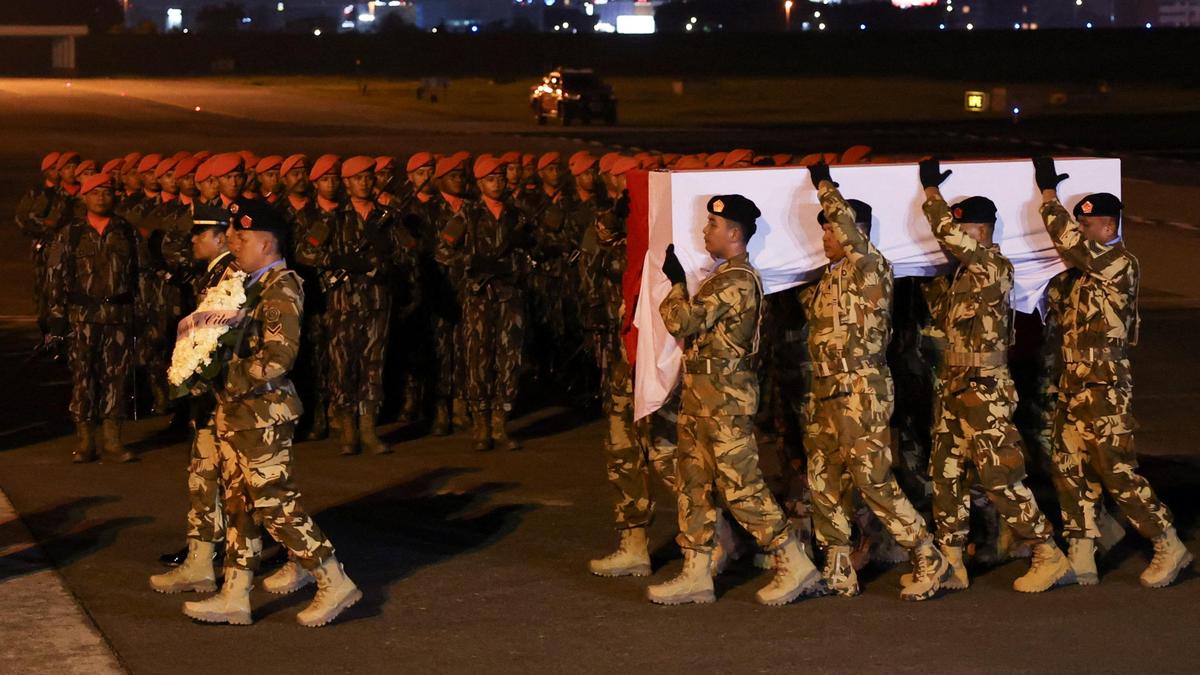
As the Indonesian military lays to rest another group of peacekeepers killed in Southern Lebanon, the national narrative follows a tired, predictable script. We see the draped flags. We hear the bugles. We listen to the hollow rhetoric about "contributing to world peace" and Indonesia’s "constitutional mandate."
It is a comforting lie.
The reality is far uglier. Jakarta is currently engaged in a high-stakes vanity project that uses its soldiers as human tripwires in a conflict they are legally and tactically prohibited from influencing. We are not "keeping" a peace that does not exist; we are subsidizing a strategic stalemate that benefits everyone except the soldiers on the ground.
The Myth of the Neutral Blue Helmet
The standard argument for Indonesia's outsized presence in UNIFIL (United Nations Interim Force in Lebanon) is that it cements our status as a leader of the Global South. By sending thousands of troops into the "Blue Line" buffer zone, we supposedly buy a seat at the big kids' table.
This is a fundamental misunderstanding of how modern proxy wars function.
In the rugged terrain of Southern Lebanon, neutrality is not a shield. It is a target. The United Nations peacekeeping model is built on a 1945 logic that assumes state actors will respect international borders and UN mandates. But the current conflict between the Israel Defense Forces (IDF) and Hezbollah is not a conventional war between two rational states. It is an asymmetrical meat grinder.
When Indonesian peacekeepers are caught in the crossfire, it isn’t a "tragic accident" or a "failure of communication." It is the logical outcome of placing lightly armed observers in the middle of a high-intensity missile and artillery exchange. By remaining there, Indonesia isn't brokering peace; it is providing a convenient layer of human padding that both sides use to manipulate the international press.
The UNIFIL Paper Tiger
Let’s look at the math. UNIFIL’s mandate is governed by UN Security Council Resolution 1701. This resolution was supposed to ensure that the area between the Blue Line and the Litani River was free of any armed personnel, assets, and weapons other than those of the Lebanese government and UNIFIL.
Has that happened? Not even close.
Hezbollah has spent the last two decades turning that exact zone into one of the most heavily fortified insurgent landscapes on the planet. The IDF, meanwhile, treats the Blue Line as a suggestion rather than a border.
If our troops cannot disarm the militias (which they aren't allowed to do) and cannot stop the IDF incursions (which they aren't equipped to do), then what exactly are they doing? They are patrolling roads to prove that roads can be patrolled. They are sitting in observation towers to report on explosions that the entire world can already see on satellite feeds and social media.
We are spending millions of dollars and risking Indonesian lives to maintain the appearance of a buffer zone that vanished years ago. To continue this mission is not bravery; it is a refusal to acknowledge tactical obsolescence.
The High Cost of Diplomatic Posturing
I have seen the internal metrics of these deployments. Governments love peacekeeping because the UN reimburses a significant portion of the costs. For many developing nations, it is a way to subsidize their military budget while giving their officers international "exposure."
But the "Indonesia is a Peace Power" brand is costing us more than we realize.
- Strategic Distraction: Our primary security concerns are in the North Natuna Sea and the shifting dynamics of the Indo-Pacific. Every elite battalion we rotate through the Lebanese hills is a battalion not training for the specific maritime and jungle challenges of our own archipelago.
- Zero Leverage: Despite being one of the largest troop contributors, Indonesia has effectively zero influence over the strategic decisions made in Tel Aviv, Tehran, or Washington. We provide the boots, but we don't get a say in the path.
- The "Hostage" Factor: When Indonesian soldiers are stationed in areas controlled by local factions, Jakarta’s foreign policy becomes a hostage to those factions. We cannot take a truly independent stance because we have thousands of vulnerable targets sitting in the middle of a combat zone.
Stop Asking the Wrong Questions
The media keeps asking: "How can we make the peacekeepers safer?"
That is the wrong question. You cannot make a man safe when his job description is to stand between two entities that want to kill each other. The real question is: "What specific Indonesian national interest is served by a presence in Southern Lebanon that outweighs the loss of life?"
If the answer is "international prestige," then we need to be honest about the price of that prestige. We are trading the sons of West Java and Central Sulawesi for a "thank you" note from a UN Secretariat that can't even agree on a ceasefire.
A Brutal Reassessment
True leadership isn't just about showing up; it’s about knowing when to leave.
If Indonesia wants to be a global player, it should lead the charge in admitting that the current UN peacekeeping model is broken. We should be the first to demand a total overhaul of the ROE (Rules of Engagement) or a full withdrawal.
Imagine a scenario where Indonesia leads a coalition of troop-contributing countries to pull out of UNIFIL simultaneously. That would do more to force a diplomatic resolution than another 20 years of "monitoring" ever could. It would create a vacuum that the international community would be forced to fill with actual diplomacy, rather than relying on Indonesian soldiers to act as a permanent anesthetic for a festering wound.
We must stop treating these funerals as an inevitable cost of doing business. They are the cost of a failed strategy. They are the cost of a nation trying to look big on the world stage by standing on the graves of its own soldiers.
The bugles will blow again. The flags will be folded again. And unless we change course, the next set of coffins is already being measured.
Bring them home. Not in flags, but on their feet.