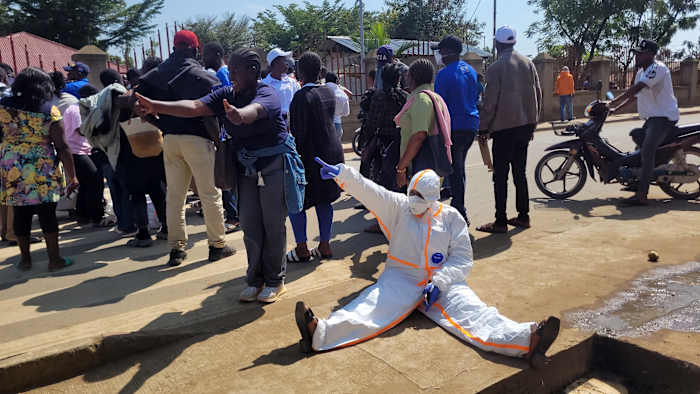
When the Ebola virus starts killing people, the last thing any humanitarian operation needs is a strike. Yet, during the devastating Kivu epidemic in the Democratic Republic of the Congo (DRC), that is exactly what happened. Health workers, the very people risking their lives to contain one of the deadliest pathogens on earth, stopped working because their paychecks stopped arriving. It wasn't just a labor dispute. It was a breakdown of trust that actively fueled the death toll.
When workers walk off the job, patients suffer. Contact tracing stops. Surveillance gaps emerge. The virus doesn't pause for contract negotiations, and the human cost of these administrative failures is measured in lives lost.
The Financial Engine of Crisis Response
You cannot run a high-stakes medical operation on volunteer spirit alone. During the 2018–2020 Ebola outbreak in the DRC, the international response involved dozens of NGOs, UN agencies, and local government health departments. Billions of dollars flooded into the region. Despite this massive influx of capital, local frontline staff frequently reported going months without pay.
This creates a perverse incentive structure. Frontline workers, often drawn from the local communities hardest hit by the virus, face immense economic pressure. When they are not paid, they are forced to choose between feeding their families and following strict infection control protocols. Some may return to informal markets or secondary jobs to survive, inadvertently spreading the virus.
Systems designed to protect the public essentially become vectors of instability when the administrative layer fails. You are asking people to perform "red zone" work—wearing suffocating PPE in tropical heat—without the security of a guaranteed income. It’s an impossible demand.
Why Payment Systems Collapse in Conflict Zones
The DRC presents a logistical nightmare for payroll administrators. You are dealing with active conflict, lack of formal banking infrastructure, and widespread internet outages. Relying on centralized digital payment systems often fails when the power grid is nonexistent.
Many organizations resort to cash payouts to bypass these digital hurdles. This introduces massive security risks. Moving physical currency through territory controlled by various armed groups invites extortion, theft, and violence. If an NGO hires a local security firm to move the cash, that firm needs payment too. The chain of custody is fragile, and when it breaks, the frontline worker is the one who loses out.
The Problem with Subcontracting
Complex humanitarian responses are layered like an onion. An international donor gives money to a UN agency, which contracts a major NGO, which subcontracts a local partner to actually hire the nurses and burial teams. At every single layer, overhead is skimmed off, and communication delays grow. By the time the funding reaches the local health worker, the paperwork might be lost, the budget line might be exhausted, or the local partner might lack the liquidity to pay staff while waiting for a reimbursement that never comes.
The Human Cost of Broken Trust
When health workers protest, the public notices. In places like Beni and Butembo, trust in the Ebola response was already paper-thin. Many residents viewed the international medical teams with suspicion, sometimes believing the treatment centers were death traps or centers for organ harvesting.
When the local staff—the neighbors and community members—stop working because they haven’t been paid, it validates the local skepticism. It sends a signal that the response is not a health initiative, but a chaotic, exploitative enterprise. Community engagement relies on the credibility of the people doing the work. Once that credibility is tarnished by labor disputes, resistance to vaccination and safe burial teams spikes immediately.
Beyond the Wage Gap
Addressing the wage crisis requires more than just faster wire transfers. The entire operational model needs a reboot. Relying on short-term, high-intensity emergency hiring creates a mercenary environment rather than a resilient health system.
Instead of parachuting in teams and using temporary labor, global health strategy should prioritize sustainable infrastructure. We need to integrate emergency response staff into the national health system during "peace time." When local nurses are already on the government payroll, they don't disappear when the emergency funding shifts focus.
Immediate Fixes for Future Outbreaks
If we want to stop these disruptions from recurring, organizations must adopt a few hard rules for crisis management:
- Direct Pay Models: Bypassing middle-tier local contractors whenever possible by using mobile money or direct-to-account systems that don't rely on physical cash transport.
- Upfront Liquidity: Donors must include "emergency payroll buffers" in their initial grants. These funds should be untouchable for anything other than frontline worker salaries.
- Transparency Dashboards: Making payment schedules and status updates visible to the workers themselves. If a payment is delayed, tell them why. The lack of communication is often more infuriating than the lack of money.
- Legal Accountability: Standardizing contracts that include severe penalties for organizations that fail to pay staff within a 30-day window.
The death toll in the Kivu outbreak eventually surpassed 2,200 people. We will never know how many of those lives could have been saved if the frontline workers had been focused entirely on the virus rather than their empty bank accounts. The lesson is clear: if you don’t pay the people on the front lines, you are effectively paying the virus to win. Fix the payroll, or accept that the response is fundamentally compromised.