The glow of a late-night monitor illuminates a desk cluttered with empty coffee cups and half-eaten takeout. Somewhere in a secure defense facility, a notification sits quietly in an inbox. It is a digital whisper in a roaring storm of high-frequency data. A single unread email.
To the algorithms sorting the daily flood of bureaucratic correspondence, it looked entirely routine. Just another routine ping, a low-priority task waiting for a clearance that never quite arrived. But in the fragile ecosystem of modern military intelligence, silence is rarely peaceful. Sometimes, silence is the sound of a vault door swinging wide open.
We tend to think of national security as a Hollywood thriller. We picture armed guards pacing damp concrete corridors, lasers crisscrossing high-tech vaults, and master spies rappelling from ceilings. We imagine the dramatic flash of a stolen hard drive or the high-stakes tradecraft of a midnight exchange on a foggy bridge.
The reality is far more mundane, and infinitely more terrifying.
The greatest intelligence breaches of the twenty-first century do not happen with a bang. They happen with a blink. A missed notification. A password written on a sticky note. A pair of digital eyes peering through a crack in the door because someone forgot to turn the deadbolt on a routine administrative update.
That is how the blueprint of American air dominance bled across the Pacific.
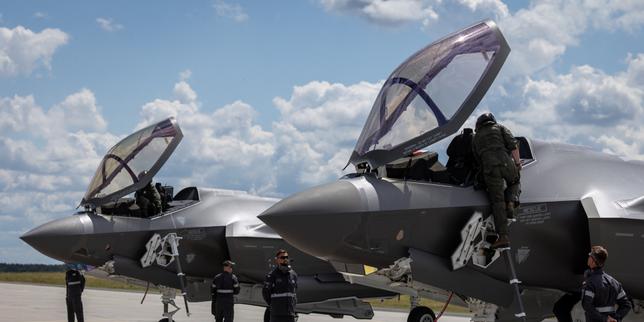
Consider the Lockheed Martin F-35 Lightning II. It is not merely an airplane. It is a flying supercomputer, a floating sensor array, a trillion-dollar technological titan designed to rule the skies for half a century. Every square inch of its radar-absorbent skin, every line of its millions of lines of proprietary source code, represents decades of grueling trial and error. Billions of taxpayer dollars. The collective genius of thousands of engineers who poured their youth into making the invisible visible and the visible invisible.
And yet, the crown jewel of Western military engineering was cracked open not by a brilliant cyber-offensive or a sophisticated malware payload, but by administrative friction and an unread email that languished in a neglected queue.
Imagine sitting in a dimly lit office in Beijing or Shanghai. The room smells of green tea and ozone. On the screen, a stream of telemetry data begins to cascade. To an untrained observer, it is a chaotic wall of hexadecimal code. To a patient intelligence officer, it is a symphony.
For years, military analysts warned about the vulnerability of the global defense supply chain. We built a system of breathtaking complexity, outsourcing specialized components to contractors spread across dozens of time zones. We traded absolute control for logistical efficiency. We assumed that encrypted servers and thick firewalls would act as an impenetrable shield against a determined adversary.
We forgot the human factor.
Security is only as strong as the most exhausted worker on a Friday afternoon. It is only as reliable as the clerk who clicks away a warning message without reading it, or the project manager who assumes someone else handled the security audit.
When the breach occurred, the immediate reaction in Washington was predictable. Shock. Outrage. Closed-door hearings where stern-faced officials pounded mahogany tables and demanded immediate accountability. Reports were commissioned. Memos were circulated. The vocabulary of crisis management was trotted out to reassure a nervous public that lessons had been learned.
But reports do not recover lost secrets.
When a rival superpower acquires the metallurgical secrets of a stealth fighter’s radar-absorbent coating, the playing field tilts overnight. Decades of asymmetric advantage evaporate in the span of a single download. The adversary no longer needs to spend thirty years and hundreds of billions of dollars guessing how to defeat an F-35 sensor array. They can study the blueprints. They can reverse-engineer the thermal signatures. They can build the countermeasures before the jet has even finished its scheduled maintenance cycle.
This is the hidden cost of our interconnected world. We have engineered systems so vast that no single human being understands them in their entirety. We have traded tangible, physical boundaries for digital corridors that span the globe in milliseconds. And in doing so, we have created an environment where a single overlooked message can alter the balance of global power.
There is a profound, unsettling irony here. We spend staggering fortunes building weapons designed to withstand the most catastrophic kinetic warfare imaginable. We armor them against surface-to-air missiles, electromagnetic pulses, and high-altitude radiation. Yet, the entire multi-billion-dollar enterprise can be compromised because a human being missed a single flashing red light on a computer screen.
We are living through a quiet revolution in how power is won and lost. The wars of the future will not be decided solely by steel and explosives, but by attention spans, administrative discipline, and the sheer fatigue of managing infinite data.
The unread email is still sitting in someone's archive. The digital footprint has long since faded into the background noise of the global network. But the fighter jets patrolling the contested skies of the South China Sea fly through a different reality now. Every maneuver is watched by an adversary who knows the plane's deepest secrets, all because someone walked away from their desk before hitting refresh.