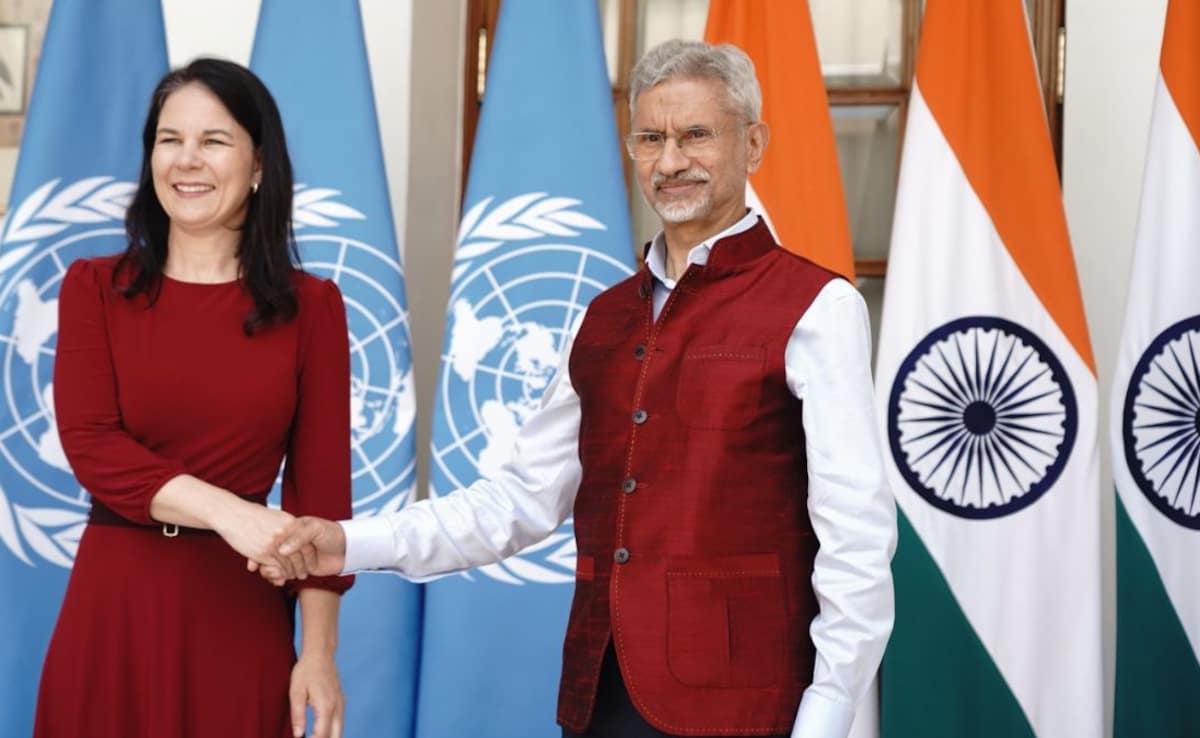
The air inside the United Nations headquarters in New York is different from the humid buzz of the Manhattan streets outside. It carries a sterilized stillness, a weight of history that feels almost physical. Here, in the corridors where the fate of borders and breadlines is negotiated, the silence is often louder than the speeches. When India’s External Affairs Minister, S. Jaishankar, sat down with the President of the 79th UN General Assembly, Philemon Yang, they weren't just two men in suits checking off a diplomatic to-do list. They were two architects looking at a blueprint that is rapidly catching fire.
Geopolitics is often treated like a high-stakes chess game played in ivory towers, but for the family in a village in the Global South, it is the difference between a meal and a debt. It is the price of a gallon of fuel or the availability of a life-saving vaccine. When these leaders meet, the "global challenges" they discuss are not abstract concepts. They are the friction points of a world that is struggling to decide who gets to lead and who is left to follow.
The Weight of the Gavel
Consider the position of Philemon Yang. As the President of the UN General Assembly, he holds a gavel that is supposed to represent the collective will of nearly eight billion people. But that gavel often feels hollow when the machinery of the UN remains stuck in the 1940s. The world has changed. The powers that were dominant at the end of World War II are no longer the only voices that matter.
Jaishankar’s meeting with Yang wasn't a courtesy call. It was a confrontation with reality. India has positioned itself as the "Vishwa Mitra," or the friend of the world, specifically championing the interests of the Global South. This isn't just a catchy branding exercise. It is a necessary shift in gravity. For decades, the decisions that affected the poorest nations were made in rooms where those nations didn't have a seat at the table. Now, India is kicking the door open, not just for itself, but for an entire hemisphere of humanity that has been silenced for too long.
The Digital Heartbeat
We often talk about the digital divide as if it’s a matter of having a faster internet connection to stream movies. It’s not. In the context of modern diplomacy and the discussions held between Jaishankar and Yang, digital public infrastructure is the new steel. It is the backbone of modern survival.
In India, a street vendor can accept a payment via a QR code, bypassing the predatory fees of traditional banking. This is "India's Digital Stack," and it was a focal point of their conversation. When Jaishankar speaks about sharing this technology with the UN, he is talking about a radical form of empowerment. He is suggesting that the tools for financial inclusion shouldn't be locked behind proprietary walls or sold for profit by Silicon Valley giants. They should be a global public good.
Think about a hypothetical farmer in a landlocked African nation. Without a digital identity or a secure payment system, she is at the mercy of middlemen who take a cut of every harvest. If the UN can facilitate the export of the Indian model, that farmer suddenly has a direct line to her own money. The "global challenge" isn't just climate change or war; it is the systemic exclusion of billions of people from the modern economy.
The Reform Paradox
The most difficult part of the conversation likely revolved around the word "reform." Everyone agrees the UN needs it. Almost no one agrees on what it should look like. The Security Council, the ultimate arbiter of peace and security, is a frozen snapshot of a world that no longer exists.
Jaishankar has been vocal about this obsolescence. He compares it to a vintage car that we keep trying to drive on a modern highway. It looks prestigious in the garage, but it can't handle the speed or the terrain of 2026. The meeting with Yang was an attempt to find a path forward for "Multilateralism 2.0." This is the idea that international cooperation must be more than just a series of photo ops. It must be a system that actually produces results for the people it claims to serve.
The stakes are invisible until they aren't. We don't notice the failure of multilateralism until a supply chain snaps and there is no medicine on the shelf. We don't notice the lack of global cooperation until a regional conflict spirals into a global energy crisis. These leaders are trying to patch the holes in the hull while the ship is already in the middle of a storm.
The Human Core of Diplomacy
Behind the formal statements and the handshakes, there is a sense of urgency that rarely makes it into the headlines. Jaishankar is known for his clinical, sharp delivery, but his mission is fueled by a very human recognition: the current global order is failing the majority.
The conversation covered the Sustainable Development Goals (SDGs). These are often dismissed as bureaucratic jargon, but they represent the basic requirements for human dignity: clean water, education, gender equality, and an end to poverty. With the 2030 deadline looming, the world is falling behind. The meeting was a pulse check on a dying patient. Can the UN be revived, or is it destined to become a museum of good intentions?
There is a specific kind of exhaustion that comes with being a diplomat in this era. You are constantly trying to bridge the gap between what is politically possible and what is humanly necessary. You are negotiating with countries that are often more interested in their own borders than the global horizon.
The Silent Majority
When we read about Jaishankar and Yang, we should see beyond the titles. We should see the millions of people who are waiting for a sign that the "international community" actually exists. The Global South is no longer a passive observer. It is a massive, energetic, and increasingly tech-savvy bloc that is tired of waiting for permission.
India’s role here is unique. It sits at the intersection of the old world and the new. It is a democracy with the scale of a continent. When Jaishankar brings the concerns of the Global South to the UNGA President, he isn't just bringing grievances. He is bringing solutions. Whether it's the International Solar Alliance or the push for a more equitable global health architecture, the message is clear: the solutions to tomorrow’s problems won’t all come from the West.
The meeting ended, as they all do, with a commitment to continue the dialogue. But the dialogue itself has changed. The tone is no longer one of petitioning for a place at the table; it is one of defining the menu.
The sun sets over the East River, casting long shadows across the UN plaza. Inside, the lights stay on. The work of preventing the world from tearing itself apart continues, one conversation at least, one handshake at a time. It is a slow, grinding process, often frustrating and frequently invisible to the people who need it most. But in a world that feels like it’s vibrating with tension, these quiet rooms are the only thing standing between us and the chaos of the void.
History isn't made by the speeches that are televised. It's made in the quiet pauses between them, in the moments when two people realize that the old ways are dead and the new ones haven't been born yet. We are living in that gap.