Dawn arrives differently when you wear the cloth.
It does not creep over the horizon with the gentle warmth of a Sunday morning on a quiet porch. It breaks with the sharp snap of boots on polished linoleum, the metallic clatter of equipment being stowed, and the heavy, metallic tang of JP-8 jet fuel hanging thick in the predawn air of an Air Force flight line. For a young airman standing on that concrete, looking out at a row of silent grey cargo aircraft, the morning brings a distinct weight. You carry the mission. You carry the chain of command. And, often, you carry a quiet, gnawing fear that the deepest part of who you are might somehow violate the rules you swore an oath to uphold.
Let us step into a hypothetical scenario to ground what this actually looks like. Imagine Airman First Class Miller, freshly assigned to a flight line in the American heartland. Miller is deeply, fundamentally traditional in faith, holding fast to spiritual convictions that predate any modern military doctrine. When a fellow service member pauses before a deployment flight, eyes heavy with the terrifying uncertainty of what waits across an ocean, Miller offers a simple traditional blessing. A brief, spoken word of peace. A religious greeting rooted in ancient texts.
To an outsider, it is a human moment. Two people finding anchor in a storm.
To the bureaucracy, however, it has historically been a legal tightrope.
For years, the invisible lines governing expression within the armed forces have been drawn with trembling hands. Command structures, anxious to avoid the slightest appearance of establishing a state religion or alienating troops of differing beliefs, often overcorrected. The result was a chilling effect. Service members learned to whisper their prayers. They learned to hide their holy books in plain sight. They worried that a casual "God bless you" or a traditional religious greeting offered in the hangar could trigger an administrative reprimand, an unfavorable review, or worse.
That tension—the friction between the individual conscience and the rigid demands of military order—created a profound quiet crisis.
Consider what happens next when leadership shifts its weight.
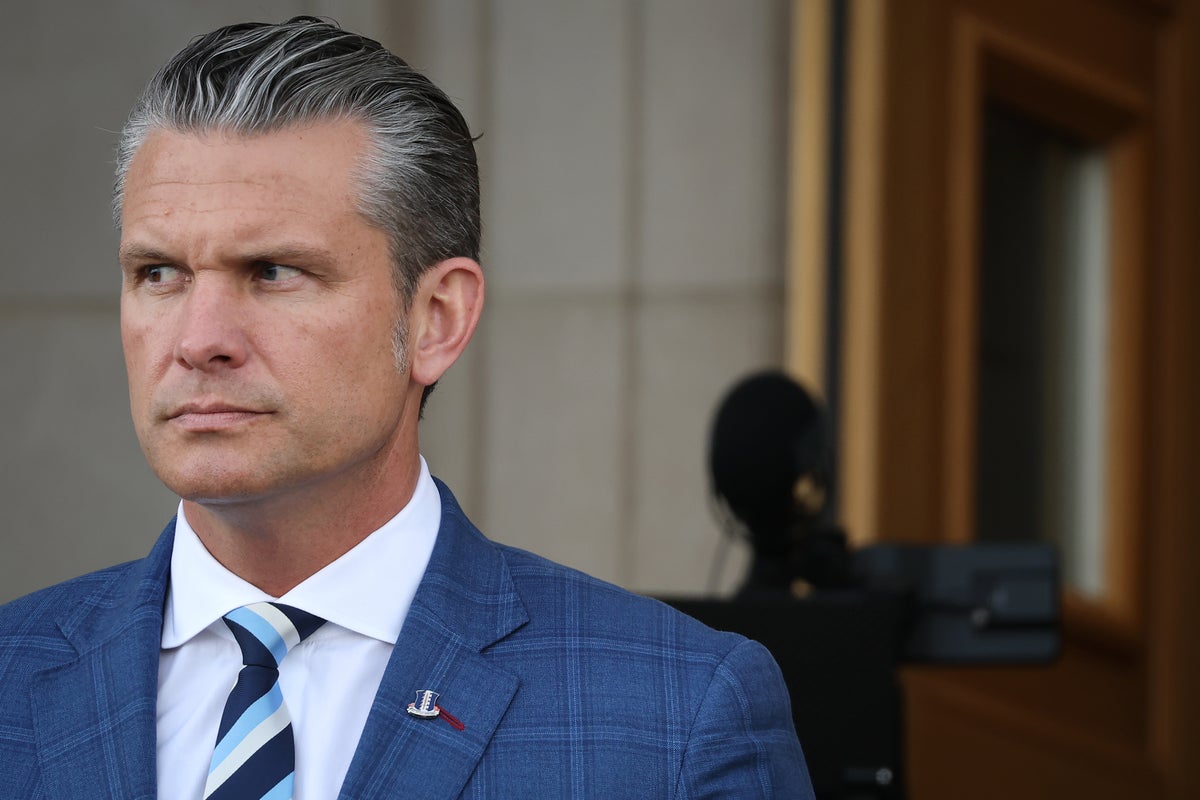
Recently, Defense Secretary Pete Hegseth stepped directly into this simmering cultural kitchen. In statements addressing the climate across military installations, including specific directives regarding religious expression at Air Force bases, the message shifted from caution to a promise. The core pledge is stark: military members who deliver traditional religious greetings or share expressions of faith will find protection, not punishment, from the top down.
The announcement hit the ranks like a sudden gust of wind clearing away fog.
Opinions split instantly, as they always do when faith and the state share a uniform. Critics argue that opening the door wider to overt religious displays threatens the delicate neutrality required of a multi-faith force. In an institution where cohesion is life or death, anything that risks fracturing unity along sectarian lines is viewed with deep, earned suspicion. If one airman feels pressured to participate in or listen to a greeting that conflicts with their own worldview, the baseline trust of the unit can erode.
Yet, the counterargument cuts straight to the bone of human motivation. Why do men and women put on the uniform? Not for a paycheck. Not for a retirement pension that requires decades of sacrifice to realize. They do it because of an internal conviction—a belief in duty, in country, and yes, for millions, in a higher power that watches over them when the ramp goes down.
When you tell a soldier, sailor, or airman that they must strip away their spiritual voice at the gate, you are asking them to fight with one hand tied behind their psychological back.
To understand why this matters so deeply, you have to look past the press releases and the cable news chyrons. You have to understand the psychology of fear in high-stress environments. Military service demands absolute surrender of personal autonomy. You eat when told. You sleep when told. You move toward the sound of gunfire when everyone else is running away.
When every external facet of your life is controlled by the institution, your internal sanctuary becomes your only true refuge. For many, that sanctuary is built on faith.
When a commander steps forward and promises protection for that faith, it changes the emotional chemistry of the base. Airman Miller is no longer looking over a shoulder, wondering if the squadron commander's legal advisor is timing a stopwatch on a blessing. That shift from anxiety to security is palpable. It breathes life back into individuals who felt marginalized by an overly sanitized institutional culture.
At the same time, we must stare honestly at the gray areas. Protection is a noble word, but implementation is messy. Where does a traditional greeting end and coercion begin? If a superior officer offers a blessing, does the subordinate feel truly free to decline? The human dynamic within a military hierarchy is never truly neutral. Power imbalances are baked into the insignia on the collar. Navigating this new directive will require more than political willpower; it will demand extraordinary emotional intelligence from every non-commissioned officer and commander on the ground.
We are watching a pendulum swing. For a long time, the institutional instinct was to scrub clean any outward sign of traditional religious devotion in the name of inclusivity. Now, the pendulum is rushing back toward the preservation of individual religious liberty, even when it rubs against the polished machinery of military standardization.
The real test of this new era will not happen in Washington conference rooms or in official policy memos signed with heavy ink.
It will happen in the dim light of a maintenance bay at 3:00 AM, when an engine is failing, the mission is hours away, and a young airman looks into the eyes of a comrade who is shaking with fear. In that split second, no regulation matters as much as the human response. Whether a whispered blessing heals that fear or complicates it depends entirely on the grace with which these new protections are lived out.
The uniform remains the same. The mission remains the same. But the space inside the soul of the service member just got a little bit larger.
Silence used to be the safest policy. Now, the airwaves belong to the faithful, and the echoes are just beginning to return.