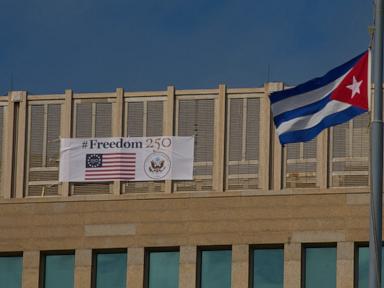
Washington just changed the rules of engagement in the Caribbean. For decades, the American embargo against Havana relied on direct financial restrictions, travel bans, and pressure on Latin American neighbors. That playbook is officially obsolete. As the US escalates its economic campaign against Cuba and targets China-based suppliers, the battleground has shifted from the Florida Straits to the global supply chain.
Most analysts still view the Cuba embargo through a Cold War lens. They're missing the actual strategy. The current enforcement wave isn't just about punishing Havana's leadership or squeezing domestic state-owned enterprises. It's about severing the logistical lifelines keeping Cuba's fragile infrastructure, telecom networks, and energy grids operational—and almost all of those lifelines run straight through Chinese manufacturing hubs.
If you manage international trade compliance, run global logistics, or simply follow geopolitical risk, this shift matters immediately. Washington is no longer waiting for goods to touch Cuban soil before acting. Regulators are moving upstream, weaponizing secondary sanctions and export control lists against third-party vendors in Shenzhen, Shanghai, and Hong Kong.
What Most People Get Wrong About the Cuba Embargo
Ask ten people how the US embargo works, and nine will tell you it bans American companies from trading with Cuba. That's only half the story. The real teeth of the system come from extraterritorial reach—specifically how the Treasury Department's Office of Foreign Assets Control (OFAC) and the Commerce Department's Bureau of Industry and Security (BIS) police non-US companies.
For years, foreign firms operated under a simple assumption. As long as they didn't use US dollars, touch American banking rails, or ship items made entirely in the United States, they thought they were safe. They weren't.
Under the Export Administration Regulations (EAR), any foreign-made item containing more than a de minimis threshold—often just 10%—of US-origin controlled content falls under Washington's jurisdiction. Think about modern electronics, industrial turbines, telecom routers, or solar inverters. Almost every single one contains American-designed semiconductors, specialized software, or proprietary components.
Havana survived recent blackouts and economic contraction largely because Beijing stepped in as both lender of last resort and primary hardware supplier. Chinese firms shipped grid equipment, surveillance tech, transportation parts, and telecommunications hardware to the island. Until recently, Washington mostly watched this happen while focusing its enforcement bandwidth on Moscow and Tehran. That patience just ran out.
How Washington Is Actually Hitting China-Based Suppliers
The mechanics of this crackdown are aggressive, surgical, and designed to scare off mid-sized exporters who value their Western market access more than their Cuban contracts. Regulators aren't relying on broad diplomatic warnings anymore. They're using specific statutory tools that freeze businesses out of the global economy overnight.
Entity List Designations and Export Denials
When the Commerce Department adds a China-based supplier to the Entity List, the impact is immediate. No company anywhere in the world can legally ship items subject to the EAR to that listed entity without a special license—and those licenses come with a presumption of denial.
For a Chinese electronics distributor or industrial manufacturer, landing on the Entity List doesn't just kill their Cuba business. It cuts off their access to American chipmakers, software updates, and European partners who refuse to risk secondary exposure. Washington knows these suppliers make razor-thin margins in Havana compared to the massive revenue they generate selling to North America and Europe. Force them to choose, and ninety-nine percent will drop Cuba before the ink dries on the Federal Register notice.
Financial Blacklisting Through OFAC
While Commerce chokes off physical goods, Treasury goes after the money. OFAC's Specially Designated Nationals (SDN) list remains the ultimate financial hammer. Once a shell company, shipping broker, or trading firm in Hong Kong or mainland China gets designated for facilitating prohibited Cuban transactions, global banks immediately freeze their accounts.
Compliance teams at major clearinghouses like HSBC, Citibank, and Standard Chartered run automated screening software that flags SDN matches in milliseconds. Even if a Chinese supplier tries to settle a Cuban invoice in renminbi or euros, the moment that supplier touches a correspondent bank with US exposure, the funds vanish into a blocked account. I've seen compliance officers shut down multi-million-dollar credit lines in under an hour simply because a counterparty showed up on a shipping manifest linked to Mariel Port.
Maritime and Logistics Chokepoints
You can't move heavy machinery from Guangzhou to Havana without ships, insurance, and port calls. US regulators have quietly ramped up pressure on maritime insurers, classification societies, and vessel operators.
Under existing restrictions, any vessel that enters a Cuban port to load or unload cargo is barred from entering a US port for 180 days unless it holds a specific exemption. By cross-referencing Automatic Identification System (AIS) transponder data with Chinese export records, enforcement agencies are identifying the exact feeder vessels transferring cargo from Chinese mega-ships onto Cuba-bound freighters in regional hubs like Panama, Jamaica, and the Bahamas.
Why Beijing's Havana Lifeline Became a Priority Target
Why now? Havana's economy has been on life support since the pandemic collapsed its tourism sector and Venezuela's oil subsidies dried up. The timing of Washington's escalation comes down to three converging realities.
First, national security hawks in Washington view Chinese infrastructure projects in Cuba as a direct intelligence threat ninety miles off the Florida coast. Reports surrounding Chinese-linked signals intelligence facilities and telecom modernization on the island turned what used to be a human rights and bilateral trade issue into a front-burner Pentagon concern. When dual-use technology—equipment that works for both civilian telecom networks and military communications—flows from China to Cuba, export control agencies treat it identically to shipments heading toward Russian defense contractors.
Second, Havana's ongoing energy crisis exposed a critical vulnerability. Cuba's aging thermoelectric power plants have suffered repeated, island-wide collapses. To keep the lights on, the Cuban government turned to Chinese state-backed firms for emergency generators, grid components, and solar farm installations. By targeting the specific suppliers fulfilling those energy and infrastructure tenders, Washington maximizes economic pressure on the Cuban state without needing to pass a single new piece of legislation through Congress.
Third, regulators realized that letting China-based middlemen skirt Cuba sanctions created a blueprint for evading sanctions everywhere else. The exact same Hong Kong trading houses and Shenzhen freight forwarders moving restricted components to Havana frequently overlap with networks supplying Iran and Russia. Shutting down the Cuba pipeline disrupts the broader sanctions-evasion ecosystem.
The Ripple Effect on Global Supply Chains
If you operate a legitimate business importing from China or selling into Latin America, you might assume this geopolitical tug-of-war doesn't affect you. You'd be wrong. Collateral damage in export enforcement is real, and it's expensive.
When Washington targets Chinese suppliers over Cuba ties, legitimate Western buyers suddenly discover that one of their tier-two or tier-three component vendors just got blacklisted. Your shipment of industrial sensors or consumer electronics sits stuck in customs because the factory that built the sub-assembly also sold power modules to a Cuban state enterprise six months ago.
Banks respond to heightened enforcement by "de-risking." Instead of carefully auditing every transaction involving mainland China or Hong Kong trading companies, compliance departments simply tighten their risk appetite. Wire transfers take weeks instead of days. Letters of credit get rejected over minor paperwork discrepancies. Trade finance dries up for perfectly legal shipments because lenders don't want to spend fifty thousand dollars in legal fees proving a transaction didn't violate the Cuban Assets Control Regulations.
Common Mistakes Companies Make With Secondary Sanctions
Watching businesses navigate these rules reveals the same predictable blind spots over and over again. People assume compliance is just checking a name against a government database once a year. That's a fast way to get fined.
- Relying solely on direct supplier screening. Checking the name of the factory you pay isn't enough. If that factory buys components from a sanctioned entity or uses a blacklisted logistics broker in Hong Kong, your supply chain is still tainted.
- Ignoring transshipment red flags. Cargo destined for Cuba rarely lists Havana on the initial bill of lading out of China. It goes to free trade zones in Panama, Mexico, or the Caribbean first. If your contracts don't prohibit unauthorized re-exportation, you carry the legal liability when your product shows up where it shouldn't be.
- Assuming non-USD transactions create immunity. Using euros, yuan, or cryptocurrency doesn't shield a company from BIS export controls. Jurisdiction follows the origin of the technology and software, not the currency on the invoice.
- Trusting verbal assurances from trading companies. Hong Kong and mainland intermediaries routinely set up fresh shell companies within days of an OFAC designation. If you aren't verifying beneficial ownership—who actually owns and controls the entity—you're flying blind.
What You Need to Do Right Now to Protect Your Operations
Geopolitical friction between Washington, Beijing, and Havana isn't cooling down anytime soon. Enforcement budgets at BIS and OFAC have expanded, and interagency data sharing between US customs, intelligence agencies, and allied governments is tighter than ever.
If your business touches cross-border manufacturing, international logistics, or trade finance, take four concrete steps immediately:
- Audit your tier-two and tier-three Chinese suppliers. Map out where your critical components actually originate, not just the trading company sending you invoices. Run updated screening checks across your entire vendor base against both the OFAC SDN list and the BIS Entity List.
- Tighten end-user and re-export clauses in every contract. Ensure your distribution and manufacturing agreements explicitly prohibit re-exporting goods, software, or technology to embargoed jurisdictions like Cuba, and include audit rights so you can verify compliance.
- Scrutinize transshipment routes through Latin America and the Caribbean. Flag any unusual shipping patterns, sudden changes in freight forwarders, or requests to route cargo through free trade zones without a clear commercial justification.
- Calculate your US-origin content accurately. Work with trade counsel to determine whether your foreign-manufactured products exceed the 10% de minimis threshold for US-controlled technology or software. Knowing your exact exposure keeps you from accidentally violating extraterritorial rules.
Washington's message to Beijing and the global business community is unmistakable: you can have access to the American financial system and US technology, or you can prop up Havana's supply lines, but you can no longer have both.