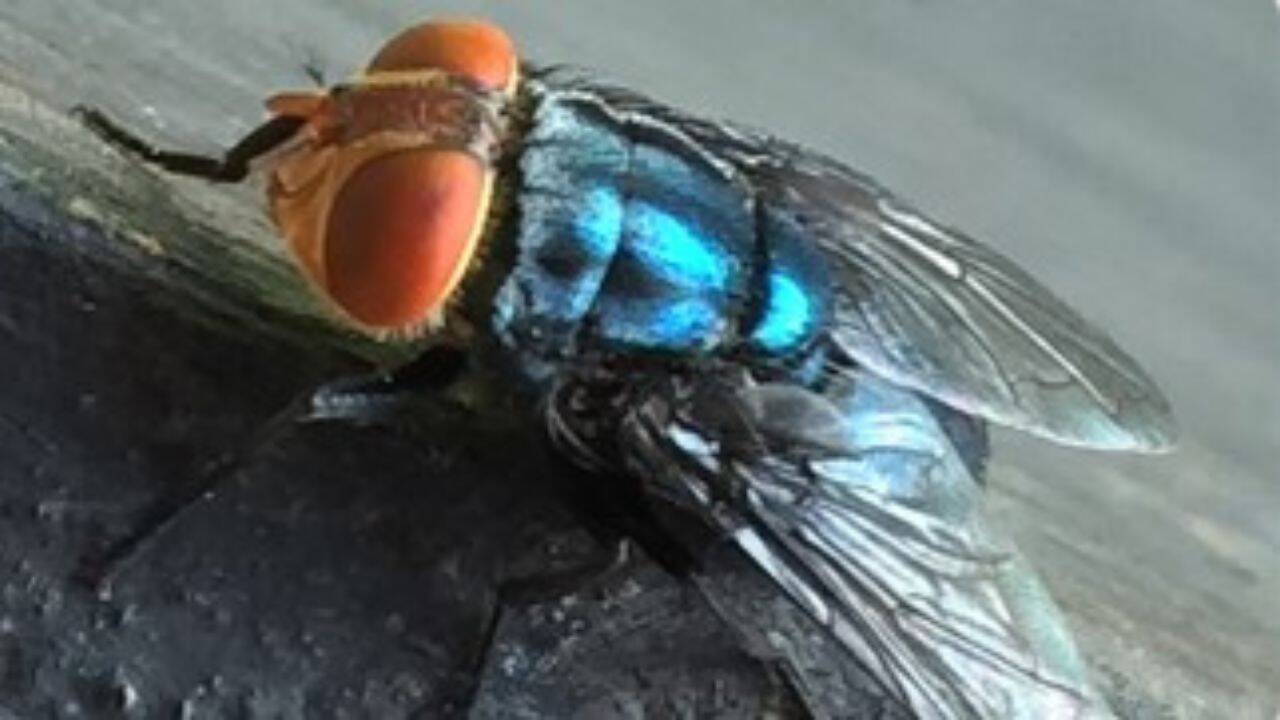
Geographic expansion vectors of parasitic dipterans follow predictable thermal and ecological corridors, yet biological management strategies frequently rely on blunt operational mechanics rather than targeted behavioral disruption. The northward migration of the New World screwworm, Cochliomyia hominivorax, toward the borders of the United States represents a systemic challenge to livestock biosecurity and veterinary public health. Recent entomological findings indicate that volatile organic compounds acting through specific olfactory pathways can alter female host-seeking behavior, presenting an avenue for interdiction. Understanding this mechanism requires deconstructing the transmission dynamics, the metabolic cost of containment, and the structural limitations of current sterile insect technique deployment.
The Operational Threat Vector of Cochliomyia hominivorax
Unlike facultative myiasis-producing flies that consume necrotic tissue, Cochliomyia hominivorax larvae are obligate parasites of warm-blooded mammalian tissue. The female oviposits at the margins of fresh wounds, mucous membranes, or minor abrasions. Upon hatching, the first-instar larvae burrow into living flesh, releasing proteolytic enzymes that liquefy host tissue while expanding the lesion. This active destruction creates a cascading biological failure mode for the host animal, leading to secondary infections, systemic shock, and high mortality rates if left untreated.
The movement of this vector is governed by three primary variables: ambient temperature, humidity, and host density. Optimal atmospheric conditions allow adult females to disperse up to twenty kilometers in search of hosts during their multi-week lifespan. Consequently, geographic containment zones must account for active flight capacity rather than passive wind drift alone. When monitoring vector advancement, regulatory agencies track the density of livestock populations, as concentrated agricultural hubs accelerate reproductive rates and amplify the baseline population size.
Historical eradication campaigns across North and Central America relied on maintaining a biological barrier zone through the continuous release of sterilized males. Sterile insect technique works on the premise of competitive mating, where irradiated, sterile males induce infertile matings in wild females, driving down the subsequent generation's population density. However, maintaining this barrier demands consistent production facilities operating at maximum capacity. Supply chain disruptions, production facility contamination, or drops in sterile male competitiveness due to radiation damage create vulnerability windows. During these windows, wild populations breach the buffer zone, shifting the geographic front northward and forcing an expansion of surveillance perimeters.
Olfactory Interception and Behavioral Manipulation
Recent scientific focus has shifted toward manipulating the sensory apparatus of the female fly to disrupt host localization. Insects navigate their environment through chemoreception, relying on specialized sensilla on their antennae and maxillary palps to detect volatile chemical signatures. Host-seeking behavior is primarily triggered by carbon dioxide gradients, organic acids, and specific phenolic compounds exhaled or secreted by mammalian hosts.
Researchers have identified specific chemical scents that inhibit this host-seeking response, effectively masking the biological signature of the animal or confusing the sensory processing pathways of the insect. Instead of relying purely on lethal trapping, olfactory interdiction alters the probability distribution of successful host location. When exposed to these repellent or masking scents, the behavioral output of the female changes from directed flight toward a host to random dispersal or directional avoidance.
The mechanics of this intervention rely on receptor-level antagonism. Specific volatile compounds bind to odorant receptors or ionotropic receptors on the antenna, blocking the neural cascade that signals the presence of a viable wound site. This creates an invisible perimeter around livestock herds. Without a functioning sensory feedback loop, the female fails to initiate oviposition behavior, breaking the reproductive cycle at its foundational step.
Deploying these olfactory agents at scale, however, introduces engineering hurdles. Volatile compounds degrade under ultraviolet radiation and high ambient temperatures. Sustained-release matrices, such as polymer-embedded dispensers or microencapsulated formulations, are required to maintain an effective atmospheric concentration of the active compound over extended field durations. The cost function of this strategy is dictated by the longevity of the release mechanism versus the frequency of manual reapplication across vast pastoral landscapes.
Comparative Efficacy of Barrier Methodologies
Evaluating the integration of olfactory interdiction alongside existing sterile insect protocols requires examining their respective operational constraints.
Sterile Insect Technique:
- Mechanism: Population suppression via induced reproductive failure.
- Primary Advantage: Self-dispersing biological agents that seek out wild females.
- Primary Vulnerability: Highly sensitive to rearing facility failures, transportation bottlenecks, and logistical delays. High capital expenditure for breeding infrastructure.
Olfactory Interdiction:
- Mechanism: Sensory masking and behavioral deterrence at the herd boundary.
- Primary Advantage: Protects high-value livestock assets directly on-site without requiring genetic manipulation or mass rearing facilities.
- Primary Vulnerability: Requires continuous physical maintenance, active replacement of delivery matrices, and coverage of large surface areas against environmental degradation.
Integrating these two methodologies creates a dual-layer defense system. Sterile insect releases suppress the baseline regional population density, while targeted deployment of olfactory masking agents around critical livestock bottlenecks prevents successful oviposition in high-risk zones. This reduces the pressure on the biological barrier, lowering the probability of a structural breakthrough during seasonal migration peaks.
Systemic Vulnerabilities in Current Surveillance Architectures
Early detection remains the most critical variable in containing vector incursions. Current surveillance relies on passive reporting by livestock producers, veterinary inspections at state and international boundaries, and sticky traps baited with synthetic attractants. Each of these components possesses structural blind spots.
Passive reporting systems suffer from latency. Producers may misidentify early-stage myiasis as common secondary blowfly strike or minor wound infection, delaying official notification until the parasite has completed a reproductive cycle and expanded its local footprint. Border inspections, while effective for commercial transport, cannot account for wildlife hosts or informal movement channels, which serve as unmonitored transit corridors for the parasite.
Furthermore, synthetic attractants used in surveillance traps often compete with natural host odors in pastoral environments. If a trap's chemical plume is less potent or less biologically accurate than a nearby herd of cattle, the trapping efficiency drops, generating false negatives in regional surveillance data. Upgrading trap designs requires synthesizing more stable, highly specific volatile profiles that mimic the exact biochemical signatures of compromised mammalian tissue without degrading rapidly in field conditions.
Strategic Deployment Framework
To mitigate the northward progression of Cochliomyia hominivorax, agricultural and veterinary authorities must transition from reactive outbreak suppression to predictive environmental management. Resource allocation should prioritize the fortification of biological barrier zones using improved mass-rearing strains that exhibit higher mating competitiveness in the field. Simultaneously, regulatory frameworks must subsidize the deployment of sustained-release olfactory deterrents for commercial herds situated within the immediate buffer corridors. Investment in automated sensor-based trap networks equipped with real-time telemetry will remove reliance on manual inspection lags, shortening the response window from weeks to hours upon the detection of an anomalous vector presence.


