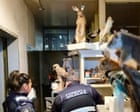
Headline hunters spent the week clutching their pearls over a Victorian property harboring seven hundred frozen and stuffed specimens.
The media framing followed a predictable, moralizing script. Authorities seized the haul. Public commentators wagged their fingers at macabre hoarding. Conservationists labeled the operation a black market atrocity against biodiversity. In related news, we also covered: Why The Kansas Senate Debate Changed Everything For The 2026 Race.
Everybody missed the point entirely.
This wasn't a criminal syndicate operating in the shadows of wildlife trafficking. This was an archive of anxiety. When a private citizen amasses an industrial-scale menagerie of preserved fauna, society diagnoses a psychological fracture. They call it pathology. They call it illegal possession. TIME has also covered this important topic in extensive detail.
They refuse to look in the mirror.
Private natural history collections powered the birth of modern ecology. Before institutional science sanitized preservation, amateurs did the dirty work of cataloging the planet. Wealthy Victorians didn't stuff birds and mammals out of malice. They did it because they watched the passenger pigeon vanish, the thylacine slip into the abyss, and the industrial machine chew through primeval forests.
Taxidermy is an act of defiance against mortality. It says that while time steals life, curation steals time back.
Modern commentators love to pretend that our relationship with the natural world is clean. We buy sustainably sourced organic produce. We watch high-definition nature documentaries from climate-controlled living rooms. We outsource our ecological footprint to distant reserves we never visit.
Meanwhile, species blink out of existence every single day at a rate that dwarfs historical extinction events. Our modern sanitized distance from nature isn't respect. It's denial.
The Victorian collector with seven hundred specimens in a shed isn't an anomaly. He is the hyper-fixated shadow of every human being who takes a photograph of a sunset, hoards national parks brochures, or buys a glass case of pinned butterflies online. We are all desperate to hold onto a dying biosphere. Some people buy hybrid cars to ease their conscience. Others freeze history in taxidermy poses.
Strip away the legal infractions and the sensationalized police reports. What remains is a sobering architectural monument to human grief.
We lock animals in glass or freezers because we cannot bear the thought of a silent earth. Until we stop pretending that moral outrage over a private collection solves the extinction crisis, we are just yelling at ghosts in an empty room.