The lazy consensus in international journalism is that diplomatic snubs and visa blocks are failures of statecraft. When Austria bars Iran's nuclear chief from setting foot in Vienna for a conference, the standard narrative writes itself. Headline writers reach for words like isolation, escalation, and protocol breach. Commentators bemoan the death of dialogue. They treat diplomatic access as an unalienable right and exclusion as a tragedy.
It is absolute nonsense.
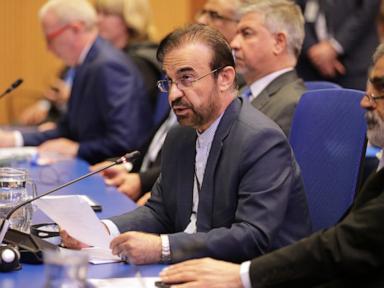
I have spent years watching the diplomatic theater in Vienna, Geneva, and New York. I have seen millions of dollars burned on catered summits where delegates trade recycled talking points while their domestic economies implode. The exclusion of Mohammad Eslami or any other Iranian official from Western soil is not a setback for diplomacy. It is a clarion call. It strips away the polite fiction that bureaucratic face-time solves structural security crises.
Let us dismantle the core premise of the mainstream outrage: the idea that physical proximity breeds compromise.
Diplomacy is not a group therapy session. Putting two adversarial negotiating teams in the same ballroom at the Vienna International Centre does not humanize the conflict. It provides political theater for domestic consumption. Tehran gets to posture as the aggrieved party standing up to Western imperialism. Washington and its European partners get to signal toughness without having to make hard compromises. Everybody wins except the truth.
By locking the doors to Vienna, Austria did something remarkable. They stopped the charade. They forced both sides out of the air-conditioned comfort of multilateral hand-wringing and into the cold, hard reality of actual leverage.
The Myth of the Negotiating Table
If face-to-face talks worked, the Iranian nuclear file would have been permanently closed two decades ago. Instead, we have a revolving door of Joint Comprehensive Plan of Action revivals, secret side deals, and endless IAEA board resolutions that carry about as much weight as a strongly worded Yelp review.
The mainstream press treats every canceled meeting as a missed opportunity to avert catastrophe. This betrays a fundamental misunderstanding of why states build nuclear infrastructure. Iran does not pursue uranium enrichment capabilities because Mohammad Eslami missed a keynote address in Austria. They pursue it because enrichment is their primary strategic currency. It is the only leverage Tehran holds in a sanctions-locked economy.
Imagine a scenario where Eslami attends every conference in Vienna, shakes hands with western ambassadors, drinks mediocre coffee, and signs non-binding communiques. Does that alter the physics of centrifuges? Does it change the calculations of military planners in Tel Aviv or Washington? Of course not. It merely sanitizes a coercive standoff with the veneer of polite internationalism.
When Vienna slams the door, the theater ends. And that terrifies career diplomats whose entire professional survival depends on the continuation of the process itself. For a bureaucrat, the process is the product. A permanent impasse threatens their funding, their conferences, and their air miles. A blocked visa is a threat to their business model.
What People Get Wrong About Isolation
Critics of Austria’s move argue that cutting off high-level access drives regimes deeper into isolation, making them more defiant and less predictable.
This argument collapses under empirical scrutiny.
Isolation is not a switch flipped by a European foreign ministry denying a visa. Iran has been under maximum economic pressure and diplomatic quarantine for decades. Their nuclear program did not accelerate because they missed a workshop in Austria; it advanced because the technical know-how is indigenous, mature, and impossible to bomb or legislate out of existence.
In fact, forced isolation often clarifies state behavior. When diplomatic channels are bloated with polite pleasantries, governments misread signals. They mistake procedural politeness for strategic acquiescence. When the doors are physically bolted, the signals become binary. There is no diplomatic static to decode.
Look at the history of non-proliferation architecture. Breakthroughs rarely happen during high-society summits in neutral European capitals. They happen through backchannel pragmatism or when the cost of status quo deviance becomes too high for both parties to bear. The Vienna meetings are executive social clubs. Excluding a controversial figure from an IAEA gathering does not blindside intelligence agencies or derail secret channels. It merely removes the red carpet from an actor who treats international oversight as a diplomatic shield for domestic escalation.
The Economic Reality Behind the Posturing
To understand why Tehran cares so much about these bureaucratic snubs, you have to look past the ideological rhetoric and follow the political capital.
When Iranian officials rail against Western exclusion, they are performing for a domestic audience that desperately needs external villains to explain internal economic decay. When the Iranian currency collapses and inflation hits astronomical figures, state media needs a narrative. A snub in Vienna becomes proof that the West is actively trying to suppress Iranian scientific achievement.
It is a brilliant distraction strategy, and Western media plays right into it every single time.
By treating a routine visa restriction as a major geopolitical crisis, journalists inflate regional bureaucrats into central characters in a global drama. Eslami is not a wronged scientist seeking peer review; he is the head of an organization central to a military-industrial complex that operates outside democratic accountability. Denying him access to international forums is not censorship. It is the mildest possible expression of institutional pushback against a proliferation risk.
The honest truth that neither side wants to admit is that nobody in Vienna actually has the authority to make a grand bargain anyway. Real decisions are not made by delegates reading pre-approved talking points off embossed stationery. They are made in Tehran's inner sanctums and Western intelligence bunkers.
The Uncomfortable Upside of Closing Doors
My contrarian take makes people uncomfortable because it strips away the comforting illusion that diplomacy is always inherently good.
We suffer from a cultural bias that equates talking with progress. We assume that if people are in the same room, peace is breaking out. History suggests the exact opposite. Some of the most devastating conflicts were preceded by decades of polite diplomatic engagement that masked aggressive strategic preparation.
Austria’s decision to block Iran's nuclear chief forces a reckoning. It exposes the toothlessness of our multilateral institutions. If an international agency cannot even enforce basic norms of transparency without descending into administrative warfare over guest lists, why pretend the institution has teeth?
Let the conferences be canceled. Let the delegations stay home. Let the polite fictions wither away until all that remains is the unvarnished reality of state interests, technical capabilities, and raw power dynamics.
When you stop pretending that a handshake in Vienna can reverse a nuclear enrichment curve, you finally start looking at the problem through the lens of reality rather than wishful thinking. And that is a perspective our foreign policy establishment cannot afford to ignore.