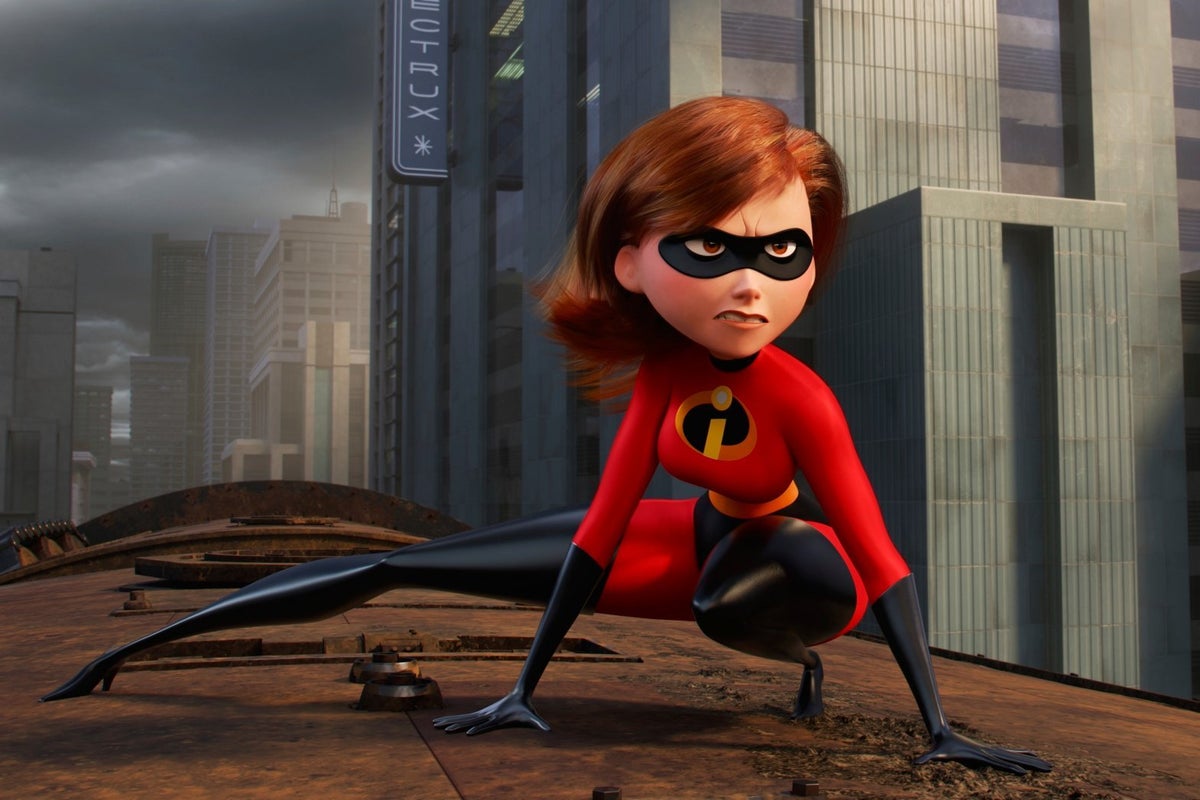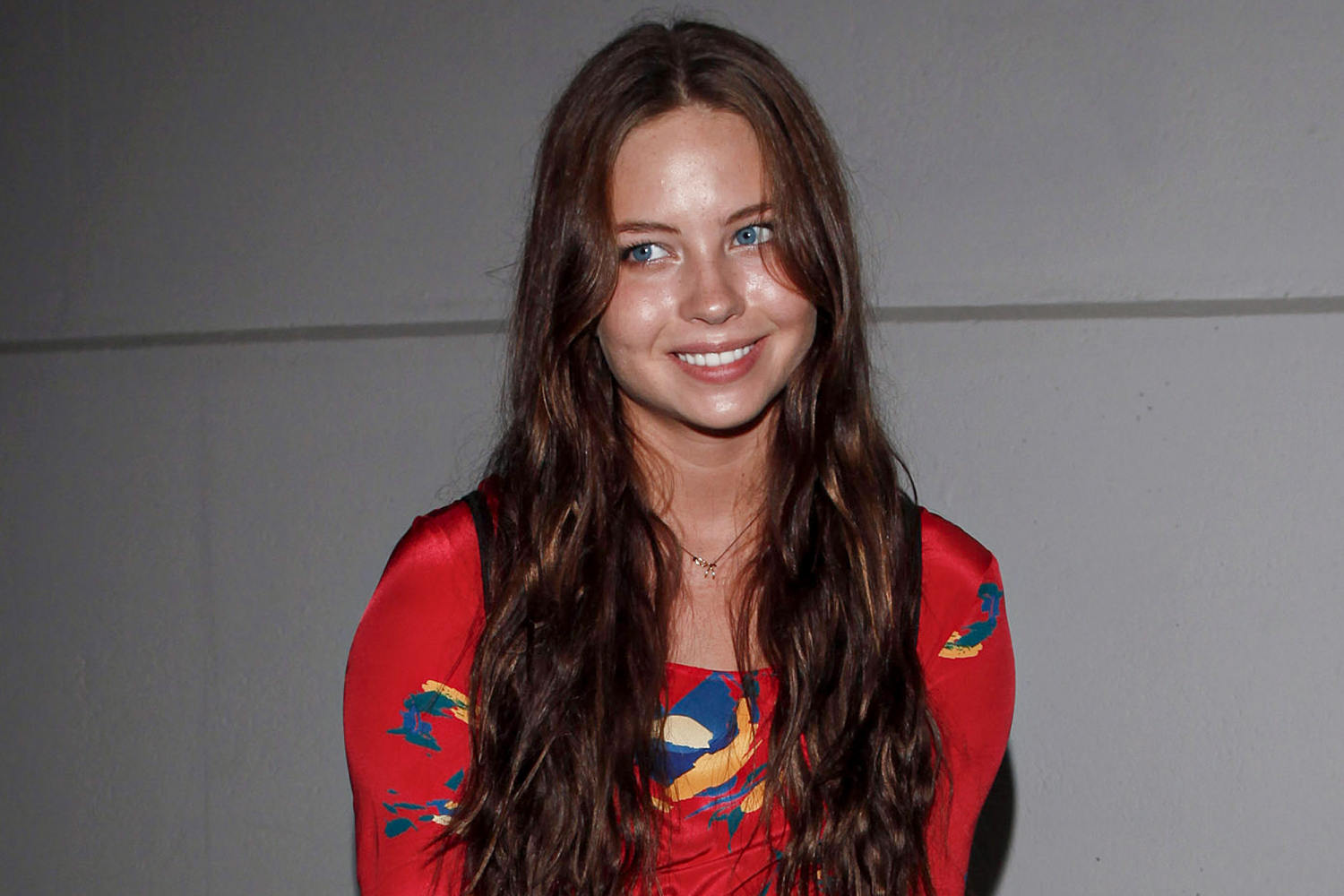
The year was 2002, and movie theaters were caught in a strange, beautiful sort of whiplash. In June, families sat in the dark, watching a lonely Hawaiian girl with a broken family adopt an erratic blue alien, teaching him that nobody gets left behind or forgotten. By October, those same theaters were filled with agonizing screams as a pale, waterlogged girl crawled out of a television screen, shattering the boundary between fiction and psychological torment.
The wildest part of that cinematic duality? Both of those girls were the exact same person. Also making news in related news: Inside the Theme Park Noise Crisis Ruining Suburban Life.
Daveigh Chase was only eleven years old when she pulled off one of the most staggering, polarized double-acts in modern Hollywood history. She gave us the warm, messy, fiercely loyal voice of Lilo Pelekai in Disney’s Lilo & Stitch, and then, with a simple tilt of her chin through a curtain of damp black hair, she became Samara Morgan in The Ring. She defined the childhoods of millions, and simultaneously defined their nightmares.
Now, at thirty-five, that voice has gone quiet. Further information on this are detailed by Entertainment Weekly.
When news broke of her passing, the standard headlines did what standard headlines always do. They listed the credits. They noted the age. They treated a human life like a Wikipedia entry that had reached its final edit. But to understand the loss of Daveigh Chase is to look past the cold dates and the box office statistics. It requires looking at what it means to carry the emotional weight of a generation before you are even old enough to drive.
The Girl Who Taught Us Family
Think back to the first time you watched Lilo & Stitch. Disney was in a transitional period, moving away from the grand, sweeping fairy tales of the nineties and trying to figure out what the new millennium looked like. They found it in a watercolor version of Kauai, built around a little girl who didn’t fit in.
Lilo wasn't a perfect princess. She threw tantrums. She fed sandwiches to peanut butter-allergic fish because she believed it controlled the weather. She was grieving her parents, screaming into pillows, and trying to navigate a world that felt entirely too big and hostile.
Behind the microphone stood Daveigh.
Voice acting is a notoriously difficult discipline, especially for a child. You are trapped in a sterile, padded room, staring at a script, stripped of the physical sets and costumes that help an actor find their footing. You have nothing but your vocal cords to convey centuries of cultural longing and immediate, sharp heartbreak. Yet, when Daveigh’s voice cracked as she explained the concept of Ohana, it didn’t feel like a line delivered by a child actor. It felt raw. It felt true.
An entire generation grew up using that specific phrase to define their own unconventional support systems. We repeated it to our friends, our broken families, our adopted pets. We found comfort in a little girl's fierce declaration of unconditional love.
But while audiences were still wiping away tears over a story about healing, Daveigh was already stepping into a very different kind of dark room.
The Shadow in the Well
The transition from a Disney recording booth to the damp, terrifying sets of Gore Verbinski’s The Ring is the kind of creative whiplash that could break a lesser performer.
Horror is a delicate mechanism. It relies heavily on the uncanny—the idea of something familiar being just slightly, terrifyingly wrong. There is nothing more familiar than a child, and nothing more terrifying than a child stripped of innocence.
As Samara Morgan, Daveigh didn't have the luxury of words. She had to communicate pure, malevolent sorrow through movement. The jerky, unnatural steps. The way she stared through the television screen, her eyes hollowed out by a tragedy that had turned into an infection.
Imagine being a pre-teen girl, spending your weekends covered in prosthetic mud and pale makeup, being told to embody the very concept of inescapable death. For audiences, Samara was a monster. For Daveigh, she was a character to be understood. In interviews from that era, she spoke about the character with a surprising amount of empathy, recognizing that Samara’s terror came from a place of deep abandonment.
It is a bizarre fate to be loved for your voice and feared for your face at the exact same moment in time.
Consider what happens when a child achieves that level of cultural saturation. You become a permanent fixture in the collective subconscious. You belong to the public. Your childhood is preserved in amber, playing on loop in living rooms and on late-night horror marathons across the globe.
But human beings do not stay preserved in amber. They grow up.
The Invisible Stakes of Growing Up in Public
The trajectory of child stardom is a story we think we know by heart. We watch from a distance, analyzing the career shifts, the quiet years, the shifts in the public eye. We assume that because someone was once everywhere, they must always possess an easy path forward.
The reality is far more complicated, and infinitely more fragile.
When the massive franchises quiet down, the silence that follows can be deafening. The roles change. The industry moves on to the next young face. A child actor has to reinvent themselves in real-time, all while trying to figure out who they actually are outside of the characters that made them famous.
Daveigh continued to work, appearing in cult classics like Donnie Darko as Samantha Darko, and lending her talents to various television series. Yet, the gravity of her early successes always pulled the narrative back. No matter what she did, she was always the girl from the well, or the girl from Hawaii.
It is a heavy thing to carry the ghosts of your past achievements before you have even reached your third decade. The pressure to replicate a lightning-in-a-bottle moment can become an invisible weight, shaping choices, relationships, and the quiet spaces between gigs. We, the audience, rarely see that part. We only see the red carpets or the lack thereof. We consume the art, but we rarely think about the toll it takes on the artisan to give away pieces of their childhood for our entertainment.
The Echo That Remains
Thirty-five years is not a long time. It is a life interrupted in the middle of its second act.
When an artist who defined our youth passes away, the grief we feel is complex. It isn't just sorrow for a person we didn't know personally; it is a sudden, sharp confrontation with our own mortality and the passage of time. The voice that comforted us when we felt lonely after school is now part of history. The character that made us pull the blankets over our eyes during teenage sleepovers belongs completely to the past.
But history has a way of keeping the right things alive.
Long after the news cycles move on to the next headline, a child somewhere will sit down in front of a screen. They will feel out of place, misunderstood, and lonely. They will press play, and they will hear a clear, stubborn voice defend a strange little alien, reminding them that family means nobody gets left behind.
And somewhere else, in the dead of night, a teenager will challenge themselves to watch a classic horror film, holding their breath as a figure emerges from the static of a forgotten era, feeling that exact same primal thrill of beautiful, orchestrated terror.
Daveigh Chase walked through the brightest lights and the deepest shadows Hollywood had to offer, leaving behind a legacy that refused to be just one thing. She gave us the courage to love our chosen families a little harder, and she gave us the safe thrill of being terrified in the dark.
The static fades. The screen goes black. But the voice stays in the room.