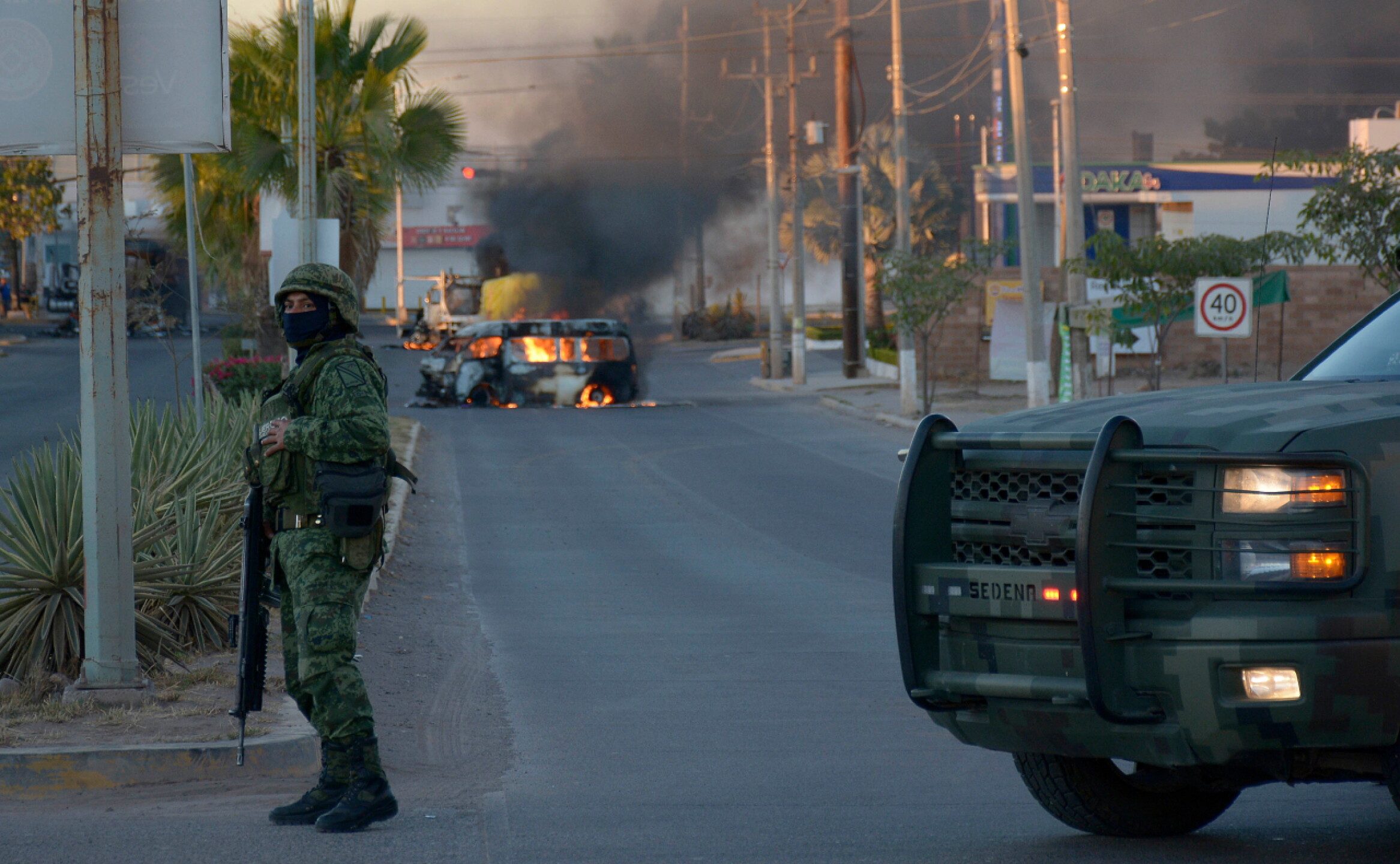
The closure of the Strait of Hormuz represents the ultimate stress test for global energy markets, creating a structural paradox where physical scarcity and speculative hedging collide. While news cycles focus on the immediate sensation of conflict, the underlying mechanics of oil pricing are dictated by the marginal cost of replacement and the velocity of spare capacity activation. If approximately 21 million barrels per day (bpd) of petroleum liquids—roughly 21% of global consumption—are obstructed at the Hormuz chokepoint, the market enters a state of "inelastic panic" where price discovery ceases to function based on fundamentals and shifts entirely to a fear-premium model.
The Triad of Global Oil Displacement
To understand why OPEC+ would consider a quota hike amidst a maritime blockade, we must first categorize the displacement into three distinct economic pressures.
- The Physical Deficit: This is the literal absence of molecules in the refinery intake stream. For Asian markets specifically, which absorb the majority of Hormuz-bound crude, this deficit is not merely a price issue but an existential industrial threat.
- The Logistic Friction: Rerouting oil via the East-West Pipeline (Saudi Arabia) or the Abu Dhabi Crude Oil Pipeline involves significant throughput limitations and higher operational expenditures. These pipelines can bypass the Strait but lack the aggregate capacity to replace the lost tanker volume.
- The Financial Multiplier: Every dollar increase in Brent crude is amplified by the "risk-on" behavior of algorithmic trading bots that front-run physical shortages.
OPEC+ intervention in this context is less about "stabilizing" the market and more about signaling resource availability to prevent a complete collapse of the global credit markets linked to energy derivatives.
The Mechanics of the OPEC+ Response Function
A reported hike in production quotas during a regional war seems counterintuitive unless viewed through the lens of Price Elasticity of Demand (PED). When prices spike too high, "demand destruction" occurs—industrial consumers switch to alternatives or cease operations, leading to a long-term loss of market share for oil producers.
OPEC+ uses a specific feedback loop to determine its intervention levels:
Spare Capacity vs. Actual Delivery
The primary constraint is that "quota hikes" do not equal "barrels on the water." Only a handful of members—primarily Saudi Arabia and the UAE—possess meaningful spare capacity that can be brought online within 30 to 90 days. For the rest of the cartel, a quota hike is a paper exercise. The strategic intent of an OPEC+ announcement during a Hormuz closure is to deflate the speculative bubble by promising future volume, even if the current maritime route is severed.
The Pipeline Arbitrage
Saudi Arabia’s East-West pipeline (Petroline) has a nameplate capacity of approximately 5 million bpd. During a Hormuz crisis, the strategy shifts to maximizing this terrestrial artery to the Red Sea. By increasing quotas, OPEC+ allows Saudi Arabia to surge production to the Red Sea terminals, partially bypassing the Persian Gulf bottleneck. However, this creates a secondary bottleneck at the Suez Canal and the Bab el-Mandeb strait, effectively shifting the geopolitical risk from one chokepoint to another.
Quantifying the Hormuz Risk Premium
The market price of crude during a conflict is composed of the Floor Price (production cost + standard margin) and the Geopolitical Risk Premium (GRP). Historically, the GRP for Hormuz-related tensions ranges from $10 to $30 per barrel, but a total closure triggers a non-linear escalation.
The cost function of a Hormuz closure can be modeled as:
$$C_{total} = (V_{lost} \times P_{spot}) + L_{extra} + I_{premium}$$
- $V_{lost}$: Volume of oil trapped behind the Strait.
- $P_{spot}$: The hyper-inflated spot price.
- $L_{extra}$: The additional logistics cost of rerouting.
- $I_{premium}$: The massive surge in maritime insurance (War Risk Surcharges).
When insurance underwriters see a kinetic conflict in the Gulf, they often revoke standard coverage. This forces tankers to wait outside the zone of conflict, effectively reducing the "floating storage" that the global economy relies on for just-in-time delivery.
Strategic Reserves and the Buffer Paradox
The role of the Strategic Petroleum Reserve (SPR) in the United States and similar stockpiles in China and India is to act as a "circuit breaker." However, the effectiveness of the SPR is limited by its discharge rate, not its total volume. If the US can only pump 4 million bpd out of its caverns, it cannot fully offset a 21 million bpd hole in the global market.
The market knows this. Therefore, an OPEC+ quota hike serves as a psychological counterbalance to the physical limitations of strategic reserves. It signals that the "taps are open," even if the "pipes are blocked." This is a battle of narratives aimed at preventing a parabolic price move that would trigger a global recession.
Impact on Refined Product Complicated by Sanctions
The complexity of the US-Iran relationship adds a layer of "sanction friction" to the analysis. If the US retaliates against Iranian infrastructure, the global supply of heavy sour crude—which many complex refineries in Asia are calibrated to process—drops significantly. Replacing Iranian or Kuwaiti grades with lighter US shale oil is not a 1:1 chemical substitution. Refineries face "yield loss" when they are forced to run crude grades they weren't designed for, leading to shortages in diesel and jet fuel even if total "crude" numbers seem adequate.
The second-order effect is the surge in Refining Margins (Crack Spreads). As crude becomes harder to source and transport, the cost of turning it into gasoline skyrockets. This hits the consumer twice: once at the raw material level and once at the processing level.
Structural Bottlenecks in Production Ramping
Increasing production is not a binary switch. It involves several technical hurdles that the Indian Express report glosses over:
- Wellhead Pressure Management: Forcing a surge in production can damage long-term reservoir pressure.
- Chemical Injection Requirements: High-volume extraction requires specific polymers and surfactants which may also be subject to supply chain delays.
- Labor and Equipment Mobility: In a war zone, getting technical crews to offshore rigs or remote desert sites becomes a high-risk operation, often leading to "force majeure" declarations.
These factors mean that even if OPEC+ "sets a hike," the actual flow of new oil may take months to manifest, leaving a dangerous gap in the interim.
The Shift to a Multi-Chokepoint Strategy
Energy security strategy is moving away from a single-point-of-failure model. The closure of Hormuz accelerates the following transitions:
- Investment in Bypassing Infrastructure: Expect a massive capital injection into pipelines that terminate in the Red Sea, the Gulf of Oman, and the Mediterranean.
- Hardening of Maritime Assets: The use of "dark fleets" and ship-to-ship transfers in non-contested waters to obfuscate the origin of oil and evade localized blockades.
- The Strategic Importance of the Northern Sea Route: As Arctic ice thinned, Russia began promoting the Northern Sea Route as an alternative to Suez and Hormuz. Kinetic conflict in the Middle East provides the necessary economic incentive for China and Europe to take this path seriously, despite the environmental risks.
The intersection of war and oil quotas is a study in Game Theory. Iran uses the threat of closure to gain leverage in sanctions negotiations; OPEC+ uses the promise of hikes to maintain its role as the global central bank of energy; and the US uses the SPR to keep its domestic economy from stagflation.
Operational Forecast for Energy Procurement
In the immediate term, industrial energy consumers must move from "Just-in-Time" to "Just-in-Case" inventory management. The era of cheap, reliable transit through the Persian Gulf is effectively paused. The strategic play is no longer about predicting if a disruption will happen, but about building Refinery Flexibility.
The most resilient players in the current market are those with the technical capacity to process "opportunity crudes"—discounted, non-standard grades—that are not dependent on Hormuz transit. Furthermore, the reliance on paper barrels (futures) must be hedged with physical storage assets. If the Strait closes, a long position in Brent futures won't keep a refinery running; only physical inventory on the correct side of the chokepoint provides true security.
Expect OPEC+ to finalize the quota hike not as a gift to the West, but as a defensive move to prevent the permanent acceleration of the global energy transition. If oil becomes too volatile, the capital flight into renewables and nuclear becomes an irreversible torrent, destroying the long-term value of the cartel’s underground assets. The goal is a "controlled burn" of the risk premium—high enough to be profitable, but low enough to keep the world addicted to the barrel.