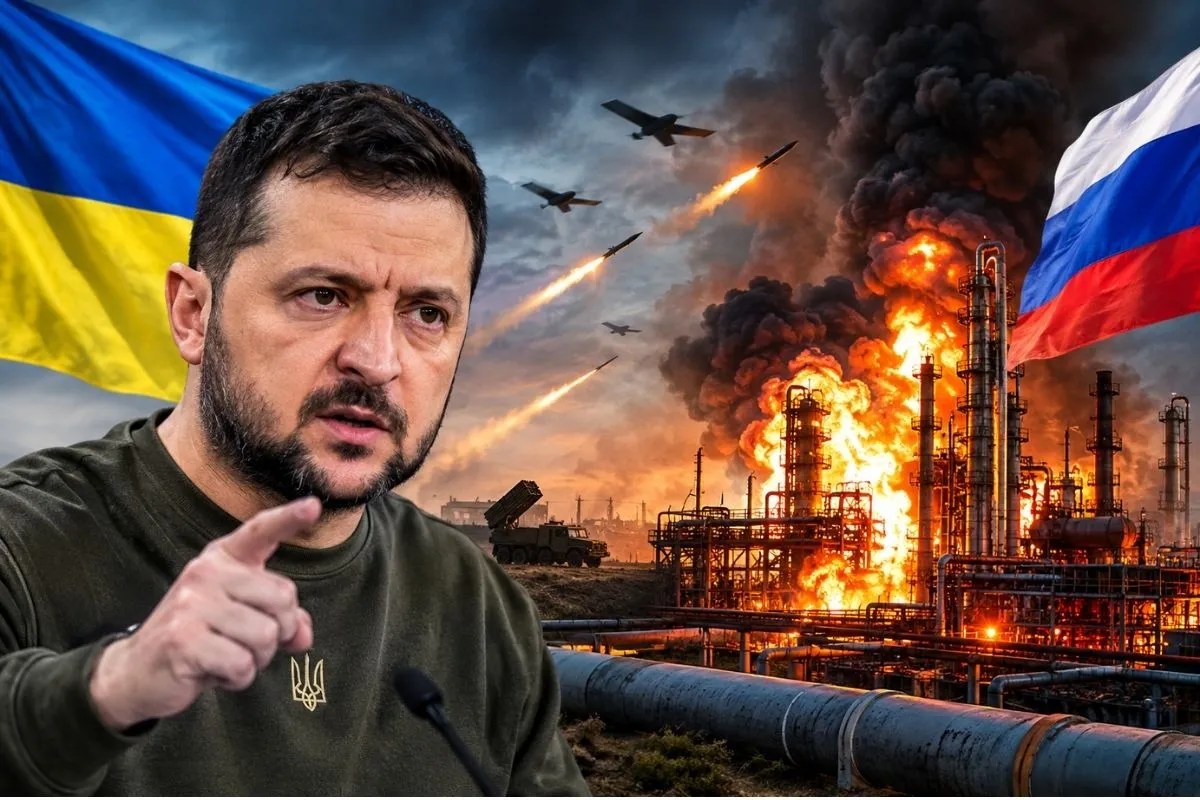
When Ukrainian President Volodymyr Zelenskyy stood up to announce that long-range drone strikes had effectively neutralized over 55% of Russia’s total oil refining capacity, it wasn't just a casual battlefield update. It was a clear signal that Kyiv is shifting the entire economic math of this war. Moscow keeps pounding Ukrainian power grids and civilian infrastructure as winter approaches, so Kyiv is answering in the only currency the Kremlin actually understands: petrodollars.
Let's be honest about what's driving this strategy. For months, international pressure—including warnings from Western allies worried about spiking global fuel prices—pushed Ukraine to ease up on Russian energy hubs. But as Russian strategy pivoted toward systematic destruction of bridges, logistics, and power plants to freeze out major cities, those diplomatic reservations evaporated. If Russia wants to plunge Ukrainian homes into darkness, Ukraine is going to cut off the very cash flow funding those missiles.
The Real Impact on Russia's War Machine
You can't finance a massive military campaign without a steady stream of revenue from fossil fuels. Refineries like those in Volgograd, Omsk, and various regional processing plants aren't just commercial enterprises; they are the literal gas stations supplying armor and airbases on the front lines.
When a swarm of long-range drones flies hundreds of kilometers deep into Russian territory to strike primary processing units, the damage goes far beyond a temporary fire. Specialized refinery equipment takes months—sometimes years—to repair or replace, especially under heavy international sanctions that block access to Western industrial tech. By chipping away at more than half of that refining capacity, Ukraine is forcing Moscow into a brutal logistical bind: prioritize fuel for domestic consumption, or keep the war machine running at full tilt.
Why Diplomacy and Oil Prices Failed to Stop the Strikes
Washington and other capitals spent much of the year sweating over how these drone operations might rattle global oil markets. Nobody wants a sudden energy shock right before winter. Yet, realpolitik has a way of cutting through theoretical caution.
Zelenskyy’s stance is blunt. If diplomatic channels fail to secure a freeze on attacks against civilian and energy infrastructure, the gloves stay off. Kyiv isn't targeting residential areas the way Moscow has; instead, they are laser-focused on the industrial assets keeping the Russian state solvent. It's a calculated escalation designed to prove that distance is no longer a shield. Whether you're a few hundred kilometers from the border or deep in Siberia, if your facility is churning out fuel for the invasion, it's on the radar.
The next phase of this conflict won't just be fought in the trenches of the Donbas. It's turning into a high-stakes war of attrition over industrial infrastructure, where the side that loses its energy backbone first loses the war.