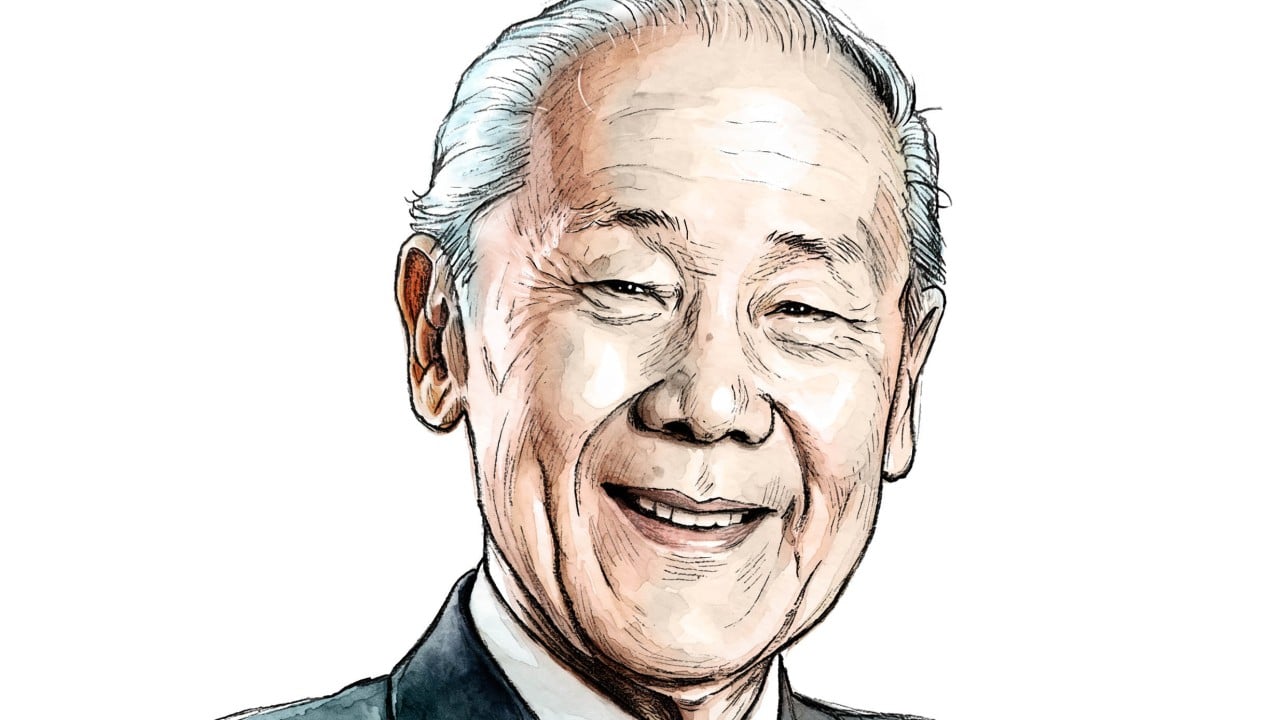
Most Western commentary on China suffers from short-term memory loss. Analysts obsess over quarterly GDP figures or current diplomatic squabbles, completely ignoring the structural weight of two millennia. To actually make sense of where Beijing is heading, you have to look through the eyes of Wang Gungwu. He is arguably the most insightful living historian on the Chinese world. Spanning over nine decades of observation, his work cuts through the noise of modern headlines. He doesn't look at China as an overnight phenomenon. He views it as a continuous civilization navigating its fourth major historical rise.
The Obsession With Unity
If you want to understand why Beijing reacts the way it does to territorial threats or regional fragmentation, look at how the Chinese state has dealt with chaos for thousands of years. Wang Gungwu points out that Chinese history isn't just a straight line of dynastic rule. It is marked by brutal civil wars, fragmentation, and centuries of north-south division.
Think about the Han Dynasty. It enjoyed three centuries of stability, followed by more than three hundred years of violent fracture. Smaller kingdoms fought constantly along the Yangtze River. Yet, every single faction fought for a single core idea. They believed there could only be one sun in the sky.
Division was always treated as an unnatural state of emergency. Unity wasn't just a political preference. It was a moral imperative deeply embedded in state ideology. When the Sui and Tang dynasties finally stitched the country back together after four centuries of chaos, it wasn't viewed as a new invention. It was a return to the natural order. Modern policymakers in Washington often miss this point. They assume unity is fragile. History tells us that for Chinese political culture, division is temporary and unity is permanent.
The Mechanics of the Fourth Rise
When Wang Gungwu talks about the fourth rise of China, he isn't just tossing around poetic metaphors. He is mapping a precise historical trajectory. The first rise was the Qin-Han unification that established the bureaucratic empire. The second was the Sui-Tang reunification that healed the fractures of the medieval era. The third came with the consolidation of the Ming and Qing dynasties.
The current era represents the fourth. After a grueling century of internal decay, foreign invasions, and revolutionary upheaval, China has managed to pull itself out of deep vulnerability. Each of these rises required massive institutional rebuilding. They also required reconciling internal diversity with absolute central control.
When the Qing dynasty fell, the old imperial framework shattered. The Nationalist government tried to build a modern nation-state but failed to unite the country effectively. The Chinese Communist Party took a different route, rejecting pure traditionalism, capitalism, and blind Sovietism to forge its own path. They drew on both Marxist structural discipline and deeply entrenched traditional concepts of statecraft. They forged the modern concept of the Chinese nation, bringing diverse ethnic minorities and regional populations under one administrative umbrella. Understanding this sequence explains why domestic stability always trumps external liberalization in Beijing's calculus.
Escaping the Cold War Straitjacket
During the Cold War, the global map was carved into two rigid camps. You were either with Washington or with Moscow. Most nations got sucked into this binary gravity pull. China took a much more dangerous and winding path.
Wang Gungwu has noted that Beijing initially experimented with various foreign models before realizing it had to find a native solution. When early radical experiments faltered, the country did something unexpected. It anchored its modern reforms back into the long continuity of its five-thousand-year civilization.
This is where external analysts get tripped up. They view modern Chinese strategy purely through the lens of twentieth-century politics. Wang argues you cannot separate current actions from deep-seated historical reflexes. Beijing doesn't see itself as a newcomer trying to upend a post-1945 Western order out of pure malice. It sees itself as an ancient civilization reclaiming its central place after a century or so of foreign humiliation and domestic collapse.
The Southern Perspective
Most academic studies of China are written from Beijing or Western capitals. Wang Gungwu offers something radically different. He spent decades studying China from the outside looking in, particularly from Southeast Asia.
Being born in Surabaya and raised in Malaya gave him a unique vantage point. He coined terms and categorized the migrant experience with precision long before globalization became a buzzword. He understood the complex loyalties of the overseas Chinese communities. They weren't simple political proxies for Beijing. They were pragmatic survivors navigating post-colonial nation-building in places like Malaysia and Singapore.
This southern perspective completely shifts how you view Chinese foreign policy. From Beijing's view, the southern maritime frontier has always been a space of trade, migration, and subtle influence rather than direct territorial conquest. When observers panic over modern infrastructure projects or trade routes in the Global South, they are ignoring centuries of historical patterns. China has always traded heavily with its maritime neighbors while maintaining a strict cultural boundary at home.
Why Historical Analogies Fail Today
We love simple historical comparisons. People constantly compare US-China tensions to the US-Soviet Cold War. Wang Gungwu cautions against lazy analogies. The Soviet Union was an ideological empire built on a universalist dogma that ultimately collapsed under economic weight and internal fracture.
China is different. It is a civilization-state. Its legitimacy doesn't rest on a transient political ideology alone. It rests on its ability to deliver security, internal unity, and economic competence while embodying an ancient cultural identity. When economic growth slows down, the leadership doesn't panic and rewrite the national identity. They lean harder into historical continuity.
If you ignore this dynamic, your forecasts will keep missing the mark. You'll expect sudden regime collapse or total capitulation to Western pressure when neither is remotely likely. Wang's work teaches us patience. History moves slowly in Beijing. Leaders there think in terms of centuries, not election cycles. They can afford to wait out short-term adversaries because they believe the long arc of civilization bends toward their eventual recovery.
Stop treating China as a temporary puzzle to solve. Start studying it as a continuous historical actor playing a very long game that began long before modern nation-states even existed.