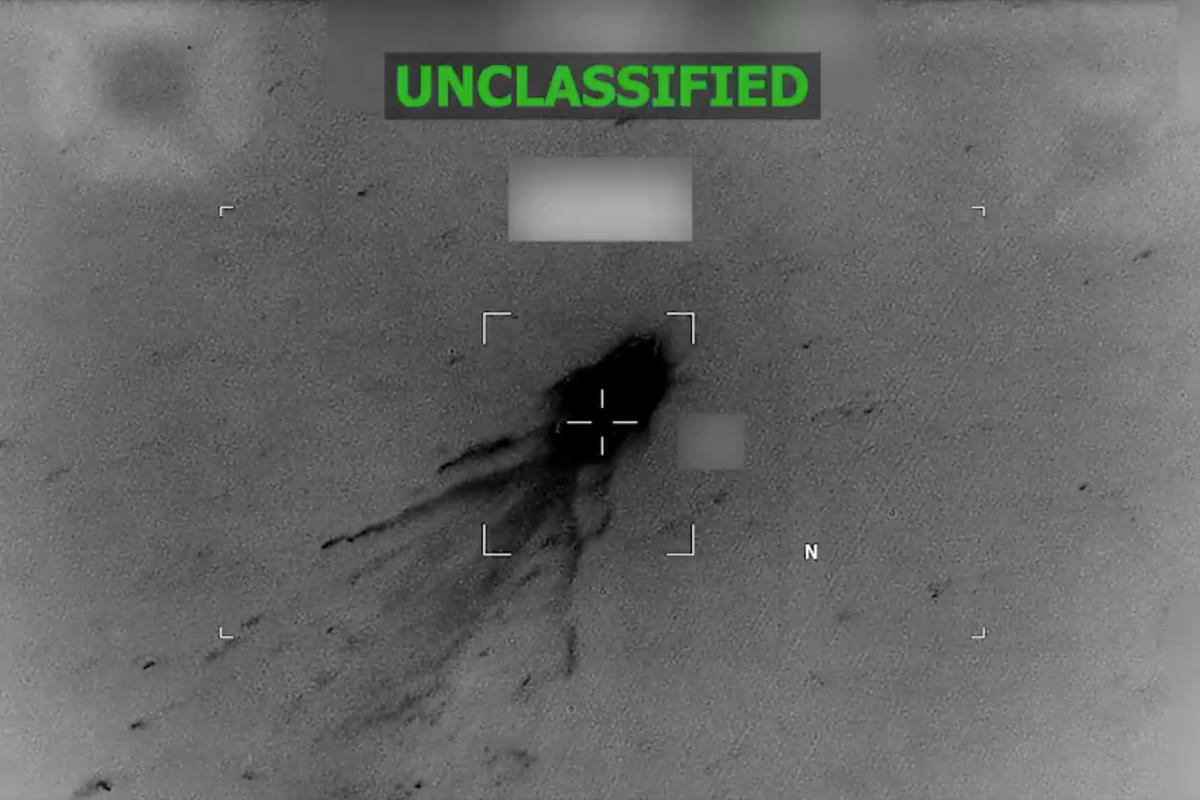
The black-and-white video footage posted on social media looks like something straight out of a Middle Eastern combat theater. A small, low-profile vessel cuts through the open waters of the eastern Pacific Ocean. Suddenly, a projectile streaks into the frame. A massive fireball erupts, obliterating the craft and sending debris showering into the sea.
But this isn't a strike against an enemy navy or an insurgent stronghold. It’s part of "Operation Southern Spear," the White House’s heavily militarized crackdown on maritime drug smuggling. Since early September 2025, the U.S. military has quietly but aggressively expanded a lethal campaign of airstrikes and naval attacks in the Caribbean Sea and eastern Pacific. If you found value in this post, you should read: this related article.
The human cost is mounting fast. Recent tallies show that at least 199 people have been killed in more than 60 maritime strikes. The administration justifies the violence by labeling the targets "narco-terrorists" and "unlawful combatants." Yet, despite the rising body count, the strategy isn't working.
Drug policy analysts, public health researchers, and even high-ranking military commanders openly admit that blowing up small boats does virtually nothing to dent the actual availability of illicit narcotics on American streets. If you think heavy weaponry can solve a supply-and-demand crisis, you're missing the basic economics of the global drug trade. For another look on this event, check out the latest update from BBC News.
The Flawed Logic of Maritime Airstrikes
The fundamental premise of the current administration's campaign is that lethal deterrence will scare smugglers off the water. The White House has claimed that these operations save tens of thousands of lives by vaporizing shipments before they reach U.S. shores. Defense Secretary Pete Hegseth and other officials maintain that the tactics comply fully with the laws of war, arguing that the U.S. is engaged in a formal "armed conflict" with Latin American cartels.
The math simply doesn't hold up. For one thing, the Pentagon has rarely provided public evidence showing what narcotics—or what quantities—were actually aboard the vessels they destroyed. In one instance, the administration claimed floating bags of fentanyl were visible after a strike, though independent aerial video reviews showed no such thing.
More importantly, treating international smuggling as a standard military target ignores how cartel networks operate. Organized crime groups don't stop when a boat goes down. They adapt.
When one maritime route becomes too hot, traffickers immediately pivot. They switch to container ships, commercial air cargo, or legal ports of entry where billions of dollars in legitimate trade cross the border every day. Data from U.S. Customs and Border Protection shows that the overwhelming majority of hard drugs like fentanyl enter the country hidden inside commercial vehicles and passenger cars, not on speedboats in the open ocean.
What the Numbers Tell Us About the Street Supply
If the U.S. military’s bombing campaign were successfully choking off the supply of contraband, basic economics dictates that the domestic price of those drugs would skyrocket. When a commodity becomes scarce, its street value goes up.
That isn’t happening. Public health researchers tracking the illicit drug market report that the street prices of major narcotics have remained remarkably stable. According to Nabarun Dasgupta, an addiction scientist at the University of North Carolina who specializes in street drug epidemiology, cocaine prices in major U.S. cities have held steady at roughly $60 to $100 per gram. The steady pricing is clear evidence that the total volume of drugs flowing into the country remains largely unaffected by the high-profile operations at sea.
An independent analysis by the Washington Office on Latin America (WOLA) revealed that the monthly average for drug seizures during the initial months of the bombing campaign barely budged compared to previous years. Between September 2025 and January 2026, seizures averaged 6,178 pounds per month. In the year leading up to the campaign, the monthly average was 5,866 pounds.
The slight uptick doesn't mean law enforcement is winning. It simply reflects the staggering, consistent volume of illegal narcotics moving through global supply chains. As WOLA’s research director Adam Isacson bluntly observed, the military strikes aren't moving the needle at all.
The Growing Legal and Strategic Backlash
Beyond the lack of practical results, Operation Southern Spear has sparked fierce pushback from international legal scholars and human rights organizations. Many argue that blowing up small civilian craft without a trial amounts to extrajudicial execution. Under traditional maritime law and the laws of armed conflict, using lethal force against individuals who do not pose an immediate, deadly threat is highly restricted.
The secrecy surrounding survivors makes the situation worse. Out of nearly 200 fatalities, the U.S. military has reported only a tiny handful of confirmed rescues. Investigations have revealed instances where individuals survived an initial strike, only to be targeted again or left to die at sea. The Pentagon's internal watchdog announced an evaluation into whether the military is properly executing its joint targeting protocols, though the review stops short of ruling on the absolute legality of the campaign.
Even the military leaders tasked with executing these orders recognize the limitations of the strategy. In March 2026, Marine General Francis Donovan, the commander overseeing U.S. Southern Command, testified before the Senate Armed Services Committee. His assessment was remarkably candid. While he noted that the strikes force traffickers to alter their patterns, he stated clearly that boat strikes are not the definitive answer to the drug crisis, calling them merely one tool among many, and likely not the most effective one.
The aggressive, unilateral nature of the strikes is also harming long-term security partnerships. For decades, maritime interdiction relied heavily on intelligence sharing and cooperation with allies like France, the Netherlands, and various Latin American nations. When the U.S. chooses to bomb vessels rather than intercept them and process suspects through the legal system, it alienates international partners who refuse to be associated with potential war crimes.
Shifting Focus to What Actually Works
The hard truth is that the U.S. cannot bomb its way out of a drug epidemic. Decades of the traditional drug war have proven that targeting the supply side yields temporary disruptions at best. Criminal networks are too decentralized, too well-funded, and too agile to be stopped by naval blockades or drone strikes.
To make a real impact on the drug crisis, policy focus must shift from theatrical displays of military might toward domestic, evidence-based solutions.
- Fund Demand-Reduction Programs: The driving force behind the illegal drug trade is the insatiable demand within American borders. Expanding access to voluntary, high-quality substance use disorder treatment does far more to shrink cartel profits than destroying a speedboat.
- Invest in Harm Reduction: Deploying public health resources like naloxone, drug-checking infrastructure, and community-led overdose prevention programs saves lives immediately. It addresses the crisis as a public health reality rather than a military theater.
- Enhance Port-of-Entry Technology: Since the vast majority of synthetic drugs enter through legal crossings, funding advanced scanning technology and intelligence-driven inspections at commercial ports is far more effective than chasing low-profile vessels across millions of square miles of open ocean.
Blowing up boats makes for a dramatic political statement and a violent online video. But as long as the underlying economic incentives and domestic addiction crises remain unaddressed, new smugglers and new routes will always emerge to take their place.