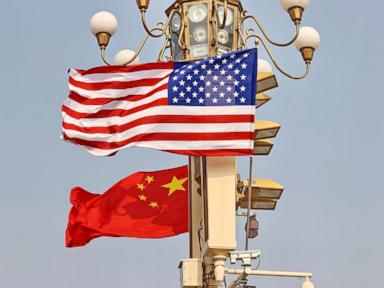
Every time Beijing slaps a restriction or an exit ban on a foreign passport holder, Washington reaches for the exact same playbook. State Department officials step up to a podium, furrow their brows with theatrical gravity, and declare the detention arbitrary, wrongful, and entirely unprovoked. The press corps nods along. The narrative solidifies instantly. Another innocent tourist or corporate expat caught in the gears of an authoritarian machine.
It makes for clean television. It also completely misunderstands how geopolitical leverage works.
I spent a decade navigating high-stakes cross-border compliance and corporate intelligence before I got tired of watching smart people walk straight into obvious geopolitical minefields. I have sat in boardrooms where executives map out expansion strategies in restrictive jurisdictions while treating local espionage laws like parking tickets. When the inevitable hammer drops, the same executives run to embassy contacts demanding a rescue mission.
The lazy consensus in mainstream coverage suggests these detentions are random acts of diplomatic hostage-taking, or sudden, unprovoked outbursts of state paranoia. That framing comforts us because it implies the victim did everything right. But if you look at the actual statutory frameworks inside foreign jurisdictions—particularly the sweeping updates to anti-espionage and data security laws in places like China—the reality is far uglier. These detentions are rarely random. They are the predictable outcome of foreign nationals operating inside legal definitions of state security that make Western corporate behavior look like industrial sabotage on paper.
The Fiction of the Naive Tourist
Let us dismantle the primary myth: the idea that ordinary travelers and mainstream business consultants are stumbling into these situations blind.
Look closely at the cases that trigger State Department declarations. They almost always involve individuals conducting corporate due diligence, gathering proprietary market data, or interacting with domestic entities that handle sensitive supply chains, tech infrastructure, or government contracts. To a compliance officer in Chicago, downloading a public company registry or talking to an industry expert is standard Tuesday morning research. To a counter-intelligence bureau in Beijing governed by an expansive anti-espionage statute passed in 2023, that exact same behavior hits every single tripwire for illegal intelligence gathering.
Washington refuses to state the obvious truth because doing so admits institutional failure. The State Department cannot simultaneously issue generic, toothless travel advisories that warn people to "exercise increased caution" while admitting that normal business operations in these markets now constitute borderline espionage under local law. Doing that would require telling American multinationals to pull their boots off the ground. It would require admitting that economic decoupling is already happening in the shadows, one detained executive at a time.
Instead, they issue the standard "wrongful detention" designation. It is a diplomatic pressure valve. It signals to domestic audiences that the administration is taking action, while providing zero actual deterrence to the foreign power holding the passport.
The Economics of Diplomatic Posturing
Why does this cycle repeat? Because both sides benefit from the friction, albeit for different reasons.
For Beijing, detaining high-profile foreign nationals serves as a blunt instrument of state signaling. It establishes a hard perimeter around domestic information control. It sends a message to domestic industries and foreign competitors alike: data is sovereignty, and treating our markets like an open book has a steep entry fee.
For Washington, the "wrongful detention" tag is a cost-effective substitute for actual strategy. Designating a citizen as wrongfully detained activates the Office of the Special Presidential Envoy for Hostage Affairs. It shifts resources, generates headlines, and creates the illusion of a rescue operation in motion. But behind closed doors, everyone knows the mechanics of release rarely involve moral arguments or appeals to international norms. They involve high-level prisoner swaps, commercial concessions, or quiet backroom horse-trading that the State Department pretends it never engages in.
I have seen companies blow millions on crisis PR firms after their regional directors get flagged at customs, hoping that a blitz of op-eds in Western media will shame a superpower into releasing their employee. It is a catastrophic waste of capital. Authoritarian regimes do not care about your New York Times op-ed. In fact, public pressure campaigns often backfire, raising the political cost for the host government to back down without looking weak.
The Uncomfortable Reality of Sovereign Risk
We need to redefine how we talk about sovereign risk. For decades, globalization taught executives to treat national borders like speed bumps. Capital flowed freely, talent moved across time zones, and local laws were viewed through the benign lens of regulatory friction rather than existential threat.
That era is over. The legal architecture has shifted beneath our feet, and the West refuses to update its mental model.
When you send an employee into a jurisdiction with sweeping national security laws while they carry laptops containing proprietary supply chain mappings, you are playing Russian roulette with a fully loaded magazine. Calling the detention wrongful after the fact does not absolve leadership of negligence. It just proves they failed to understand the rule of law as it is actually practiced, rather than how international law textbooks wish it were practiced.
My contrarian approach has a major downside: it puts the burden of responsibility squarely back on the individual and the corporation, rather than allowing them to play the victim of geopolitical weather. It strips away the comforting narrative that you can ignore foreign state security apparatuses and rely on the U.S. Marines to bail you out with a well-worded press release.
The Rules of Engagement Have Changed
If you are still operating under the assumption that diplomatic protection shields your personnel from local legal realities, you are a liability to your own organization.
- Audit your information flows: If your on-the-ground research mimics intelligence gathering under a hostile legal definition, change your methodology immediately.
- Treat travel advisories as politics, not guidance: Level 3 and Level 4 travel warnings are legal shields for the government, not accurate assessments of your corporate risk profile.
- Accept the cost of isolation: If a market requires you to break local laws to get actionable intelligence, you should not be in that market. Period.
Stop waiting for the State Department to save your business model from the reality of great power competition. They are too busy drafting press releases about a game they stopped controlling years ago.