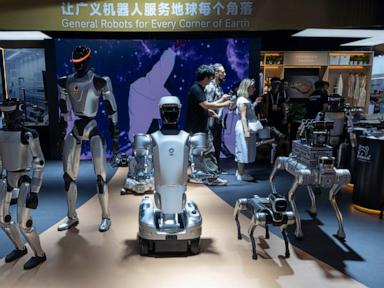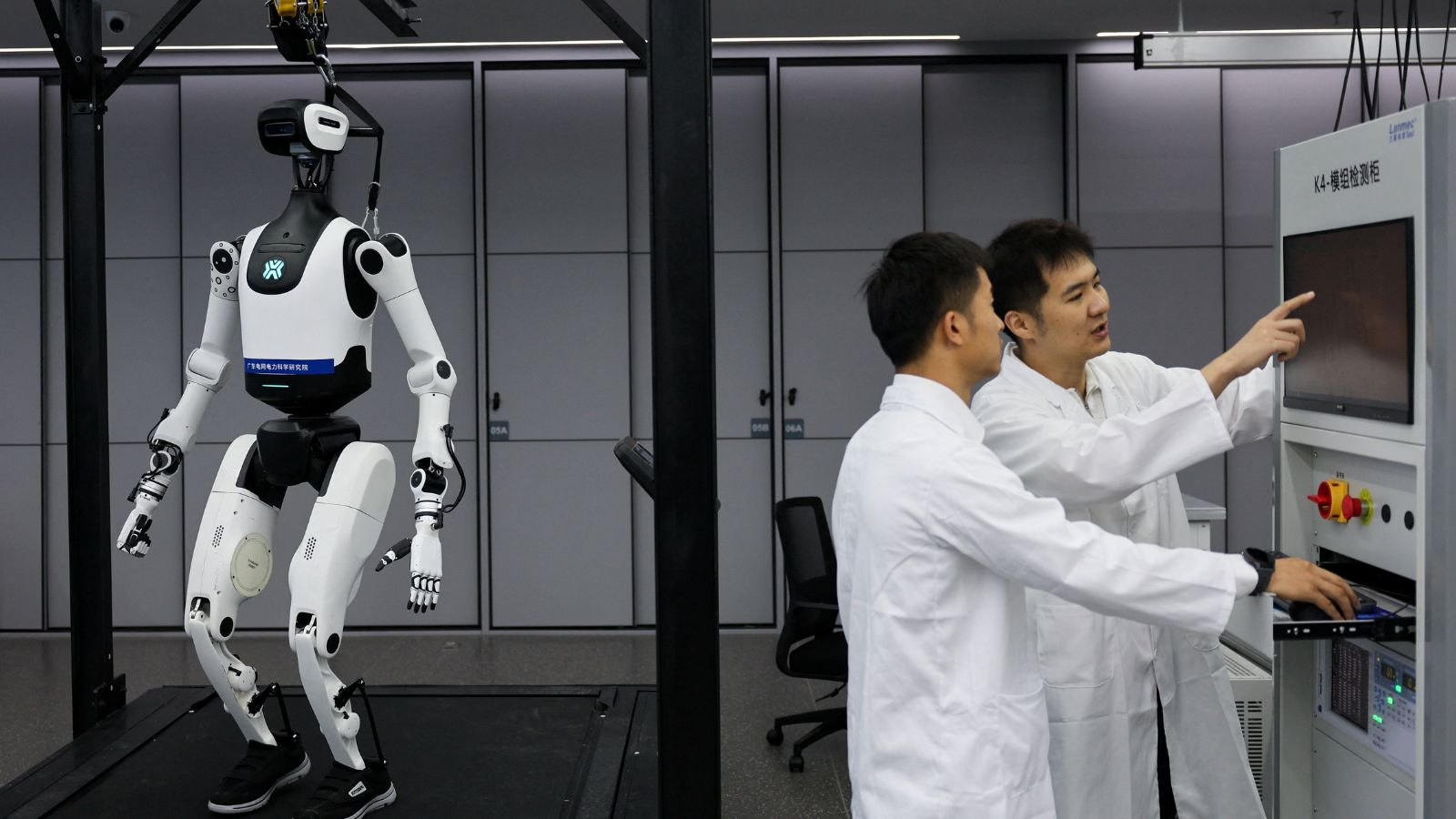
Washington just slammed the door. If you thought hardware trade tensions were cooling down, think again. The administration under Donald Trump has taken a massive swing at the robotics sector. Beijing's newest humanoid creations are officially blocked from entering American markets.
It's a bold move. It changes the chessboard overnight. Recently making waves lately: Inside the Memory Market Panic Why Record Profits Still Triggered a Tech Rout.
You aren't just looking at a simple tariff bump or a slap on the wrist. This is a hard technical blockade aimed directly at the software and mechanical engineering coming out of Asian laboratories. Why now? Because the speed at which these mechanical bodies learned to walk, run, and manipulate objects caught national security experts completely off guard.
The Core Risk Behind the Ban
Let's talk about what's actually happening underneath the polished carbon-fiber chassis. Humanoid machines aren't just expensive toys or factory arms bolted to a floor. They process vast amounts of spatial data. They map rooms, read thermal signatures, and track human movement with terrifying precision. Additional information into this topic are covered by MIT Technology Review.
When you deploy a machine that looks and moves like a person inside a logistics hub, a hospital, or a warehouse, you invite an incredible amount of sensory hardware into your infrastructure.
Washington officials looked at this hardware and saw a Trojan horse.
Sensors fail safely until they don't. Cameras record. LiDaR scanners map. Telemetry streams back to home servers. Lawmakers decided they couldn't trust where that data pipeline ended up. Security analysts have been screaming about this for months. You can't separate the physical machine from the digital network it feeds.
What the Competitor Reports Missed
Most mainstream coverage treats this like a standard supply chain dispute. They talk about chips, trade deficits, and manufacturing hubs. They miss the real story entirely.
This isn't about factory competition. It's about kinetic autonomy.
Chinese engineering firms managed to slash production costs for bipedal systems down to fractions of Western estimates. You could buy a functional mechanical worker for the price of a mid-tier car. That affordability terrified legacy industrial nations. If automated workers flood Western supply chains at that price point, local tech ecosystems get wiped out before they can mature.
Beyond economics, the software layer is where the real battle lies. These machines run on complex neural networks trained on massive reinforcement learning models. The administration didn't just ban the metal and the actuators. They banned the cognitive architecture powering them.
The Economic Backlash You Won't Hear About
Factories across the US rely on automation to stay competitive. Labor shortages are real. Finding people willing to work grueling shifts in fulfillment centers keeps getting harder.
Business owners are furious.
I've spoken with supply chain operators who had multi-million dollar pilot programs lined up with eastern hardware providers. Those contracts are dead on arrival now. They have to scramble for domestic alternatives that cost three times as much and deliver half the performance right now.
It hurts. Innovation slows down when you artificiality restrict the marketplace.
Yet, the strategic planners in Washington don't care about short-term operational friction. They care about long-term survival. They believe letting foreign-controlled androids anchor US supply chains creates a vulnerability you can never patch out.
How This Rewrites the Rules of Global Tech
The global tech landscape is fracturing into distinct digital and physical blocs. You won't see universal standards anymore.
If you build hardware in one bloc, you can't sell it in the other. Period.
Startups need to adjust their funding pitches. If your supply chain touches restricted territories, venture capitalists won't touch you. They refuse to fund hardware that might get embargoed tomorrow.
We are moving away from an open-source global manufacturing model. Localization is the only game left in town.
What You Need to Do Right Now
If you're building in the robotics space, stop relying on imported sub-assemblies immediately. Diversify your sourcing before the regulatory net tightens further.
Audit your supply chain today. Find out where every single microchip, actuator, and sensor comes from.
Compliance is your biggest product feature now. Ignore it and watch your capital burn.