Panic sells. Calm expertise does not.
Every time a Chinese automaker rolls a vehicle into a Western trade summit or parks a sleek electric car near Capitol Hill, the media machinery spins up the panic generators. The standard narrative writes itself with zero effort. We get breathless warnings about Trojan horses on four wheels, rolling data collection devices, and state-subsidized juggernauts coming to crush domestic manufacturing.
It is a comfortable narrative. It fits neatly into the geopolitical cold war script. And it is fundamentally lazy.
I have spent the last decade watching legacy automotive executives panic in boardrooms, burning billions on defensive lobbying while ignoring the actual physics of global manufacturing and software integration. They want you to believe this is a straightforward battle of national security and protectionist tariffs. They want you focused on the red flag waving from the bumper.
They are looking at the wrong threat entirely.
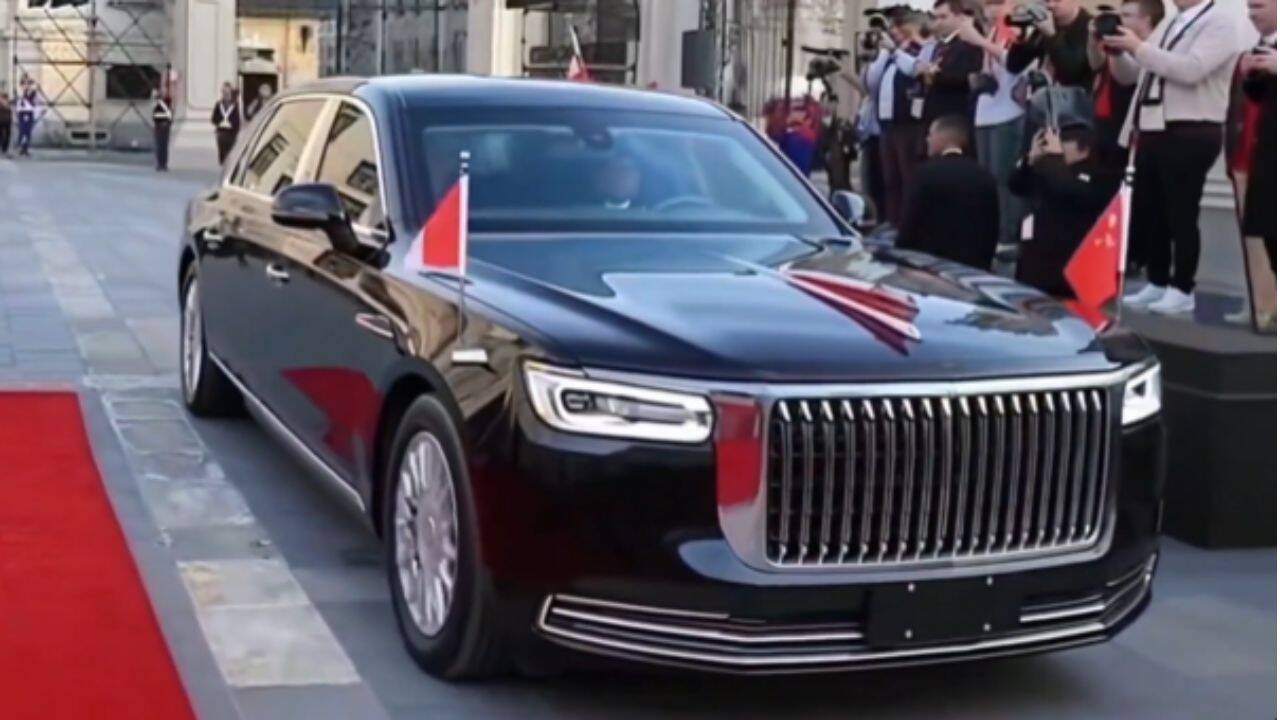
China did not bring a red flag to Washington to spy on your morning commute or map out federal parking garages. They brought it because they understand something Detroit, Stuttgart, and Wolfsburg refuse to accept. The automotive industry is no longer about mechanical engineering, sheet metal stamping, or even horsepower. It is a consumer electronics supply chain disguised as a car. And the West lost that supply chain a decade ago.
The Myth of the Rolling Surveillance Pod
Let us dismantle the primary panic point first. The prevailing wisdom claims that connected Chinese electric vehicles are vacuuming up sensitive telemetry, monitoring American highways, and feeding everything straight back to Beijing.
If this sounds familiar, it is because it is the exact same playbook used against telecommunications equipment providers years ago. The argument relies on technological mysticism. People treat modern cars like magical spy boxes rather than what they actually are: computers on wheels with poor battery thermal management.
Every modern car on the market, regardless of whether it was built in Michigan, Munich, or Shenzhen, is a rolling sensor suite. Cameras, lidar, radar, ultrasonic sensors, GPS receivers, and cellular modems are standard equipment. Your Ford F-150 collects more diagnostic and location data than you realize. Your Tesla is constantly mapping roads and uploading neural network training data.
The security concern is real, but our panic is hypocritical. The data risk is an architecture problem, not a passport problem. If a vehicle runs proprietary closed-source firmware with hardcoded telemetry pipelines back to domestic servers, it represents a vulnerability whether those servers sit in Shanghai or Silicon Valley.
Washington is focusing on the flag on the hood instead of the software bill of materials. By framing this as a geopolitical invasion rather than a software sovereignty crisis, policymakers are crafting blunt tariff instruments for a surgical software problem. Tariffs will keep the physical metal out of the country. They will do nothing to stop the underlying software architecture from dictating the future of global mobility.
The Cost Structure Fallacy
Let us address the second pillar of the conventional wisdom: the subsidy myth.
The Western consensus loves to argue that Chinese electric vehicles are cheap solely because of direct state intervention. Billions in government grants, free land, cheap loans, and state-directed supply chains, they claim, allow companies to dump cars below cost to obliterate foreign competition.
There is truth to this, but it is a half-truth used as a security blanket by executives who missed the boat.
I have walked through Tier 1 manufacturing facilities in Zhejiang and compared them with legacy plants in the Midwest. The cost advantage is not just about state subsidies or suppressed wages. It is about vertical integration, iterative speed, and supply chain concentration.
When a Chinese EV manufacturer builds a car, the battery cell plant is often down the road. The rare earth processing is in the same province. The software team sits in the same office park as the assembly line. They iterate hardware designs every six months because their suppliers are agile enough to handle rapid change.
Compare that to legacy Western automakers. They are hamstrind by legacy supplier contracts, bureaucratic procurement processes, unionized negotiations, and legacy dealer networks that siphon margins. They treat software as an outsourced add-on rather than the core operating system of the vehicle.
When you buy a traditional car, you are paying for a century of legacy overhead, dealer markups, complex multi-tier supply chains with bloated margins, and internal combustion engine transition costs. When you buy a modern Chinese EV, you are buying a product built from the ground up for a software-defined era.
Pretending that subsidies are the only reason these vehicles are affordable is an excuse to avoid hard structural reform. It is easier to cry foul at the World Trade Organization than to admit your cost structure is broken.
The Real Threat Is Market Ambition, Not Espionage
If the espionage narrative is overblown and the subsidy narrative is a convenient distraction, what is the actual threat?
It is competence.
Chinese automakers are not trying to conquer Western markets by force. They are arriving with superior user experiences, faster charging architectures, better infotainment software, and aggressive price points that expose the complacency of domestic brands.
For years, Western automakers treated software in cars as an afterthought. They outsourced it to traditional tier-one suppliers who delivered clunky, laggy interfaces that made a ten-year-old smartphone look responsive. They assumed consumers would forever accept terrible navigation systems and uninspired digital dashboards because the badge on the hood said prestige.
Then came competitors who treated the car cabin like a consumer living room, integrated voice assistants that actually work, and built charging networks that make range anxiety a relic of the past.
By the time Western executives woke up, the gap had widened from inches to miles. Now, instead of competing on product merit, the incumbent establishment relies on trade barriers to buy time.
Tariffs are a sedative. They soothe the pain in the short term while killing the muscle tone required to survive in the long run. When you shelter a domestic industry from brutal global competition, you do not make it strong. You make it fragile, entitled, and obsolete.
What Happens When the Walls Go Up
Imagine a scenario where Washington successfully builds an impenetrable wall around the American automotive market. Tariffs climb to one hundred percent. Regulatory hurdles become insurmountable. Chinese brands are entirely locked out of the domestic market.
Does Detroit win?
Only on paper. Protected from the pressure of hyper-competitive global rivals, domestic automakers will slow down their EV transitions. They will double down on high-margin internal combustion trucks and SUVs, milking the past while the rest of the world moves on.
Meanwhile, Chinese automakers will dominate every other market on the planet. They will win Europe, Southeast Asia, Latin America, and the Middle East. They will refine their manufacturing scale, lower their battery costs further through relentless iteration, and build massive global supply chains that dwarf anything the West can muster.
By the time the protected domestic market is finally forced to face reality, the technological delta will be unbridgeable. You cannot legislate your way into technological leadership. You can only earn it through competition.
The red flag in Washington was never a weapon. It was a mirror. It reflects a domestic industry that forgot how to build for the future and decided to barricade the doors instead.
Stop worrying about what is hiding in the glove compartment. Start worrying that by the time our policymakers finish drafting their tariffs, there won't be anything left worth protecting.