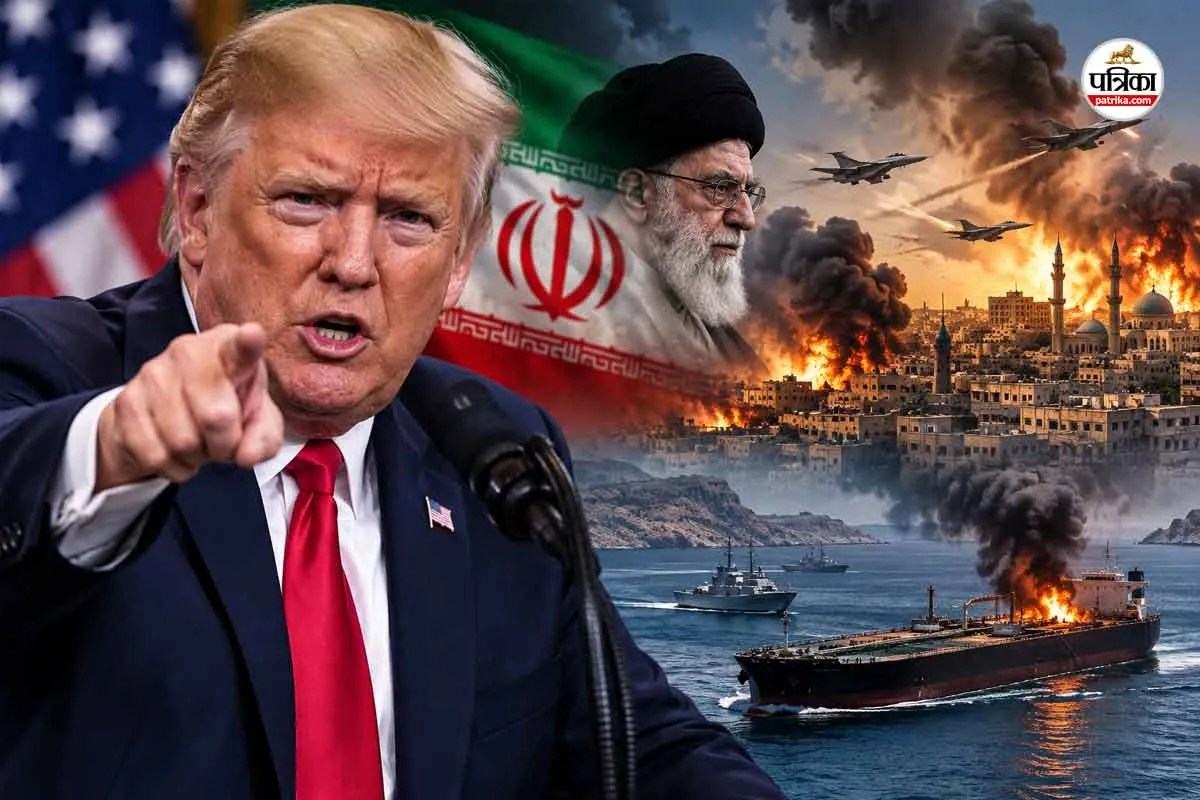
The headlines scream about impending apocalypse every time a missile twitches in the Middle East. Sanaa gets hit, Tehran gets finger-pointed, and cable news anchors dust off their dramatic maps while Washington politicians issue grave warnings about escalating regional chaos. The lazy consensus tells you we are staring down the barrel of a catastrophic global war, anchored by predictable geopolitical tropes and old Cold War reflexes.
Everyone is looking at the wrong map. Discover more on a similar issue: this related article.
I have spent decades watching foreign policy analysts trade in recycled anxiety. They treat every flare-up as an existential detonation point, ignoring the cold, transactional calculus driving actual state behavior. The noise surrounding Iran and the theater of proxy strikes is designed to obscure a far more mundane reality: this is not a march toward Armageddon. It is a managed friction zone, and the panic is the product.
The Myth of Imminent Regional Conflagration
Let us strip away the theatrical warnings coming out of Western capitals. Every time a retaliatory strike hits a regional outpost, commentators hyperventilate about blockades, oil shocks, and total war. They rely on linear thinking. If A hits B, then B must obliterate C, leading straight to a global economic seizure. More reporting by The Washington Post explores comparable perspectives on the subject.
History shows us the opposite. Major powers and entrenched regional actors spend enormous amounts of energy ensuring conflicts remain carefully bounded. Iran does not want a direct conventional war with the United States or its heavily armed allies any more than Washington wants to occupy a mountainous nation three times the size of Iraq with a population that makes historical quagmires look like weekend camping trips.
When Trump issues stern warnings or Sanaa absorbs airstrikes, observers mistake tactical signaling for strategic escalation. The Islamic Revolutionary Guard Corps operates on a doctrine of asymmetric friction, not suicidal self-destruction. They run a network of proxies precisely to maintain plausible deniability and keep the battlefield outside their borders. To read these exchanges as precursors to a grand regional holocaust is to fundamentally misunderstand how modern deterrence works. Both sides are playing a high-stakes game of chicken with air bags deployed.
Follow the Money Not the Rhetoric
If you want to understand why the Middle East stays perpetually bruised without ever quite breaking into total catastrophe, look at balance sheets, sanctions evasion networks, and energy markets.
Sanctions enforcement against Tehran has evolved into a sprawling bureaucratic cottage industry. For every tightening of financial restrictions, a shadow fleet of tankers swaps flags in the dead of night off the coast of Malaysia or the Persian Gulf, moving heavy crude to refineries willing to look the other way for a discount. The financial lifeblood of the regime does not dry up; it simply reroutes through complex, opaque intermediaries.
Western defense contractors, meanwhile, reap record windfalls every time a politician beats the war drum. Threat inflation is a fantastic business model. When the narrative frames Iran as an imminent existential threat to global stability, military budgets sail through legislative bodies without meaningful oversight
Why Every Headline About Iran and Trump is Missing the Real Danger
news
The lazy consensus in international reporting runs on pure autopilot. Turn on the news or scroll through a feed today, and you are fed a tired script. Air strikes hit Sana'a, a bombastic warning drops from Washington, and the pundit class loses its collective mind over the immediate escalation. The narrative is always the same: a flashpoint in the Middle East is about to plunge the globe into total chaos because two volatile sides are rattling sabers.
It is loud, it is urgent, and it is completely wrong.
Strip away the geopolitical theater, and you find a massive analytical blind spot. Everyone is staring so hard at the incoming missiles and the social media threats that they are missing the structural reality of how modern conflict actually operates. Wars between major states and entrenched regional networks are no longer decided by who has the loudest rhetoric or who strikes first in a localized skirmish. They are cold, calculated grinds of economic attrition and logistics, masked as high-stakes drama for domestic consumption.
If you want to understand why the current panic over Iran, Sana'a, and American ultimatums is overblown in the ways people fear, and dangerously underblown in the ways they ignore, you have to throw out the standard playbook.
The Myth of the Accidental Armageddon
Every time tensions spike in the Gulf or the Red Sea, the doomsayers dust off the 1914 Sarajevo analogy. They tell you that a single miscalculated strike will trigger a cascading chain reaction of automatic alliances, plunging the world economy into a smoking crater.
I have watched strategists panic over this exact trap for over a decade. It is a comforting fantasy for people who want simple narratives. It assumes that major state actors, intelligence agencies, and military command structures have the impulse control of toddlers with matches.
The truth is much colder. Both Tehran and Washington have spent decades mapping out the exact boundaries of tolerable friction. They know where the tripwires are, and more importantly, they know how to skirt right up against them without stepping over. The air strikes in Yemen or verbal warnings from returning administrations are not precursors to a cinematic total war. They are routine communications written in high explosives.
When Donald Trump issues a blistering warning or kinetic force is applied to proxy infrastructure, the market panics for forty-eight hours, energy traders make a killing on volatility, and cable news ratings spike. Meanwhile, the actual military planners on both sides are playing a very different game. They are testing radar signatures, mapping logistical bottlenecks, and burning through secondary stockpiles of hardware that both sides know need to be replenished anyway.
The danger is not that someone accidentally starts a world war. The danger is that we are sleepwalking through a silent economic restructuring while everyone is distracted by the fireworks.
What the Pundits Get Wrong About Deterrence
Let us look closely at the core assumption driving the headlines: that aggressive rhetoric and sudden kinetic actions either deter aggression or inevitably invite total retaliation.
This is a false binary.
Deterrence in the twenty-first century is not about looking tough or sending a message. It is about asymmetry. When an administration threatens severe consequences, or when regional proxies launch asymmetrical strikes using cheap drone technology against multi-million-dollar defense shields, the calculus isn't about winning a battle. It is about bankrupting the enemy's patience and resources.
Think about the math. A low-cost loitering munition costs a fraction of the interceptor missile fired to stop it. Multiply that by hundreds of engagements over months, and you realize that the traditional metrics of military strength are being rewritten in real time.
The mainstream media treats each strike as an isolated emotional event—an outrage to be condemned or a victory to be cheered. But if you look at it through the lens of supply chain endurance and domestic political stamina, a completely different picture emerges. Tehran does not need to win a direct military confrontation against the United States to achieve its strategic goals. It just needs to sustain a low-level friction that bleeds political capital and keeps the West perpetually bogged down in regional management.
Conversely, American warnings carry a specific expiration date dictated by domestic political cycles and fiscal realities. When you shout from the rooftops that you will respond with overwhelming force, but your entire economic strategy relies on keeping inflation down and avoiding prolonged foreign entanglements, your threats lose their structural weight.
The Regional Realignment Nobody Wants to Talk About
While the headlines obsess over the theater between Washington and Tehran, a profound structural shift is happening beneath the surface across the Middle East. Regional capitals are quietly cutting their own deals, hedging their bets, and bypassing Western security guarantees entirely.
For years, the conventional wisdom was that the Middle East was cleanly divided into opposing camps. Today, that map is obsolete. Gulf states are normalizing relations with adversaries, opening backchannels, and making it explicitly clear that they refuse to become collateral damage in a direct showdown between superpowers and regional revisionists.
This is the part the talking heads miss. When Sana'a is hit or shipping lanes are disrupted, the immediate local response is no longer an automatic alignment with Western coalitions. It is tactical ambiguity. Every regional player is optimizing for self-preservation, recognizing that American security umbrellas come with heavy diplomatic costs and unreliable long-term commitments.
If you are still analyzing Middle Eastern geopolitics through the lens of a bipolar Cold War rivalry or a simple clash of civilizations, you are fighting the last war. The actors on the ground stopped playing that game years ago.
The Real Cost of Looking Away
The tragedy of the current media circus is not that it causes panic. The tragedy is that it diverts attention from the structural vulnerabilities that actually matter.
Every hour spent debating the tone of a political warning or the tactical success of a single night of air strikes is an hour not spent addressing the fundamental fragility of global trade choke points, cybersecurity vulnerabilities in critical infrastructure, and the quiet decoupling of regional economies from Western financial dominance.
We are watching a slow-motion transformation of global power dynamics, disguised as a daily crisis soap opera. The leaders in Tehran know how to play the media cycle to domestic advantage. The politicians in Washington know how to use foreign crises to project strength at home. And the media outlets profit off the collective anxiety of an audience hooked on escalation narratives.
Stop treating every flare-up as the end of the world. Start looking at the ledgers, the supply chains, and the quiet diplomatic backchannels where the real leverage is being traded.
The next time a breaking news banner screams about an impending catastrophe in the Gulf, remember what is actually happening: a well-rehearsed routine designed to keep your eyes off the ball while the rules of the global order are rewritten in the background.
Don't look at the missiles. Look at who is paying for them, and who is profiting from the panic.