Most municipal water utilities treat technology like a shopping trip. They fly a delegation to Tel Aviv, buy a few shiny sensors or sign a desalination contract, and expect their water crisis to vanish.
It never works that way.
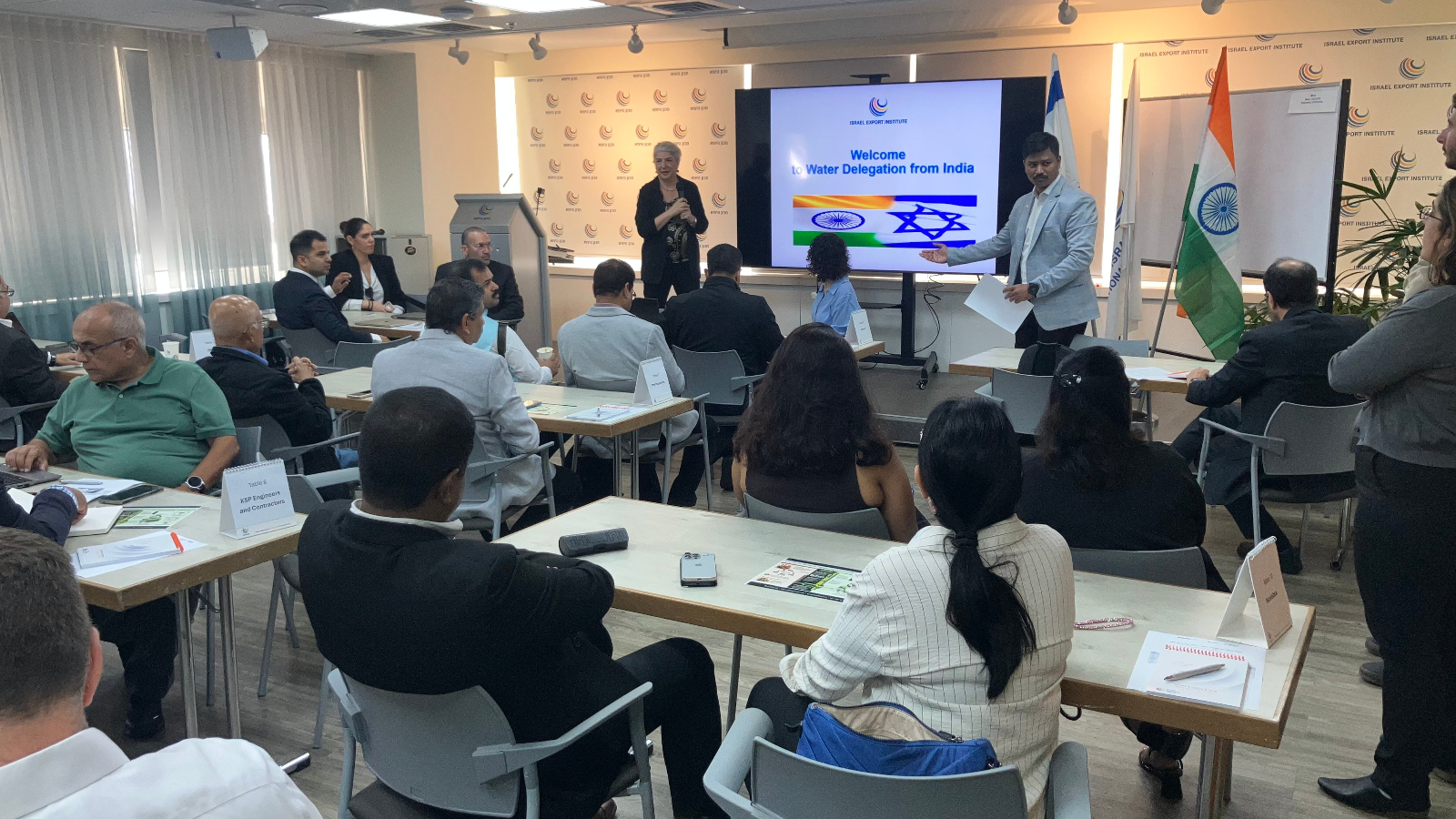
In November 2026, an Indian delegation of engineering, procurement, and construction (EPC) executives and municipal officials toured Israeli treatment facilities and attended the 12th Kinneret Water Conference at the Sea of Galilee. Israel wasn't just pitching hardware. According to Noa Amsalem, Israel's water attaché in New Delhi, the real push is moving away from one-off equipment sales toward joint ventures, co-development, and long-term operational partnerships.
If you're a utility director, policy planner, or infrastructure investor looking at Israeli water tech, copying the gadgets without copying the system behind them is a guaranteed way to waste millions.
Hardware Without Governance Is Just Expensive Scrap
Israel produces roughly 86% of its drinkable water through seawater and brackish water desalination, and it reclaims around 90% of its municipal wastewater for agriculture. Meanwhile, national water loss sits near 3.2%, compared to global urban averages where up to 40% of treated water disappears into leaky pipes before reaching a tap.
Those numbers look miraculous on a slide deck. In practice, they exist because Israel treats water as a single, closed-loop national grid managed by the state water company Mekorot and regulated under strict cost-recovery tariffs.
I've watched municipalities in water-stressed regions spend fortunes on reverse osmosis plants while ignoring the distribution network downstream. Pumping pristine, high-cost desalinated water into rotting municipal mains is like pouring champagne into a colander. You don't solve scarcity by producing more water if half of it vanishes underground.
Mekorot's leadership has been blunt about this exact trap. Tech only matters when it solves a specific operational bottleneck—saving energy, cutting manpower, or stopping physical water loss. Everything else is distraction.
Inside the New Wave of Israeli Water Tech
The November 2026 showcase highlighted a major shift in what Israeli water startups are actually building. Ten years ago, the conversation centered almost entirely on mega-plants and drip irrigation. Today, the sharpest innovation is happening inside existing pipes and treatment reactors—retrofitting aging infrastructure rather than bulldozing it.
Optical Fibers Acting as an MRI for Desalination
Reverse osmosis (RO) desalination relies on thousands of tightly wound membranes inside high-pressure vessels. Historically, operators operated blind. You knew pressure was dropping or salinity was rising, but you couldn't tell which specific membrane inside a vessel had fouled or suffered a mechanical breach without shutting down the train and pulling elements out manually.
Israeli startup Perciv tackled this blind spot with a proprietary sensing layer built on optical fibers. Founder and CEO Stas Bank describes it as an "MRI" for reverse osmosis systems. By embedding fiber-optic sensors directly alongside the membranes, operators get real-time diagnostics on component health and performance. Instead of reactive shutdowns and guesswork, maintenance teams pinpoint the exact damaged element and intervene before a minor tear ruins an entire bank.
AI and Microscopic Video Inside Sewage Reactors
Biological wastewater treatment is notoriously temperamental. In secondary treatment reactors at sewage treatment plants (STPs), sudden bacterial imbalances trigger severe foaming. Once foam takes over a reactor, the plant loses its ability to strip out ammonia and phosphorus, risking regulatory violations and downstream environmental damage.
An Israeli platform developed by Majji pairs artificial intelligence with operational telemetry and live microscopic video feeds of the wastewater biomass. Rather than waiting for lab tests hours or days after a process upset begins, the software spots microbiological shifts early, flags the root cause of foaming, and guides operators on chemical or aeration adjustments across both municipal and industrial plants.
Sealing Underground Leaks Without Digging Up Streets
Digging up urban roads to fix pinhole leaks is slow, loud, and brutally expensive. Curapipe, another company featured during the 2026 delegation tour, approaches underground distribution networks with Trenchless Automated Leakage Repair (TALR).
Instead of excavating streets, operators isolate a section of water main and launch a pressurized "pig" train carrying a specialized sealing compound. As the compound moves through the pipe under pressure, it self-detects pinholes, cracked joints, and failing service connections, curing inside the breach to form a permanent seal. Field deployments have demonstrated roughly a 75% reduction in overall leakage across treated sections without a single backhoe touching asphalt.
Mega-Scale Efficiency at Sorek 2
While startups optimize existing pipes, Israel continues pushing the economics of large-scale seawater desalination. Delegates touring the Sorek 2 (Be'er Miriam) facility south of Tel Aviv—built by IDE Technologies and brought online in 2025—saw what modern scale looks like. Producing 670,000 cubic meters of potable water every day (200 million cubic meters annually), Sorek 2 ranks among the largest reverse osmosis plants on earth.
More importantly, it pushed the cost of desalinated water down to roughly 1.45 Israeli shekels per cubic meter by pairing high-efficiency recovery designs with steam-driven pumps. When desalination gets that cheap, it stops being an emergency backup and becomes base-load municipal supply.
Why Bilateral Partnerships Beat Off-the-Shelf Exports
Look closely at the diplomatic structure behind the India-Israel water push, and you'll notice something unusual. India is the only country in the world where Israel has stationed a dedicated Water Attaché. That isn't ceremonial fluff. It reflects a hard lesson learned by both sides over the last decade.
Israeli tech thrives in a compact, high-tariff, tightly regulated market where utilities pay for performance. Drop that exact same technology into a massive, decentralized market like India—where municipal water tariffs are heavily subsidized, power grids fluctuate, and raw sewage loads carry heavy industrial runoff—and off-the-shelf calibration breaks down fast.
Joint ventures solve the localization gap. Indian EPC giants bring massive construction scale, local regulatory navigation, and cost-engineered manufacturing. Israeli firms bring core intellectual property, sensor algorithms, and decades of water-scarcity playbook experience.
We can already see how this plays out across three distinct tiers:
- Rural water budgeting: In drought-prone Bundelkhand, joint projects expanded across dozens of villages downstream of the Pahuj Canal focus on basic water accounting and crop planning before introducing advanced hardware.
- Urban non-revenue water reduction: Through dedicated Centres of Water Technology, municipal engineers adapt smart metering and acoustic or trenchless leak repair specifically to transition intermittent Indian water supplies toward 24/7 pressurized delivery.
- Targeted coastal and island desalination: Rather than building mega-plants everywhere, bilateral teams target acute freshwater bottlenecks—such as government-to-government desalination initiatives in Lakshadweep and industrial coastal hubs.
The Hard Truths Nobody Puts in the Press Release
It's easy to get swept up in press release optimism about international tech transfers. If you're evaluating Israeli water tech for your own utility or portfolio, keep three friction points firmly in view.
First, desalination isn't a free lunch. Reverse osmosis is energy-intensive, and concentrated brine discharge remains an ecological headache for shallow or poorly circulated coastal waters. Israel manages this because its Mediterranean coastline has strong currents and its grid can absorb the load, backed by heavy R&D into high-recovery zero-liquid-discharge systems. Copying Sorek 2 in a sensitive estuary without rigorous marine modeling will trigger environmental backlash and permitting delays.
Second, smart sensors fail without skilled operators. Giving a struggling municipal treatment plant fiber-optic membrane diagnostics or AI microscope feeds does nothing if the staff lacks training, spare parts budgets, or authority to act on alerts. Software exposes problems; human institutions have to fix them.
Third, tariff reform is the real bottleneck. Israel's water sector is financially self-sustaining because user tariffs cover nearly the entire cost of infrastructure investment and operation. In regions where politicians keep water artificially cheap or free, utilities stay starved of capital. No AI platform can fix a broken balance sheet.
How to Actually Build a Water Tech Partnership That Sticks
If you're leading a utility, an EPC firm, or a municipal agency looking to adopt these technologies, skip the generic trade show junkets and follow a stricter sequence:
- Audit your non-revenue water before buying production capacity. Measure exactly how much water you lose between treatment plant and customer meter. If losses exceed 20%, prioritize trenchless pipe rehabilitation, pressure management valves, and smart metering before spending a dime on desalination.
- Mandate six-month local pilot validation. Never sign a city-wide rollout based on Tel Aviv performance metrics. Require technology providers to run a 180-day live pilot using your actual raw water chemistry, local ambient temperatures, and existing operator teams.
- Structure contracts around performance outcomes, not equipment delivery. Tie vendor payments to verified kilowatt-hours saved per cubic meter, percentage reduction in membrane replacement rates, or documented liters of leakage recovered.
- Pair every foreign tech license with a local EPC partner. Ensure local engineering teams hold maintenance certifications and spare-part inventory rights from day one so your plant never stalls waiting on overseas customs clearance.