The federal government is reshaping the mechanics of American identity by transforming boilerplate legal jargon into a powerful psychological tool. When official executive communications warning that "aliens walk among us" are broadcast from Washington, the targeted demographic is not merely the undocumented populace. The fallout impacts every visa holder, green card permanent resident, and naturalized citizen who speaks with an accent or carries a foreign surname.
By treating the technically accurate, statutory term alien as a cultural weapon, the administration’s rhetoric intentionally collapses the distinction between lawful residents and undocumented immigrants. This calculated semantic shift has triggered an identity crisis across the American legal landscape. It exposes a profound structural hypocrisy: the same administration enforcing this hostile framework relies on a family legacy deeply rooted in the exact immigration mechanisms it seeks to disparage.
The Legal Semantics Behind the Strategy
The Immigration and Nationality Act of 1952 defines an alien as any person who is not a citizen or a national of the United States. For decades, practitioners used this as a clinical, dry legal category. It encompasses the H-1B engineer designing microchips, the international graduate student, the corporate executive, and the long-term permanent resident who has paid American taxes for thirty years.
But legal terminology does not exist in a vacuum. When official administrative platforms package a neutral term with phrases implying subversion, contagion, or physical danger, the clinical definition is stripped away. The government replaces it with something designed to evoke fear.
Corporate law firms and immigration advocacy offices across the country report that this linguistic shift is causing tangible anxiety. Lawful permanent residents are expressing fear during routine re-entries at U.S. ports of entry. High-skilled professionals on non-immigrant visas, who have spent a decade waiting in backlogs for green cards, increasingly report feeling like state-sanctioned outsiders. The rhetoric aims to blur lines so that the public perceives all non-citizens as an undifferentiated, threatening mass.
The Ultimate Executive Irony
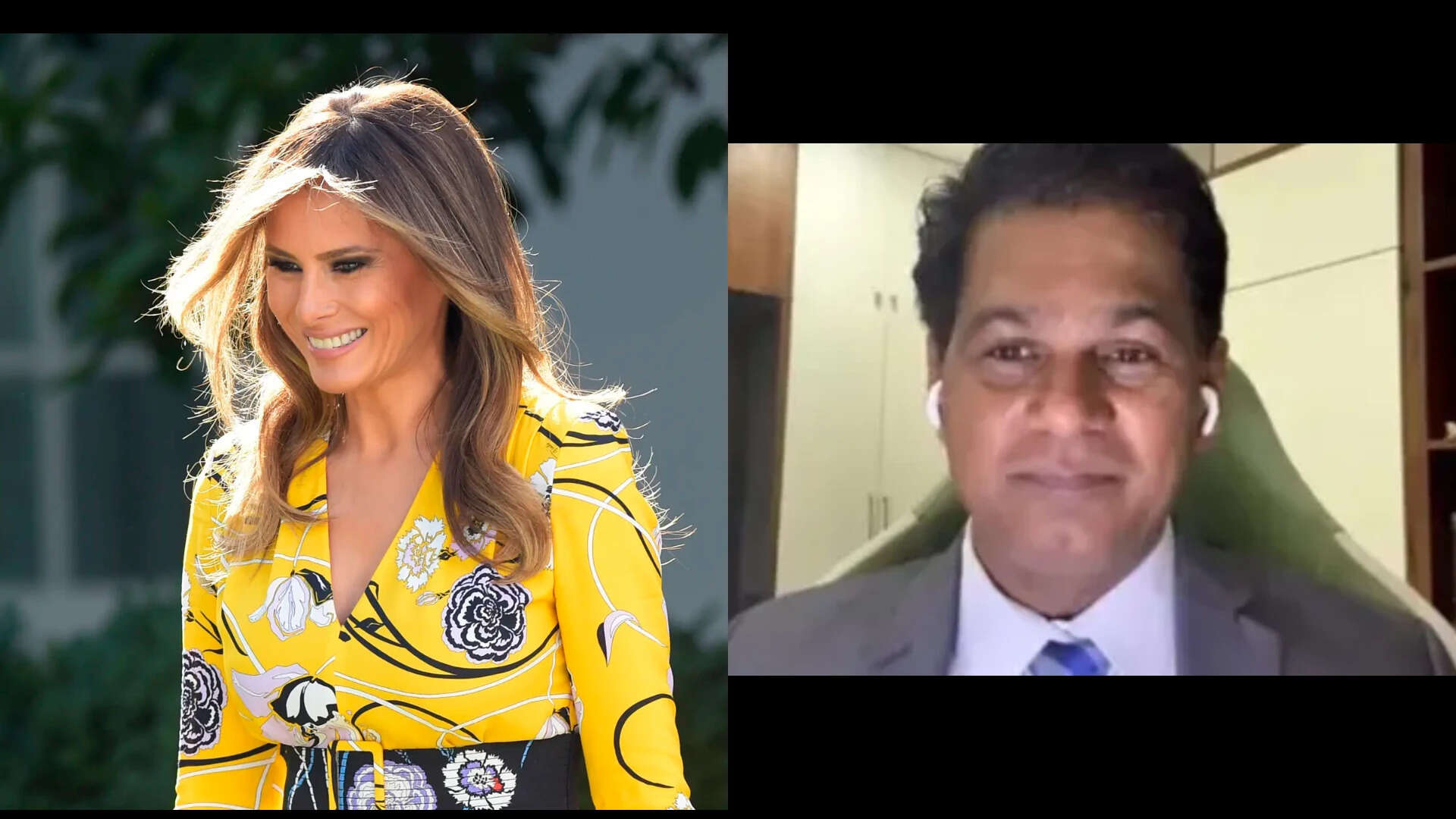
The most striking vulnerability in this rhetorical strategy is its complete disconnect from personal history. Former First Lady Melania Trump immigrated to the United States from Slovenia. She obtained permanent residency through the EB-1 program, a highly selective category reserved for individuals of extraordinary ability, before eventually becoming a naturalized citizen.
Her story is not an anomaly within the political family tree. The historical record shows a lineage built entirely on immigration:
- Ivana Trump, the president's first wife, was a naturalized citizen born in Czechoslovakia.
- Mary Anne MacLeod, the president's mother, immigrated to New York from Scotland.
- Friedrich Trump, the president's grandfather, arrived in the United States from Germany.
If lawful immigrants are fundamentally incompatible with national identity, then the highest echelons of the executive branch are populated by the direct beneficiaries of that very system. This reality highlights the core paradox of modern restrictionist policy. It relies on an implicit "good immigrant, bad immigrant" binary, where legitimacy is granted retroactively to a select few while contemporary applicants are met with blanket suspicion.
The Systematic Dismantling of Due Process
The focus on language shields a more consequential operation: the systematic escalation of bureaucratic friction. The administration is not just changing its vocabulary; it is reshaping administrative law to restrict the path to legal entry and permanent residency.
[Standard Visa Adjudication Process]
           │
           ▼
[Executive Orders on Vetting] ──► Increased Request for Evidence (RFE)
           │
           ▼
[Delayed/Denied Approvals]    ──► Decreased Foreign Talent Retention
Recent executive orders have systematically targeted the immigration bar. Executive actions directives have instructed the Department of Justice to aggressively pursue sanctions against attorneys and firms that file what the administration deems "frivolous, unreasonable, and vexatious litigation" against executive agencies.
This move directly intimidates the legal profession. When the government threatens to penalize lawyers who challenge visa denials, it compromises the constitutional right to due process. Immigration attorneys are forced to choose between zealously defending their clients or protecting their law licenses.
Concurrently, the administration has implemented stricter screening frameworks that have choked the pipeline for specialized talent. Policies aimed at curtailing the H-1B visa program for high-tech workers have increased the volume of Requests for Evidence (RFEs). This technical friction bogs down American companies in endless paperwork. The long-term economic consequence is predictable. By creating an unpredictable, hostile environment, the United States risks driving top-tier international talent to rival markets like Canada, the United Kingdom, or Western Europe.
The Spillover Effect into Daily Life
The weaponization of legal terminology does not stop at the borders of federal courtrooms or immigration processing centers. It leaks directly into public spaces. When the highest office in the country routinely uses dehumanizing phrasing, it grants implicit permission for the public to treat foreign-born neighbors with suspicion.
Children of naturalized citizens face alienation in public schools. Local business owners are subjected to performative citizenship checks by self-appointed watchdogs. The administration’s policies are creating a fractured society where legal documentation offers no protection against cultural exclusion.
The immigration system must maintain structural integrity, protect national security, and punish actual fraud. A sovereign nation possesses an undisputed right to secure its borders and manage its domestic labor market. However, a government can rigorously enforce its statutes without resorting to state-sponsored propaganda.
The current approach compromises the stability of American industries, alienates law-abiding taxpayers, and actively undercuts the very legal pathways that allowed previous generations of the First Family to call America home. The ongoing campaign against the foreign-born community has laid bare a uncomfortable truth: when a state spends years conditioning its public to fear the outsider, it eventually loses the ability to recognize the value of the individuals who arrived the right way.
The friction is the point.