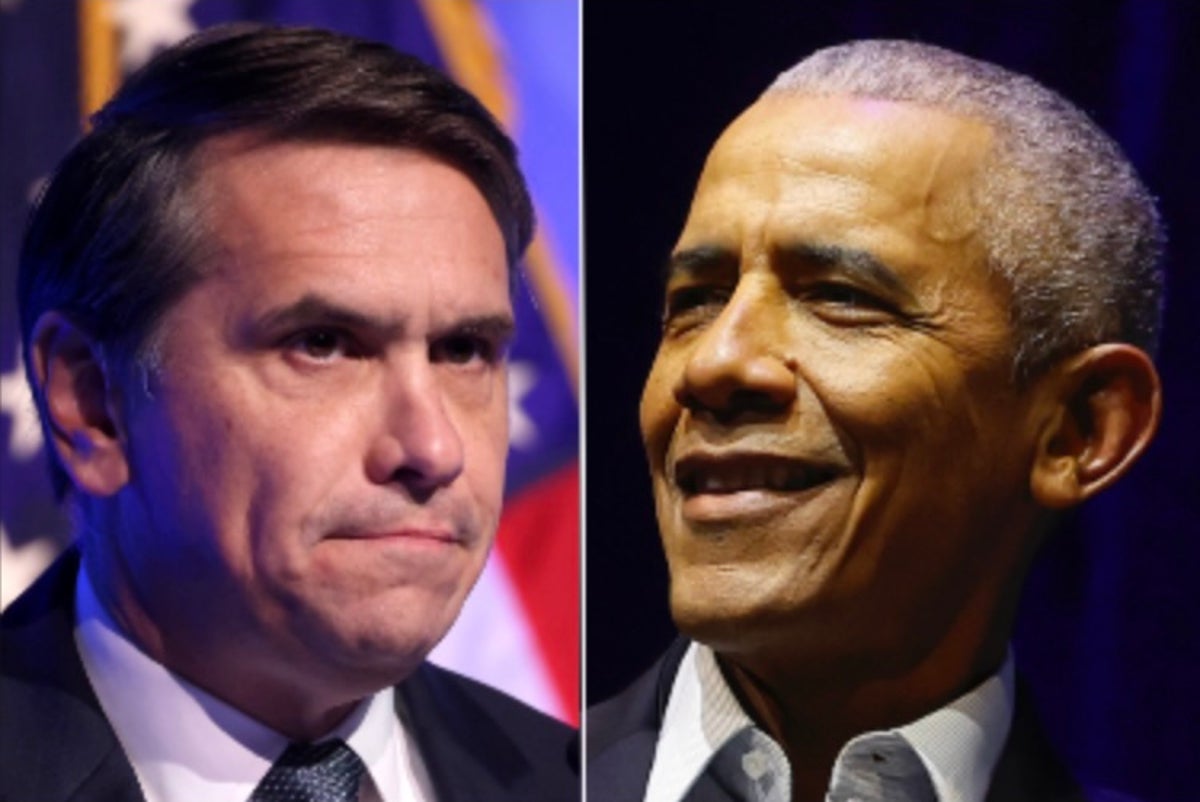
The hand-wringing over Todd Blanche’s appointment to the Department of Justice is not about protecting democracy. It is about protecting a comfortable, high-stakes fiction. When critics cite Barack Obama’s concerns regarding the targeting of political opponents, they are performing a choreographed dance that ignores how power actually functions in Washington. The narrative that the DOJ has ever been a neutral, antiseptic chamber of pure law is a fantasy sold to the public to maintain the status quo.
Todd Blanche isn't the death knell of a fair system; he is the honest face of its inevitable evolution.
The Neutrality Trap
Mainstream media outlets have spent months framing the Blanche appointment as a radical departure from tradition. They suggest that before this moment, the Department of Justice operated with the clinical detachment of a laboratory. This is a historical lie. Every administration, from Kennedy to Obama to Trump, has viewed the DOJ as the ultimate tool for implementing a specific vision of American order.
The "lazy consensus" suggests that a lawyer who defended a president in court is fundamentally compromised when they lead a department. In reality, the legal system has always been an extension of political philosophy. To pretend otherwise is to be willfully blind to the history of the Attorney General's office. Robert Kennedy wasn't chosen by his brother because he was the most "neutral" candidate in the country; he was chosen because he was a loyalist who would execute the administration’s agenda.
The False Dichotomy of Political Targeting
Critics argue that Blanche’s presence will lead to the "targeting" of critics. This premise assumes that the current baseline is zero. It ignores the reality that law enforcement at the federal level is always a series of choices. Prosecutors choose which cases to bring, which investigations to prioritize, and which leads to ignore. These choices are inherently political.
When the Obama administration used the Espionage Act to prosecute more whistleblowers than all previous administrations combined, was that "neutral"? When the Trump administration’s DOJ pursued leaks with a ferocity that chilled the press, was that a "deviation"?
The nuance missed by the competitor’s article is that "targeting" is the functional reality of federal power. The only difference now is that the masks are coming off. Blanche’s response that these concerns are "simply false" isn't just a denial; it’s a dismissal of the entire framework of the critique. He knows that the game hasn't changed—only the players and the volume of the complaints.
The Defense Attorney Advantage
There is a deep-seated bias against defense attorneys taking the helm of prosecution-heavy agencies. The logic is that because Blanche defended Donald Trump, he is somehow "infected" by his client’s interests. This is a fundamental misunderstanding of the legal profession.
A high-level defense attorney understands the mechanics of overreach better than a career prosecutor ever will. They have seen the sausage being made from the outside. They know where the pressure points are. If we actually wanted a Department of Justice that respected civil liberties and due process, we would fill it with people who spent their careers fighting the state, not those who spent decades building cases for it.
The fear isn't that Blanche will be a bad lawyer. The fear is that he knows exactly where the bodies are buried. He knows how the DOJ can be manipulated because he’s spent years defending against those exact manipulations.
Dismantling the "Independence" Charade
The Department of Justice is an executive agency. The President is the head of the Executive Branch. The idea that there should be a "wall" between the President and the DOJ is a post-Watergate norm that has no actual basis in the Constitution.
Article II of the Constitution vests the executive power in a President. It doesn’t say "The President and a bunch of independent agencies he can’t talk to." The push for "independence" is actually a push for an unaccountable fourth branch of government—a permanent bureaucracy that can stymie the will of the voters by hiding behind the shield of "non-partisanship."
Imagine a scenario where a President is elected on a platform of radical reform, only to be told he cannot direct his own Justice Department to investigate the very corruption he was elected to clean up. That isn't a check on power; it’s a subversion of the democratic process.
The Risks of the Contrarian Reality
Let’s be clear: the downside of an overtly political DOJ is transparency. When the department is honest about its alignment, it loses the "halo" of objective truth. This makes every prosecution look like a hit job to the losing side.
But isn't that where we are already?
Half the country believes the current DOJ is a weapon of the Democratic Party. The other half believes it's the only thing standing between us and autocracy. The "trust" that critics claim Blanche is destroying has been dead for a decade. Blanche isn't breaking the system; he’s just stopping the pretend-play that it’s still intact.
The Actionable Order
Stop asking if a DOJ official is "biased." Everyone is biased. Instead, ask if they are effective, if they are following the letter of the law, and if they are being transparent about their objectives.
We need to stop mourning the loss of a "neutral" DOJ that never existed and start demanding a DOJ that is accountable. Accountability only happens when the people in charge are clearly linked to the person the public actually voted for.
If you want a Department of Justice that acts as a check on the President, you don’t look to an acting chief. You look to the courts and the legislature. Expecting the Executive Branch to police itself via a "tradition of independence" is like asking a shark to manage the aquarium’s security.
The era of the "unbiased" technocrat is over. It’s time to deal with the world as it is, not as the Op-Ed pages of 2008 wish it to be.
Stop looking for a referee. Start looking for the rulebook.