You can't make this stuff up. The Trump administration actually tried to blame a passing thunderstorm for missing a federal court deadline to strip Donald Trump's name off the John F. Kennedy Center for the Performing Arts.
The clock struck midnight on Friday, June 12, 2026, and the giant metallic letters branding the building as the "Trump-Kennedy Center" were still very much attached to the marble facade. Instead of compliance, the Department of Justice dropped an 11th-hour court filing begging for a 12-hour extension. The excuse? Safety concerns over D.C. lightning.
But anyone paying attention knows the weather wasn't the real obstacle here. It was a classic, desperate stall tactic from a team running out of legal road.
The Thunderstorm Defense Falls Flat
Let's look at the actual timeline because it exposes exactly how absurd this excuse really is. U.S. District Judge Christopher Cooper handed down the permanent injunction requiring the name removal way back on May 29, 2026. The administration had a full two weeks to get some ladders, hire a crew, and unscrew the letters.
Instead, the Trump-appointed board spent those two weeks burning through every legal Hail Mary they could think of. They begged Judge Cooper to pause his own order. He said no at 1:00 p.m. on Friday. They scrambled to the U.S. Court of Appeals for the D.C. Circuit for an emergency stay. The appeals court slapped them down later that afternoon.
Only when the legal options completely vanished did the administration suddenly realize they had a physical task to complete. Kennedy Center executive director Matt Floca filed a declaration claiming the evening storms made it too dangerous for workers to climb the scaffolding.
Democratic Representative Joyce Beatty of Ohio, who launched the original lawsuit against the board, didn't buy it for a second. Her legal team blasted the excuse, calling it part of an "inexcusable delay" and a blatant pattern of non-compliance. They noted that the government only found itself in a rush because they waited until the literal final hours of a two-week window to start the physical labor.
The Midnight Spectacle on the Potomac
If the administration wanted to avoid a public embarrassment, the delay backfired spectacularly. By Friday night, several hundred spectators and protestors gathered outside the arts venue. They weren't deterred by the rain.
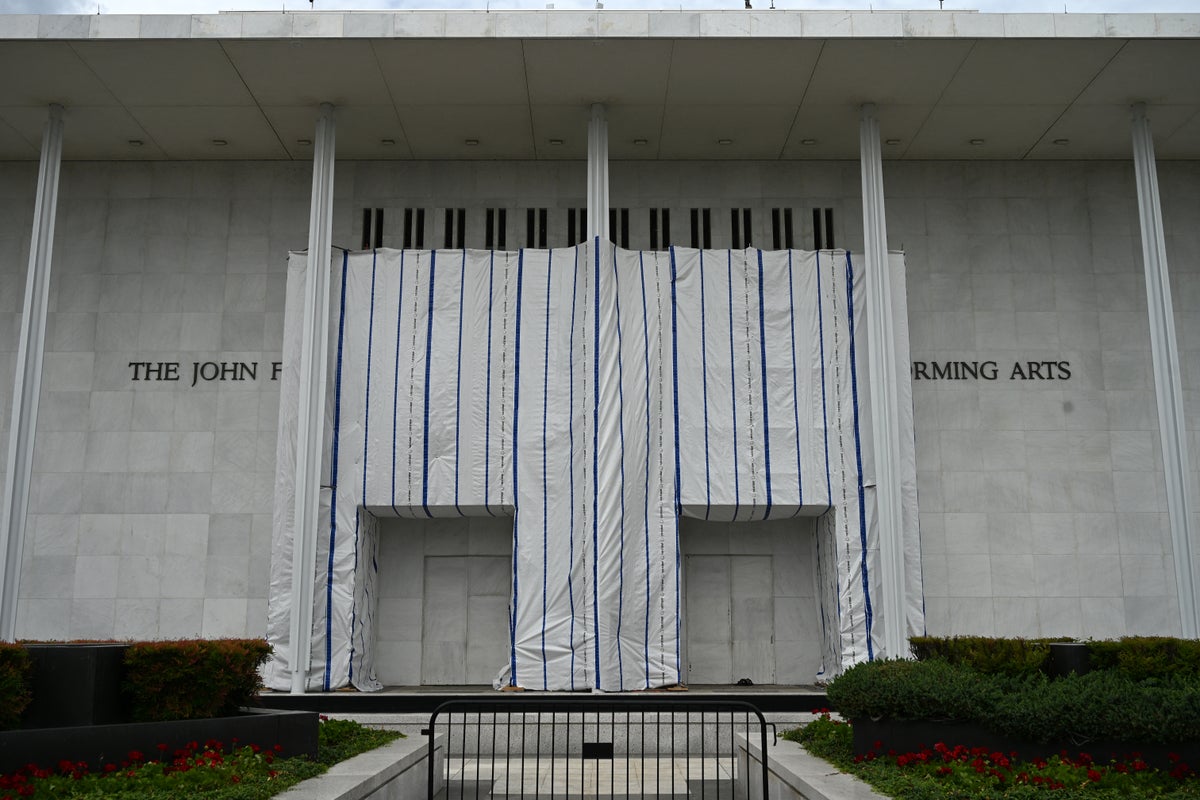
As midnight approached, the crowd watched workers slowly assemble scaffolding in front of the portico. Instead of a quiet, late-night compliance operation, the delay turned the removal into a highly visible public event. The crowd chanted "take it off" and "shame" into the damp night air.
The digital cleanup had already happened. The Kennedy Center website and internal staff email templates had quietly scrubbed the Trump branding days earlier. But those heavy metallic letters on the building facade required physical sweat. The crew finally pushed through the drizzle in the predawn hours of Saturday, June 13. By 3:10 a.m., under the cover of tarps, workers spent about 30 minutes finally ripping the letters down, missing the official midnight deadline but ending a chaotic chapter for the cultural landmark.
The Real Legal Battle You Need to Understand
To understand why this name removal matters, you have to look past the petty scheduling drama and look at the underlying law. This isn't just about partisan bickering; it's about structural separation of powers.
The Kennedy Center was established by Congress in 1971 as a living federal memorial to President John F. Kennedy. When Trump returned to office, he aggressively reshaped the center's board of trustees, installing fierce allies and taking the chairman seat for himself. In December, this newly compliant board voted to officially rename the venue "The Donald J. Trump and The John F. Kennedy Memorial Center for the Performing Arts."
The legal problem with that move is absolute. Judge Cooper’s May ruling made it clear: the Kennedy Center is a congressional designation. A presidential board cannot simply rewrite a federal monument’s name on a whim. Only Congress holds the constitutional authority to change or add to a national memorial.
The administration’s counter-arguments in court revealed what this was really about: money and branding. In their appellate filings, DOJ lawyers argued that stripping Trump's name would cause "irreparable harm" to fundraising efforts. They claimed certain high-dollar donors only pledged money because the Trump brand was slapped on the building, warning that the center might have to return millions if the name came down. Judge Cooper found that argument completely unconvincing, ruling that fundraising speculation doesn't override federal law.
Part of a Much Bigger Blueprint
This wasn't an isolated rebranding stunt. The fight over the Kennedy Center is part of a broader, highly controversial campaign to alter the historic aesthetics of Washington D.C.
The administration has repeatedly targeted established landmarks to leave a permanent architectural footprint. If you look at what's happening across the city, a clear pattern emerges:
- The Reflecting Pool: The administration already faced intense pushback after ordering the Lincoln Memorial Reflecting Pool to be chemically treated and repainted to a much brighter, artificial blue.
- The White House East Wing: A massive ongoing lawsuit is fighting the administration's decision to demolish the historic East Wing to build an 8,400-square-meter grand ballroom.
- The White House Lawn: The president openly floating plans to install a permanent UFC "claw" logo on the lawn following a celebratory anniversary fight event.
The court's total rejection of the Kennedy Center renaming acts as a massive speed bump for this design agenda. It signals to the administration that federal property and national monuments aren't personal real estate assets to be updated by executive decree.
The letters are down, the building is back to its original name, and the board’s planned two-year total renovation shutdown remains blocked by the courts. For now, the historic theater belongs solely to the legacy of JFK, no matter what the local weather forecast looks like.