In the quiet, climate-controlled halls of the Tower of London, a single stone sits behind thick glass, drawing millions of eyes every year. It is called the Kohinoor. To a casual tourist, it is a magnificent piece of carbon, a glittering centerpiece of the British Crown Jewels. To Zohran Mamdani, a New York State Assemblyman and a man whose heritage is stitched into the very fabric of the Indian subcontinent, it is a ghost. It is a piece of home that was never meant to leave.
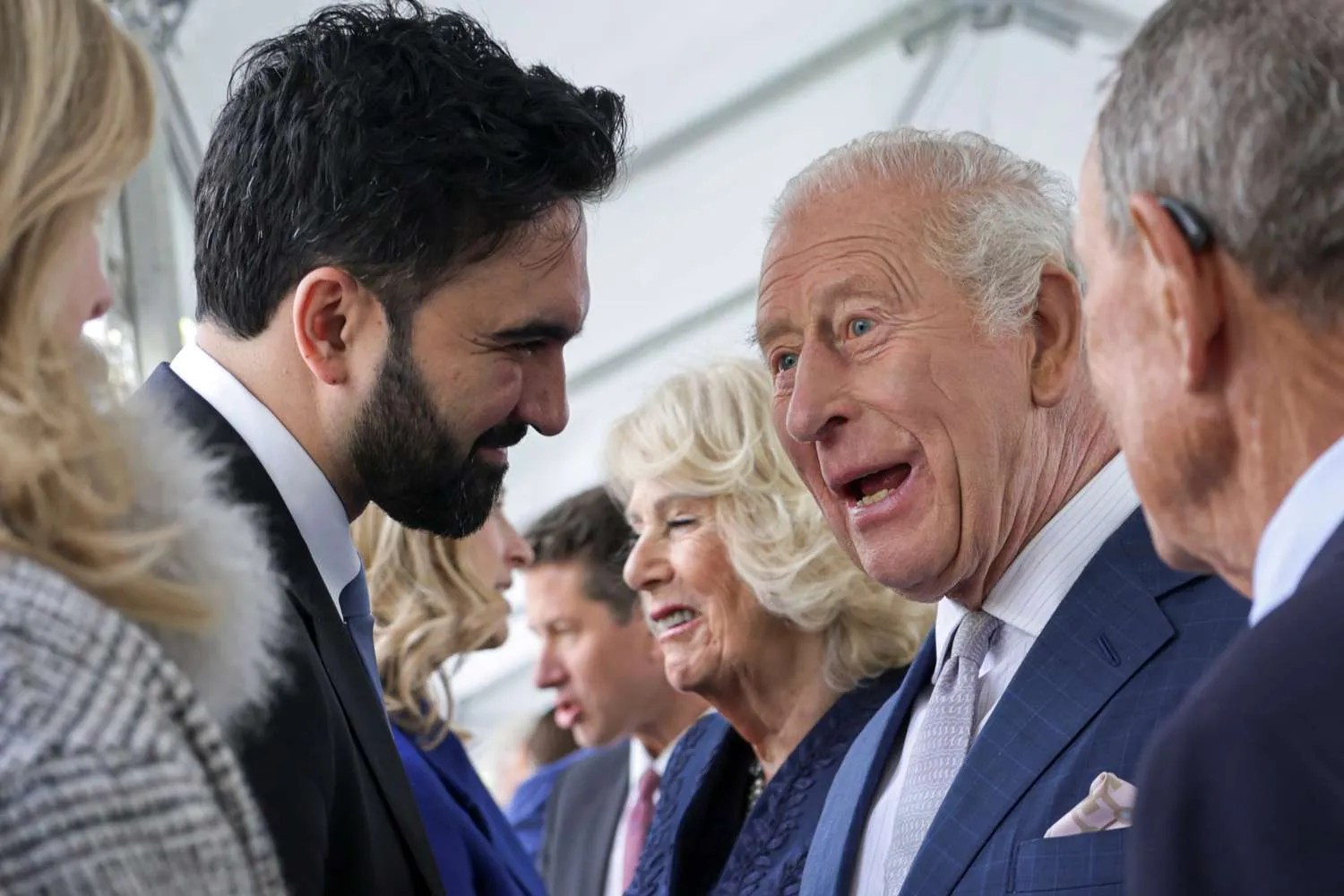
History is rarely a clean sequence of events. It is a messy, blood-stained tug-of-war. The story of the Kohinoor—the "Mountain of Light"—is not merely about a diamond. It is about the memory of a nation and the long, lingering shadow of colonialism that refuses to dissipate, even as the world enters a new era of diplomacy. When Mamdani recently stood on the global stage, just ahead of a scheduled meeting with King Charles III, he didn't talk about trade deals or urban policy. He talked about the stone. He demanded its return.
Why does a politician from New York care about a rock in London? Because the Kohinoor is a symbol of an unfinished conversation.
The Theft Wrapped in a Treaty
Imagine a ten-year-old boy. His name is Duleep Singh. He is the last Maharaja of the Sikh Empire. He is surrounded by men in red coats who tell him that his kingdom is no longer his. They present him with a document—the Treaty of Lahore. Under the terms of this "agreement," the young king is forced to surrender not just his land, but the most prized possession of his dynasty.
The British claim it was a gift.
History, however, remembers it as an ultimatum delivered to a child. The diamond was spirited away, across oceans, to be re-cut and placed in the crown of Queen Alexandra, and later, Queen Elizabeth the Queen Mother. When we talk about the Kohinoor today, we aren't just discussing jewelry. We are discussing the physical manifestation of a power dynamic that stripped a culture of its treasures while claiming it was doing so for the sake of "preservation."
Mamdani’s vocal stance in New York serves as a reminder that the diaspora does not forget. You can move a person across the globe, give them a new passport and a new life, but the collective memory of a stolen legacy remains. It pulses. It waits for the right moment to speak.
A King, a Mayor, and the Moral Ledger
The timing of Mamdani’s statement was no accident. As King Charles III prepares to navigate his role in a modern Commonwealth, he faces a world that is no longer content with "the way things have always been." The voices calling for the return of the Kohinoor are no longer coming just from the streets of Delhi or the halls of the Indian Parliament. They are coming from the most influential cities in the West.
When a figure like Mamdani speaks up, he bridges the gap between the historical grievance and modern political accountability. He represents a generation that views the British monarchy not with the awe of a subject, but with the scrutiny of a contemporary.
Consider the logistical reality of the British Crown. It is an institution built on the accumulation of vast wealth, much of which was extracted from colonies that were left fractured and impoverished. For India, the return of the Kohinoor would be more than a win for the national treasury. It would be an act of restorative justice. It would be an admission that the era of "to the victor go the spoils" is over.
But the British response has remained remarkably consistent: silence, or a polite redirection. They argue that the diamond’s history is too complex, that it has passed through Persian, Afghan, and Sikh hands, and that returning it to India would trigger a chaotic chain reaction of claims.
This argument is a shield. It suggests that because a crime was complicated, it should never be rectified.
The Ghost in the Jewelry Box
There is a specific kind of grief that comes with seeing your history displayed as a trophy in someone else's house.
For many Indians, the Kohinoor is a constant reminder of the "Drain of Wealth" theory. Between 1765 and 1938, it is estimated that Britain drained nearly $45 trillion from India. The diamond is the tip of that iceberg. It is the visible evidence of a much deeper hollow.
When Mamdani demands the return of the stone, he is asking the British Monarchy to look into the mirror. He is forcing a confrontation with the fact that the splendor of the coronation is inextricably linked to the suffering of the colonized.
This isn't about being "woke" or revisionist history. It is about the simple, human desire to have one’s heritage respected. If you walk through the British Museum or the Tower of London, you are walking through a warehouse of other people’s memories. The Kohinoor is simply the most famous of these displaced spirits.
The Power of the New York Platform
New York is a city built on the stories of those who left somewhere else. It is a hub of the global South Asian diaspora, a place where the politics of "home" are debated over chai in Jackson Heights and in the legislative chambers of Albany.
Mamdani’s choice to use his platform to address King Charles is a masterstroke of cultural diplomacy. It signals that the demand for the Kohinoor is not a localized Indian issue; it is a global human rights issue. It is a question of who owns history.
Does history belong to the person who took it, or the person who created it?
The British government often points to the 1963 British Museum Act, which prevents the de-accessioning of artifacts. They have built a legal fortress around their collection. But laws are human inventions. They can be changed. What cannot be changed is the growing consensus that holding onto looted heritage is a moral liability.
Beyond the Sparkle
Let’s strip away the gold and the fame for a moment. What is left?
A diamond is just a rock. It cannot breathe. It cannot feel. But we, as humans, imbue objects with the weight of our identity. We use them to tell the story of who we are. For the British, the Kohinoor tells a story of empire and endurance. For India, it tells a story of loss and the long road to recovery.
Mamdani is standing at the crossroads of these two stories. By confronting the King, he is challenging the narrative of the "benevolent empire." He is asking for a world where the relationship between the UK and India is based on mutual respect, not the lingering imbalance of a colonial past.
The stone itself is said to be cursed. Legend suggests that any man who wears it will meet a tragic end, while women are spared. Whether you believe in ancient curses or not, there is no denying that the Kohinoor carries a heavy burden. It is a diamond that has seen empires rise and fall, and it currently sits in a crown that represents a monarchy in transition.
As King Charles moves forward with his reign, the question of the Kohinoor will not go away. It will be raised by politicians, by activists, and by the children of the diaspora who see their own reflection in that stolen light.
Zohran Mamdani didn't just make a "big statement." He threw a stone into a very old, very still pond. The ripples are moving outward, crossing the Atlantic, and heading straight for the gates of Buckingham Palace. The Mountain of Light may be locked in a tower, but its story is finally breaking free.
The diamond remains cold. The conversation, however, is finally starting to burn.