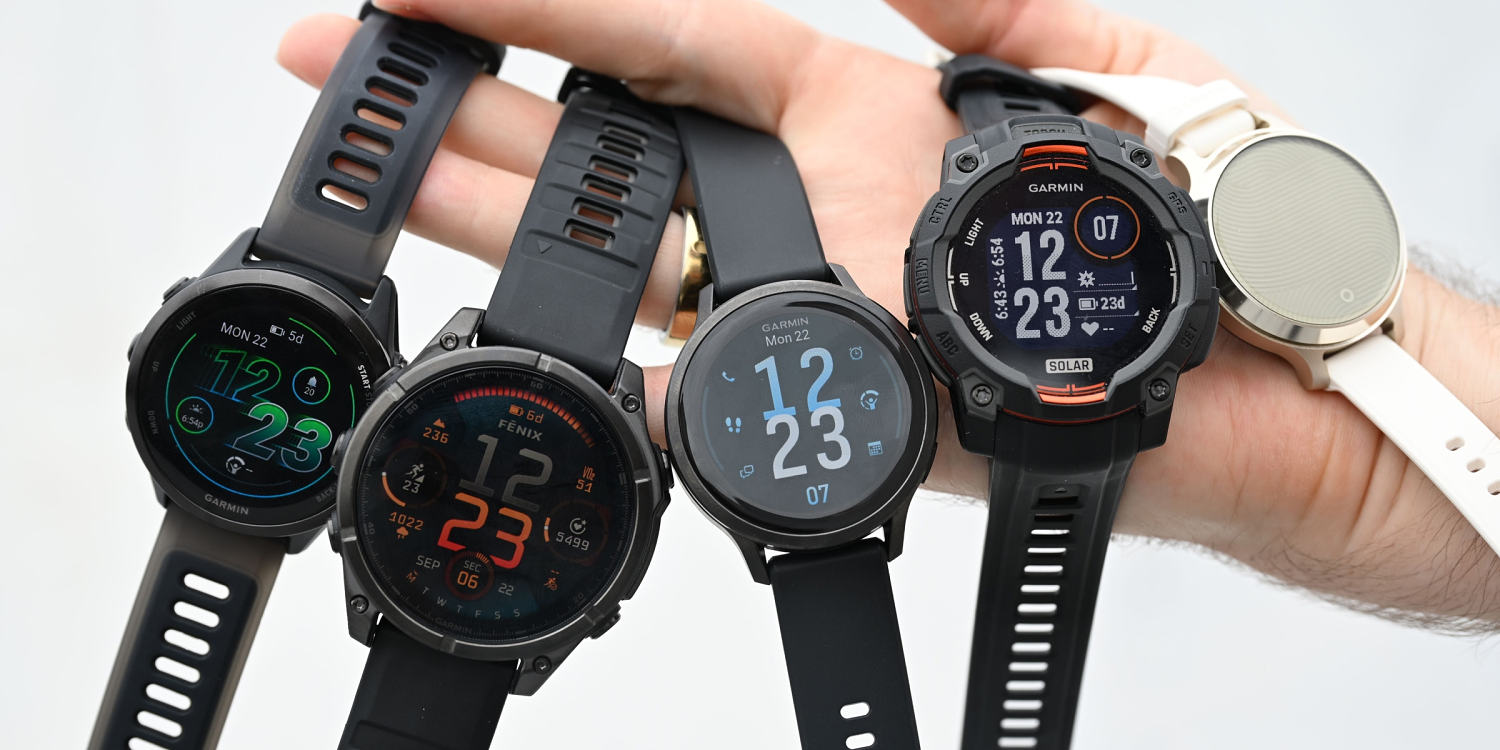
Dawn arrives not with a sound, but with a quiet, persistent vibration against the wrist. It is 5:00 AM on a Tuesday. Outside, the streetlights still pool amber light onto empty pavement, and the air carries that sharp, metallic bite of an early spring morning. For most of the world, this hour belongs to sleep. For Marcus, it belongs to the pavement.
He sits on the edge of his bed, rubbing his eyes, feeling the familiar, dull ache in his left calf from yesterday's twelve-mile effort. He looks down at his arm. Encased in titanium and glass, the screen softly illuminates his bedroom with a rich, vibrant AMOLED panel. It does not just display the time. It holds the ledger of his physical existence. In similar updates, take a look at: The Glass Thread That Holds the World Together.
According to the metrics logged overnight, his sleep score is a meager 62. His HRV status is dipping downward, whispering of accumulated fatigue. The software, drawing from deep physiological algorithms, suggests today should be an easy recovery jog rather than the grueling speedwork he had planned.
Marcus sighs. He wants to ignore it. Every runner knows the temptation of chasing raw ambition past the boundaries of common sense. But he bought this Garmin Fenix 8 precisely because he wanted a tool honest enough to save him from himself. Engadget has analyzed this important issue in great detail.
We live in an era obsessed with quantified bodies, yet we often miss the emotional architecture behind the gadgets we strap to our wrists. A spec sheet tells you that a device has dual-band GPS, multi-week battery life, and a built-in LED flashlight. It does not tell you what it feels like to watch your predicted marathon time slowly tick downward by two agonizing minutes after months of disciplined training. It does not capture the quiet satisfaction of a device that outlasts your own willpower, maintaining a charge for weeks while you struggle to maintain a routine for days.
Consider what happens next across different wrists in different lives.
Across town, Elena is waking up for a very different reason. She is a corporate litigator who spends her days navigating high-stakes arguments and her evenings trying to carve out forty minutes of peace on a treadmill. She doesn't need topographic maps or military-grade durability. She wears the Garmin Venu 4. To her, the watch is a translator. It takes the abstract chaos of a stressful workday—reflected in her elevated resting heart rate and jagged stress graphs—and gives her a concrete breathing exercise to anchor her nervous system before she walks through her front door. When her phone rings from deep inside her tote bag, she answers a quick call directly from her wrist, her fingers never missing a beat as she stretches her hamstrings.
Then there is Sarah, who views technology through the lens of pure survival. Out on the rugged, wind-scoured trails of the Pacific Northwest, Sarah straps on an Enduro 3. For her, a dead battery is not an inconvenience; it is a hazard. She relies on memory-in-pixel solar displays that drink in the pale mountain sunlight, stretching endurance into weeks of untethered tracking. When the fog rolls over the ridge and the trail vanishes beneath a blanket of grey mist, she doesn't panic. She glances down at the breadcrumb navigation and full topographic maps glowing quietly on her forearm, trusting the silent geometry of satellites orbiting hundreds of miles above her head to guide her safely back to the treeline.
The modern market splits these experiences into rigid categories.
If you are a triathlete or an obsessed marathoner hunting down a personal record, the Forerunner ecosystem calls to you. The lightweight polymer cases and deep training load analytics of models like the Forerunner 570 and the map-wielding Forerunner 970 serve as ruthless, data-driven coaches. They do not flatter you. If your recovery score is poor, they tell you to rest. If your training readiness is high, they demand excellence.
If you are an outdoor purist who measures weekends in elevation gain rather than hours worked, the rugged architecture of the Instinct 3 series offers a masterclass in functional minimalism. It strips away glossy distractions, offering a choice between solar-boosted endurance and stark readability, built to take a beating against granite and shale.
Yet, the true magic of these devices is not found in their silicon processors or their waterproof ratings. It is found in the behavioral mirror they hold up to us.
We buy them because we want accountability. We want an objective witness to our effort. In a world where so much of our daily labor feels ephemeral—spread across invisible spreadsheets, Slack messages, and digital deliverables—a workout is wonderfully, painfully real. Your lungs burn. Your muscles fatigue. And the watch remembers every single drop of sweat, etching it into a permanent digital history.
Marcus ultimately decides to compromise. He skips the punishing speed intervals, lacing up his shoes for a moderate, steady-state six miles instead. As he steps out into the crisp morning air, the GPS locks onto satellites in seconds. The screen glows steady against the dawn. He starts his run, and for a little while, the rest of the world fades into silence, measured only by the steady rhythm of his stride and the quiet ticking of time on his wrist.