The air inside an ivory tower is rarely as clean as it looks from the outside. It smells of old paper, floor wax, and a very specific brand of quiet desperation.
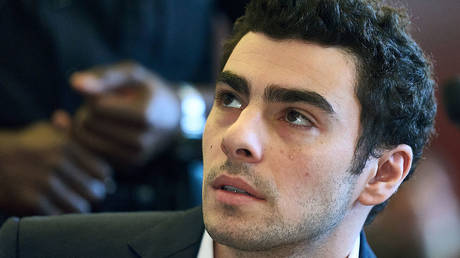
When Jason Arday stepped into the history books as the youngest Black professor at the University of Cambridge, the celebration was deafening. Headlines cheered a triumph against the odds. A working-class kid from South London who could not read or speak until he was eleven years old had scaled the highest academic cliff in the world. He was a symbol. He was proof that the system could open its heavy oak doors and let brilliance in, regardless of where it started. Learn more on a similar topic: this related article.
Then, the narrative fractured.
Plagiarism allegations surfaced, casting a long, unsparing shadow over the achievement. And soon after, the silence came. Jason Arday was found dead. More reporting by USA Today explores similar views on the subject.
The shockwaves hit the academic community like a physical blow. But beneath the breaking news alerts and the hurried social media statements lies a deeper, heavier truth about what we demand from our symbols. We do not just ask them to succeed. We ask them to carry the weight of a collective hope, and when that weight cracks them, we often stand back and watch the debris fall.
Consider what happens when a human being is turned into an icon.
An icon has no bad days. An icon does not make mistakes, suffer from imposter syndrome, or cut corners under the suffocating pressure of a ticking clock. An icon is an immovable monument. But Jason Arday was not marble. He was flesh and bone, shaped by an extraordinary, exhausting journey that few could truly fathom.
To understand his rise, you have to look at the sheer friction of his early life. Diagnosed with global developmental delay and autism spectrum conditions, he spent his childhood navigating a world that told him he would need lifelong institutional care. He communicated through sign language. He struggled to process spoken language. The educational system looked at him and saw a dead end.
Instead, he found a different path. Driven by an iron will and an insatiable curiosity, he taught himself. He memorized rap lyrics to understand rhythm and cadence. He devoured books with the fierce determination of someone trying to break out of a locked room. By his twenties, he had earned degrees, then master's degrees, and finally a PhD. He published prolifically, driven by a relentless engine that never seemed to turn off.
That engine was his superpower. It was also his vulnerability.
Academia is a pressure cooker. It operates on a relentless metric of output: publish or perish. For scholars from marginalized backgrounds, the pressure is magnified tenfold. You are never just doing your job; you are representing an entire demographic. Every paper is a referendum on whether you belong. Every lecture is an audition to prove the skeptics wrong. In that environment, the temptation to stumble—or the devastating impact of an accusation that you did—takes on catastrophic proportions.
When the plagiarism allegations broke, the reaction was swift and unforgiving. The modern digital town square does not believe in nuance. It thrives on binary verdicts. You are either a saint or a fraud. There is no room for human error, no grace for exhaustion, no curiosity about the systemic conditions that might lead a brilliant, overwhelmed mind to cut a corner or make a citation error.
The allegations became the only story. The human being vanished behind the scandal.
We have built a culture that worships the ascent but abandons the climber when the footing slips. We cheer for the underdog until the underdog makes a mistake. Then, we act surprised when the sudden withdrawal of communal validation leaves a vacuum so hollow nothing can fill it.
What does it cost a person to defy gravity for their entire life?
Imagine standing on a tightrope, knowing that thousands of people are watching below, waiting not just for you to walk across, but to perform acrobatics while you do it. Every step requires absolute perfection. You cannot look down. You cannot catch your breath. And the moment the wind shifts, the same crowd that was applauding your bravery suddenly gasps, points, and looks away as you fall.
The tragedy of Jason Arday is not just about academic integrity or the ethics of citation. It is about a society that consumes brilliance and spits out the human beings who generate it. It is about the terrifying isolation of high achievement, where the higher you climb, the fewer people there are who can understand the cold air at the top.
We talk endlessly about representation, about breaking glass ceilings, about opening doors. But we rarely talk about what happens to the people inside the rooms once the door closes. We rarely ask if the structures we build are capable of nurturing the minds we invite in, or if they are simply designed to chew them up and discard them when the novelty wears off.
The books on the shelf remain. The papers bear his name. But the voice behind them has gone quiet, leaving behind a profound and echoing question about the price we exact from those we claim to celebrate.
The lights in the library will stay on. Another morning will break over Cambridge, casting long shadows across the ancient stone. And somewhere out there, another child with the odds stacked against them is dreaming of a desk in that very city, unaware of how heavy the air can get once you finally arrive.