The air inside a bus is a specific kind of ecosystem. It smells of damp coats, spilled coffee, and the faint, metallic scent of floor heaters working overtime against a European chill. On a standard Tuesday, the passengers are ghosts to one another. They stare at their phones, tracing the blue dots of their lives on digital maps, blissfully unaware that the glass and steel surrounding them is the only thing separating their routine from the abyss.
Then the engine revs too high. The trajectory shifts. The blue dot on the map moves toward the gray expanse of the river, and suddenly, the ecosystem shatters. Read more on a similar topic: this related article.
When a learner driver behind the wheel of a multi-ton transit vehicle lost control and plunged into the cold, churning depths of one of Europe’s major waterways, the headline read like a dry police blotter. But facts are skeletal. They don't capture the sudden, violent transition from the mundane to the terminal. They don't describe the sound of a windshield meeting a river at velocity—a sound less like a splash and more like a gunshot muffled by a pillow.
The river doesn't care about permits or training hours. It is an indifferent weight. Further reporting by Al Jazeera delves into comparable views on the subject.
The Mechanics of Panic
A bus is designed to be a sanctuary of transit, but when it hits the water, it becomes a pressurized trap. Imagine the interior light flickering as the electrical system begins to short-circuit. The water doesn't seep in; it hammers against the doors, held shut by the immense external pressure of the river.
In those first few seconds, time liquefies.
Physics dictates that you cannot open a door against the weight of a river until the pressure inside equals the pressure outside. This means waiting for the water to fill the cabin. It is a terrifying, counterintuitive requirement for survival. To live, you must sit still while the freezing tide rises to your chest, your neck, your chin.
Consider the passengers in this specific disaster. They weren't just "pulled from the water." They were extracted from a nightmare of buoyancy and darkness. There is a specific kind of courage required to look at a stranger across a sinking aisle and realize your lives are now inextricably linked by a shared oxygen supply that is rapidly disappearing into the ceiling vents.
The Burden of the Student
We often speak of "human error" as if it were a software glitch. It isn't. For the person behind the wheel—the learner—that error is a physical weight they will carry long after their clothes have dried.
Training to steer a vehicle of that magnitude is an act of hubris. You are attempting to domesticate momentum. When that momentum turns against you, the realization is instantaneous and paralyzing. There is a fraction of a second where the driver realizes the brake isn't enough, the steering rack has reached its limit, and the curb is no longer a boundary but a ramp.
The public outcry usually follows a predictable arc: Why was a learner on that route? Why wasn't the instructor faster? But these questions ignore the chaotic reality of the road. Mastery isn't found in a manual; it is forged in the moments when the unexpected occurs. On this day, the unexpected was a watery grave that refused to stay quiet.
The River’s Memory
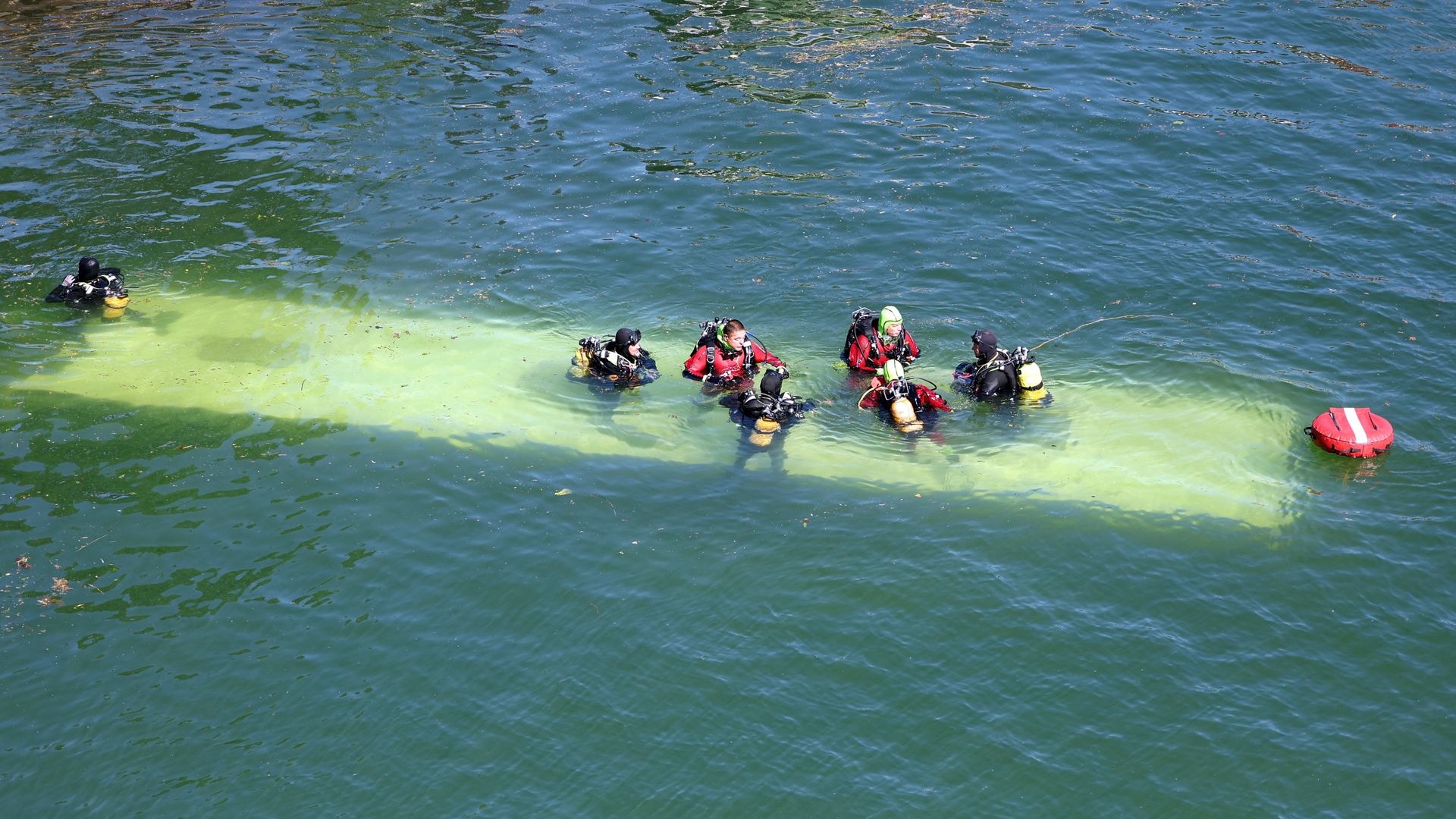
Rescue divers will tell you that the underwater world of an urban river is a graveyard of things we’ve forgotten. Bicycles, shopping carts, and the silt of a century. When a bus joins that collection, it looks alien. It sits on the riverbed, its headlights occasionally still glowing through the murk like the eyes of a deep-sea creature, illuminating the swirling debris of people’s lives.
Floating wallets. A single shoe. A child’s backpack.
The rescue operation wasn't just a feat of logistics; it was a battle against the river’s grip. First responders arrived to see heads bobbing in the current, the lucky ones who smashed through windows or escaped as the pressure equalized. The water in these rivers is rarely clear. It is a soup of runoff and sediment, blinding and numbingly cold.
Hypothermia is a quiet thief. It starts with a shiver and ends with a strange, sleepy indifference to the fact that your heart is slowing down. The people pulled from the water weren't just wet; they were transitioning into a state of biological shutdown. Each hand that reached down from a rescue boat was pulling a soul back from the edge of a very long, very dark sleep.
The Invisible Ripples
We consume news of accidents like this and then we board our own buses, our own trains, our own planes. We trust the system because the alternative—acknowledging the fragility of our infrastructure—is too heavy to bear.
But the system is held together by people. People who get tired. People who are still learning. People who make a mistake on a bridge on a Tuesday afternoon and change the lives of twenty strangers forever.
The bridge where it happened likely looks the same today. The tire marks have been washed away by the rain or covered by the grit of thousand other commutes. But for those who were inside that glass box as it dipped beneath the surface, the sound of rushing water will never truly stop. They will hear it every time they cross a bridge. They will feel it every time a bus leans a little too far into a turn.
Survival isn't the end of the story. It is the beginning of a long, silent negotiation with the fact that you are still here, while the bus—and the person you were before you hit the water—stays at the bottom.
The river continues to flow. It moves past the city, indifferent to the metal we pull from its bed, carrying the silt of the day toward the sea, leaving the rest of us on the shore, shivering and suddenly, violently awake.