On Wednesday, July 15, 2026, the physical border fence separating Spain and Gibraltar—known locally as La Verja—officially came down. For the first time in generations, people and cars crossed the frontier between the tiny British Overseas Territory and southern Spain without pulling out a passport.
If you've ever spent hours roasting in a stationary car at the Gibraltar border, breathing in exhaust fumes while Spanish police meticulously inspected every single vehicle, you'll know exactly how massive this is. It's the end of a long, painful post-Brexit headache.
But don't assume Gibraltar just joined the European Union by the back door, or that Britain handed the keys of "the Rock" to Spain. The legal and practical reality of this new UK-EU treaty is incredibly bizarre. Under the hood, Gibraltar has achieved a strange geopolitical status: it remains proudly British, yet it's practically functioning as a member of the European Schengen free-travel zone.
How does that actually work? If the border checks at the land fence are gone, where did they go?
The Schengen Illusion: Is Gibraltar in or Out?
Let's clear up the biggest misconception right away. Gibraltar is not part of the Schengen Area.
If you read the draft treaty published earlier this year, the legal wording is very precise: Gibraltar remains outside the Schengen Zone and the EU, but Schengen border rules are now being applied at its external borders.
Think of it like this: the Schengen perimeter has basically been stretched. Instead of the border sitting at the land fence between Spain and Gibraltar, the "Schengen wall" has been pushed back to Gibraltar’s airport and seaport.
[Old System]
Spain (Schengen)  <-- HARD BORDER (Checks) -->  Gibraltar (UK)  -->  Gibraltar Airport

[New 2026 System]
Spain (Schengen)  <-- FREE MOVEMENT -->  Gibraltar (UK)  <-- HARD BORDER (Checks) -->  Gibraltar Airport
Because those checks have migrated to the ports of entry, the land border can finally breathe. Daily life is instantly easier for the 15,000 frontier workers who cross from Spain every morning to keep Gibraltar's economy running. They can now walk or drive straight through.
But if you are arriving from outside—specifically from the UK—things are about to get a lot more complicated.
What Flying from the UK to Gibraltar Looks Like Now
For British tourists, Gibraltar has always been a convenient slice of home in the sun. You fly in, you see the red phone boxes, you buy tax-free gin, and you don't worry about EU rules.
That convenience just took a massive hit.
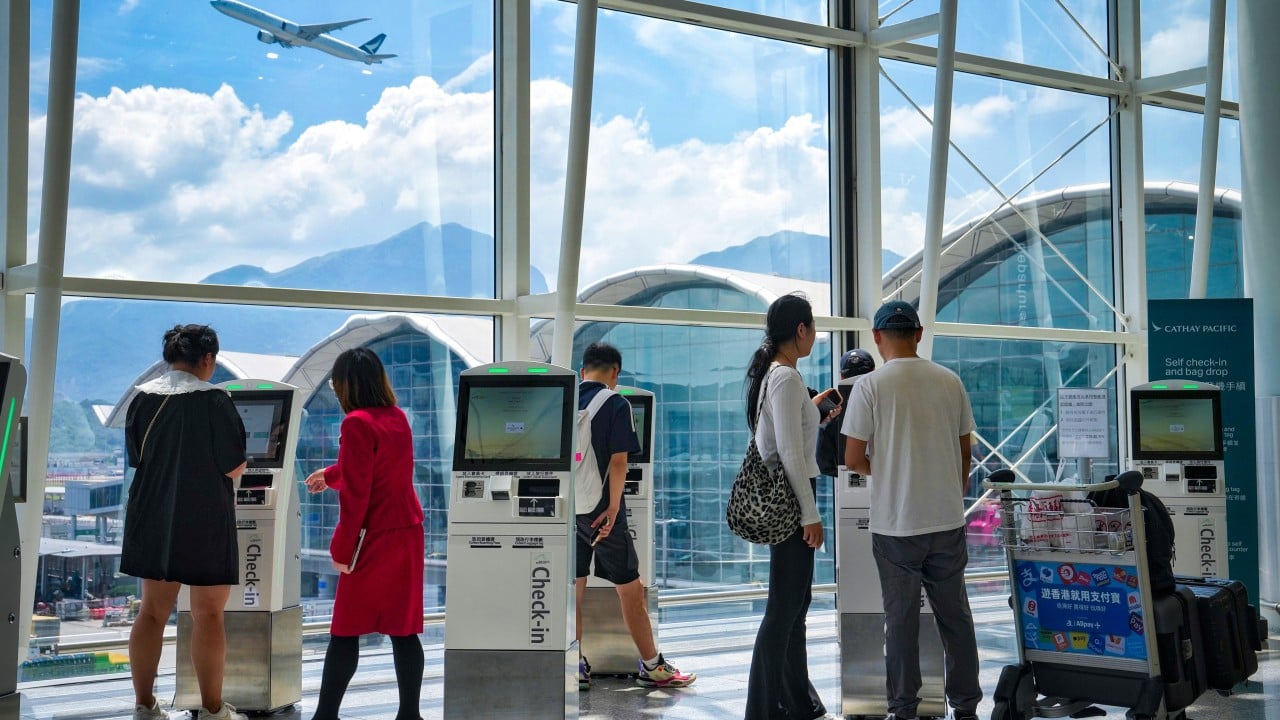
Because Gibraltar’s airport is now treated as an external Schengen entry point, anyone flying in from the UK has to clear Schengen border controls. Even worse, you have to deal with the EU’s newly operational digital border system, the Entry/Exit System (EES).
The EES, which was fully phased in earlier this year, replaces traditional ink passport stamps with biometric data. That means the first time you land in Gibraltar, you'll need to have your fingerprints scanned and your photo taken.
The physical setup is also bound to raise some eyebrows. Because Spain is responsible for enforcing Schengen rules, Spanish border police are now stationed inside Gibraltar's airport.
To avoid the political nightmare of Spanish officers roaming a British military hub, they've built a joint facility right on the boundary line—jokingly dubbed the "Schengen shack" by Gibraltar's Chief Minister, Fabian Picardo. You'll essentially go through Gibraltar's local security, and then immediately step up to a Spanish-run desk to get your biometric Schengen clearance.
Do those 90 days count?
Yes. This is the sting in the tail for British travelers.
If you are a UK citizen visiting Gibraltar, the days you spend on the Rock do not count toward your Schengen 90-day limit while you are physically in Gibraltar.
However, because the land border checks are gone, the moment you step foot across the old line into Spain, your Schengen 90-day clock is already running because you cleared Schengen entry at the airport. If you plan to split your holiday between Gibraltar and the Costa del Sol, you need to track your rolling 180-day window incredibly closely.
The Winners and Losers of the Deal
A compromise this complex doesn't happen without some serious trade-offs.
The Winners: Frontier Workers and Local Businesses
The real victors here are the local communities on both sides of the old fence. Spain’s Campo de Gibraltar region has historically suffered from brutal unemployment rates. Keeping the border open secures jobs and keeps money flowing. Commuters no longer lose hours of their lives every week waiting in arbitrary lines.
The Losers: Bargain Hunters
Gibraltar has long been a haven for cheap, duty-free shopping because it sat outside the EU customs union.
To make this borderless system work for goods as well as people, Gibraltar is aligning its customs rules with the EU. It is introducing a new transaction tax (essentially a VAT equivalent) starting at 15%. Over the next few years, this rate will creep up. Cheap cigarettes, alcohol, and fuel are going to get notably more expensive as Gibraltar levels the playing field with Spain.
Sovereignty Didn't Budge
Every time Spain and the UK sign a paper regarding Gibraltar, unionists worry that the UK is slowly giving up the territory.
But sovereignty was the absolute red line during these four years of brutal negotiations. The treaty explicitly states that nothing in the agreement changes the legal status or British sovereignty of Gibraltar.
Furthermore, the UK’s massive military base on the Rock remains entirely under British command, exempt from any Schengen rules. Royal Navy vessels and RAF military transport can slip in and out without Spanish oversight.
What You Need to Do Before You Visit
If you're planning a trip to the Rock under this new regime, forget the old rules.
- Register for EES early if possible: If you've already traveled to the Schengen zone recently and completed your biometric registration, your transit through Gibraltar Airport will be significantly faster.
- Expect airport delays initially: The rollout of EES has been notoriously bumpy across Europe. With Gibraltar's airport handling flights packed with UK holidaymakers, queue bottlenecks at the joint Spanish-British desks are highly likely during peak travel seasons.
- Watch your tax allowances: If you're crossing back and forth with goods, keep in mind that land border duty-free limits (€300) are tighter than air limits (€430) during the current transition period.