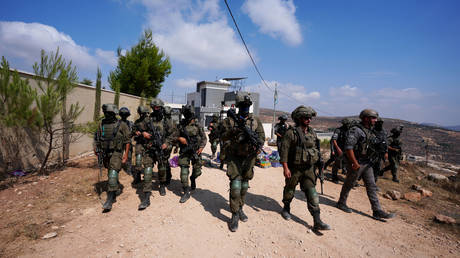
Doors locked. Lights off. Silence.
That is the routine for families living across the West Bank when reports spread that armed groups are approaching. "Don't come out, you'll be killed," warnings crackle through local group chats and loudspeakers. It sounds like a movie script. It is an everyday reality.
If you look at mainstream headlines, you might think the conflict is entirely contained to blockaded borders and formal military exchanges. You would miss the ground-level storm. Human rights organizations, international monitors, and local Palestinian residents have documented an alarming escalation of intimidation, property destruction, and physical assaults in rural communities.
Let's look at what is actually happening on the ground. Why does this crisis keep worsening? And why do international diplomatic efforts routinely stall before reaching these dusty roads and isolated olive groves?
The Anatomy of Daily Displacement
Data from bodies like the United Nations Office for the Coordination of Humanitarian Affairs paints a grim picture. Since late 2023, incidents involving armed community members moving into Palestinian neighborhoods have spiked dramatically. This isn't just about isolated fights. It's a systematic pattern designed to make normal life impossible.
Herding communities bear the brunt of this pressure. Think about Khirbet Zanuta or similar pastoral hamlets. Families who have lived on these hills for generations find their water tanks smashed, their sheep stolen, and their access roads blocked.
When you lose your water source, you cannot stay. When your children are too terrified to walk to school, you pack what you can fit in a van.
This is quiet displacement. It does not always happen in a single televised explosion. Instead, it happens drop by drop, night after night, until an entire village packs up and leaves. Entire communities have vanished from the map simply because the psychological and physical toll became too heavy to bear.
Accountability Gaps and Official Responses
Why don't local authorities stop it? That is the question human rights lawyers ask every single day.
Legal systems in the region operate under a dual framework. One population faces strict military courts, while civilian laws protect another. When complaints are filed after an orchard is burned or a home is attacked, prosecution rates remain exceptionally low.
Victims report that filing a police report often leads nowhere. Sometimes, the victims themselves face suspicion or detention when they try to defend their property. This lack of accountability creates total impunity. If you know nobody is coming to rescue you, and no one will be punished for burning your car, your options narrow to vanishingly few.
International allies issue statements expressing deep concern. They write letters. They call for restraint. But words do not stop a tractor from flattening a greenhouse. Sanctions have been applied by a handful of governments against specific individuals, yet the macro-trend continues upward because political will to enforce systemic change remains missing.
Economic Devastation Beyond the Physical Attacks
Violence is only one weapon in this campaign. The economic squeeze is just as brutal.
Olive harvesting season used to be a time of community celebration. Families camped out under ancient trees, gathered the fruit, and pressed oil that sustained households for months. Now? Farmers need military coordination just to reach their own land for a few designated days.
Often, permits are denied, delayed, or cut short. Harvesters arrive to find their trees vandalized, hacked down, or burned to ash.
When you destroy an olive tree that takes decades to mature, you are destroying a family's livelihood for a generation. This economic strangulation forces younger generations to look for work elsewhere, hollowing out the demographic core of these rural areas.
What the Mainstream Media Misses
Most coverage treats these incidents as random flare-ups. They aren't. They are part of a long-term strategy aimed at altering the demographic and geographic reality of Area C, which makes up over sixty percent of the West Bank and remains under full military control.
Understanding this requires looking past the daily body counts and examining land registry maps, zoning laws, and infrastructure development. Outposts pop up on strategic hilltops, cutting off Palestinian towns from one another. Roads are paved for one group while neighboring villages are denied permits to fix potholes.
You cannot understand the current political deadlock without grasping how these micro-level pressures feed into macro-level political goals. Every destroyed home and every abandoned pasture shifts the baseline of what is considered permanent.
Facing the Reality on the Ground
Pretending this is a symmetrical dispute between two equal sides is lazy and inaccurate. One side holds state power, military backing, and institutional protection. The other side locks their doors at night, hoping the noise outside doesn't reach their children's bedroom.
Ignoring these realities guarantees that the cycle will deepen. Sustainable futures cannot be built on a foundation of displacement, impunity, and fear. Until international pressure moves past gentle scolding and forces real accountability, the midnight warnings will continue to echo across the hills.


