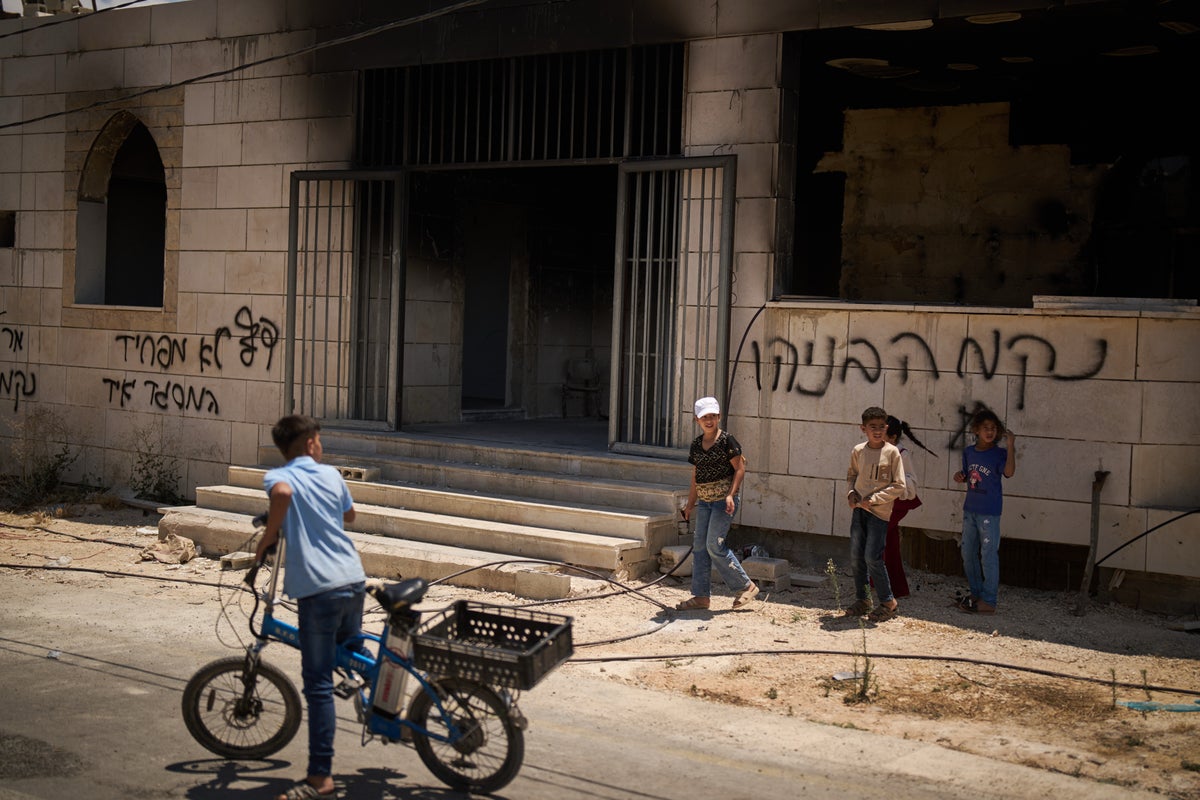
The fires burning at two mosques in the northern West Bank this weekend aren't isolated incidents. They’re symptoms of a rapidly deteriorating security situation. Early Sunday morning, villagers in Qusra and Kour woke up to the smell of smoke and the sight of their houses of worship under attack. This wasn't just vandalism. It was a targeted, violent response to a lethal clash that occurred just days prior.
If you’re trying to make sense of the chaos in the occupied West Bank, you have to look beyond the headlines of individual attacks. The data shows a disturbing trend. UN figures and independent humanitarian reports indicate that settler violence has surged by 45% in the first half of 2026 compared to the same period last year. We’re talking about over 1,020 recorded incidents since January.
The Reality on the Ground
When you hear about these incidents, it's easy to see them as chaotic outbursts. But the patterns tell a different story. Ahmed Abu Mahmoud, a 64-year-old resident in Qusra, heard the attackers at 3 a.m. By the time he realized what was happening, the mosque was already engulfed. He couldn't fight the fire alone. When the military eventually arrived, they observed the scene and left without intervening. That experience isn't an outlier. It’s what many Palestinians in the region describe as a regular occurrence.
The attack on the Qusra mosque left behind clear evidence of the motive. Perpetrators spray-painted "revenge Benayahu," a reference to an Israeli soldier killed on Friday, alongside slogans like "the land of Israel is redeemed with blood." In Kour, security footage captured three individuals in civilian clothes setting off an explosive device at the entrance of the mosque. The message is blunt. The violence is becoming more organized, more frequent, and more audacious.
Why This Cycle Isn't Stopping
The clash that sparked this weekend’s arson happened near the village of Tal. On Friday, four Palestinians and two Israeli soldiers were killed. The details remain murky, as they often do in these flashpoints, but reports from both local Palestinian officials and Israeli media confirm that a group of settlers, some armed, entered the area. A standoff ensued. It turned deadly.
Critics of the current government argue that there's a lack of accountability fueling the fire. While the Israeli military often states it condemns these attacks, arrests of settlers involved in such violence remain rare. Meanwhile, the military response toward Palestinian communities is swift and severe. Over the weekend alone, more than 70 Palestinians were arrested in what authorities described as an effort to contain the violence.
The impact on local communities is devastating. Children are bearing the brunt of this instability. Save the Children reported that over 1,000 Palestinian children were displaced by settler violence in the first six months of 2026. That’s half the total number displaced over the entire previous three-year period. Families are living in a state of constant fear. Their homes, vehicles, and agricultural land are frequently targeted.
A Systemic Failure
You need to understand the structural context to grasp why this matters. Most countries and international bodies view Israeli settlements in the West Bank as illegal. Despite this, expansion has continued at a breakneck speed under the current government. This isn't just about territory. It's about a fundamental shift in how law and order are perceived—and enforced—on the ground.
When the Palestinian Prime Minister's office describes these events as "state-backed settler terrorism" leading to "systematic pogroms," they're signaling a total breakdown in communication and trust. The incident at the stone-cutting facility in Kafr Malik, where workers were attacked, shows that this isn't limited to religious sites. It’s affecting the local economy and the basic ability of people to go to work.
Taking Stock of the Situation
If you’re looking for where this goes next, keep an eye on a few key indicators:
- Deployment Patterns: Are security forces actually preventing attacks, or are they only responding after the fact?
- Diplomatic Pressure: Watch for shifts in how international bodies address the displacement statistics.
- Local Resistance: As displacement numbers hit record highs, the potential for further clashes rises.
This isn't a situation that's going to resolve itself through press releases. The current trajectory suggests that without a significant change in how these incidents are investigated and prosecuted, the cycle of violence will only continue to accelerate. The mosques in Qusra and Kour are just the latest casualties in a conflict that is expanding into every corner of daily life in the West Bank. If you want to understand the true cost of this instability, look at the families who have lost their homes and the communities living in constant, justified fear.