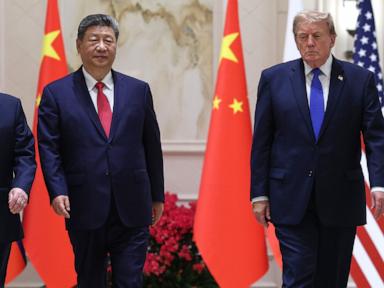
Every major newsroom in Washington and London spent the week hyperventilating over a credential revocation in Beijing. A Bloomberg journalist shouted a question out of turn at an earlier diplomatic event, and Chinese officials subsequently barred her from a high-level trilateral meeting.
The Western press immediately reached for its favorite dust-covered playbook. They framed the incident as another predictable skirmish in an ongoing war against press freedom. According to the standard narrative, Beijing simply cannot handle unscripted scrutiny, and punishing a reporter for breaking protocol proves that authoritarian fragility is alive and well.
That analysis is lazy. Worse, it completely misses the actual game being played on the ground.
If you have spent any real time managing international communications, running foreign bureaus, or advising executives navigating cross-border crises, you recognize this moment immediately. It is not a story about censorship. It is a story about asymmetrical diplomatic choreography, the dying utility of the theatrical press shout, and why Western media outlets keep walking into traps they built themselves.
The Myth of the Heroic Microphone
Western journalism romanticizes the ambush. From the White House briefing room to the steps of Capitol Hill, shouting a sharp question over a departing official is treated as a badge of honor. In Washington, Brussels, or London, that behavior is baked into the theater. Politicians expect it. Press secretaries budget for it. Even when an official ignores the shout, the clip plays well on cable news and signals to subscribers that their journalists are fearless truth-tellers holding power to account.
Transport that exact behavior into a tightly scripted East Asian diplomatic summit, and the mechanics change entirely.
In Beijing, diplomatic events are not chaotic town halls. They are precision-engineered rituals where every camera angle, seating chart, and pool question is negotiated weeks in advance. When a reporter breaks that choreography by shouting unapproved questions at a prior event, Chinese protocol officers do not view it as bold journalism. They view it as a deliberate breach of contract and an attempt to hijack a state-staged visual.
By barring the Bloomberg reporter from the subsequent trilateral meeting, Beijing was not reacting out of sudden panic over a tough question. Officials were enforcing a predictable boundary: violate the rules of access in room A, and you lose your seat in room B.
What the Press Freedom Narrative Conveniently Ignores
Mainstream coverage of the incident relies on a massive blind spot. It pretends that access to high-level diplomatic rooms is an unconditional right rather than a transactional privilege negotiated between states and media organizations.
Consider how access actually works in every major capital on earth.
- Washington: The White House Correspondents' Association and the Secret Service strictly control who enters the East Room. Reporters who disrupt formal bilateral press sprays or violate pool agreements routinely find themselves stripped of hard passes or quietly dropped from travel manifests.
- Brussels: European Council summits operate on rigid accreditation tiers. Step outside the designated press pen or disrupt an official photo op, and security revokes your badge before the summit ends.
- Tokyo: The kisha club system enforces strict behavioral codes that make Beijing look positively informal by comparison.
When Western outlets cover their own governments enforcing these rules, they call it "maintaining order" or "enforcing press pool guidelines." When Beijing enforces its own version of access control after a documented protocol breach, the exact same behavior is framed as an assault on democratic values.
This double standard blinds editors to the operational reality of covering China. You cannot treat Zhongnanhai or the Diaoyutai State Guesthouse like the North Lawn of the White House and act shocked when the consequences are swift and bureaucratic.
The Real Casualty Was Intelligence, Not Optics
I have watched major financial and media organizations burn millions of dollars and years of relationship capital in Asia because they prioritized performative confrontation over actual intelligence gathering.
Look at what Bloomberg actually lost in that moment.
Bloomberg is not a tabloid. It is a terminal business whose multi-billion-dollar valuation rests on delivering actionable, granular market intelligence to institutional traders, central bankers, and corporate boards. Its clients do not pay twenty-five thousand dollars a year per terminal to watch a reporter yell a question that goes unanswered. They pay to know what was said inside the room during a trilateral meeting between major economic powers.
When a reporter gets barred from a trilateral summit over a prior outburst, the outlet trades substantive access for a fleeting moment of viral friction.
- Zero new data: A shouted question at a departing official almost never yields a policy shift or a candid admission. It produces a blank stare and a security escort.
- Lost room presence: Being inside the trilateral meeting—even under strict pool rules—allows a sharp correspondent to read body language, note which deputy ministers are taking notes, observe side conversations, and verify the exact phrasing of translated statements.
- Institutional blowback: In diplomatic ecosystems built on long-term institutional memory, a single credential revocation does not stay isolated to one reporter. It creates friction for every colleague applying for visas, ministry briefings, and corporate interviews across the bureau for the next twelve months.
The competitors covering this story celebrated the confrontation while ignoring the strategic blunder. In high-stakes international reporting, getting kicked out of the room is rarely a victory. Usually, it just means your competitors get the story while you write a press release about your own exclusion.
Why Beijing Played This Hand Now
To understand why Chinese officials acted decisively here, you have to look at the broader diplomatic calendar. Trilateral meetings—whether involving Beijing, Tokyo, and Seoul, or major European trade blocs—are delicate balancing acts. Every participant enters the room with fragile domestic political constraints and narrow negotiation mandates.
Beijing's primary objective during these summits is narrative control and visual stability. Officials want images of calm, senior statesmanship projecting economic reliability to nervous global markets.
An unscripted shouting match in front of international cameras shatters that visual instantly. Even if the question is ignored, the video clip dominates the news cycle, shifting coverage away from trade agreements or diplomatic thaws and back toward confrontation.
By swiftly barring the specific journalist responsible for the earlier disruption—while still allowing broader press pool coverage to proceed—Beijing executed a surgical warning. The message to every foreign correspondent in the capital was unmistakable: we will tolerate tough written analysis, and we will tolerate pointed questions submitted through official channels, but we will not allow individual reporters to turn state summits into cable news theater.
Dismantling the Wrong Questions
If you search for coverage of this incident, the prevailing questions revolve around whether China is closing off to foreign media or whether Western outlets should boycott state events in protest. Both questions miss the mark.
Is China shutting out all foreign financial media?
No. Beijing desperately needs foreign capital, institutional investors, and global trade flows. State ministries actively court financial wire services because terminal headlines move markets and validate China's economic weight. The restriction was targeted at a specific behavioral violation, not a blanket ban on financial journalism.
Should Western newsrooms stage collective walkouts when a reporter is barred?
Walkouts feel great in editorial meetings and accomplish nothing in reality. State media agencies and regional outlets from Asia, the Middle East, and Europe will happily take the empty seats, publish the official readouts, and capture the market-moving headlines while Western bureaus sit outside writing op-eds about solidarity.
Does shouting questions ever force accountability from state officials?
In open parliamentary systems where politicians rely on domestic voters who watch evening news clips, yes. In centralized diplomatic systems where officials answer exclusively to internal party leadership, public shouting does not create accountability. It simply triggers risk-aversion protocols that reduce press access for everyone else.
The Honest Downside of Playing by Protocol
Taking a disciplined, protocol-aware approach to diplomatic reporting carries real risks, and pretending otherwise would be dishonest.
If foreign bureaus become too deferential to host-government choreography, they risk slipping into stenography. State press offices across the world—not just in Beijing—love compliant journalists who stick to pre-approved scripts and never press on uncomfortable economic data, human rights issues, or geopolitical friction. Over-indexing on access can slowly erode a newsroom's editorial edge until its coverage reads like a translated ministry press release.
The discipline required to navigate this tension is immense. Great foreign correspondents do not choose between reckless shouting and passive compliance. They keep their heads down during the staged photo ops, maintain impeccable professional decorum in the room, and then use their unrivaled access to sources, data, and off-the-record briefings to publish devastatingly accurate reporting once they leave the building.
How Smart Organizations Actually Navigate High-Stakes Access
Whether you are running a foreign news bureau, leading corporate affairs for a multinational bank, or managing government relations in a tightly regulated market, the rules of engagement are identical.
- Separate theater from intelligence. Never sacrifice long-term informational access for a short-term public relations stunt. If an action generates applause at home but locks you out of the room where decisions are made, it is a bad trade.
- Master the local rules of protocol before pushing boundaries. You cannot subvert a system effectively if you do not understand its tripwires. Know exactly which rules are negotiable and which ones trigger automatic administrative retaliation.
- Apply pressure through analysis, not disruption. The most powerful tool a financial journalist or analyst holds is not a loud voice in a hallway. It is the ability to connect disparate data points, expose contradictions in official policy, and publish rigorous reporting that markets take seriously.
- Protect the bureau over the individual. In cross-border environments, individual grandstanding creates collective liability. Operational discipline protects the entire team's ability to function on the ground.
Western media outlets love to cast themselves as fearless outsiders storming the gates of power. That romantic self-image sells subscriptions in New York and London, but it is a liability in Beijing. The reporters who actually break the biggest stories out of China are not the ones yelling over velvet ropes at diplomatic photo ops—they are the ones quietly sitting inside the room, taking notes while everyone else is locked outside.