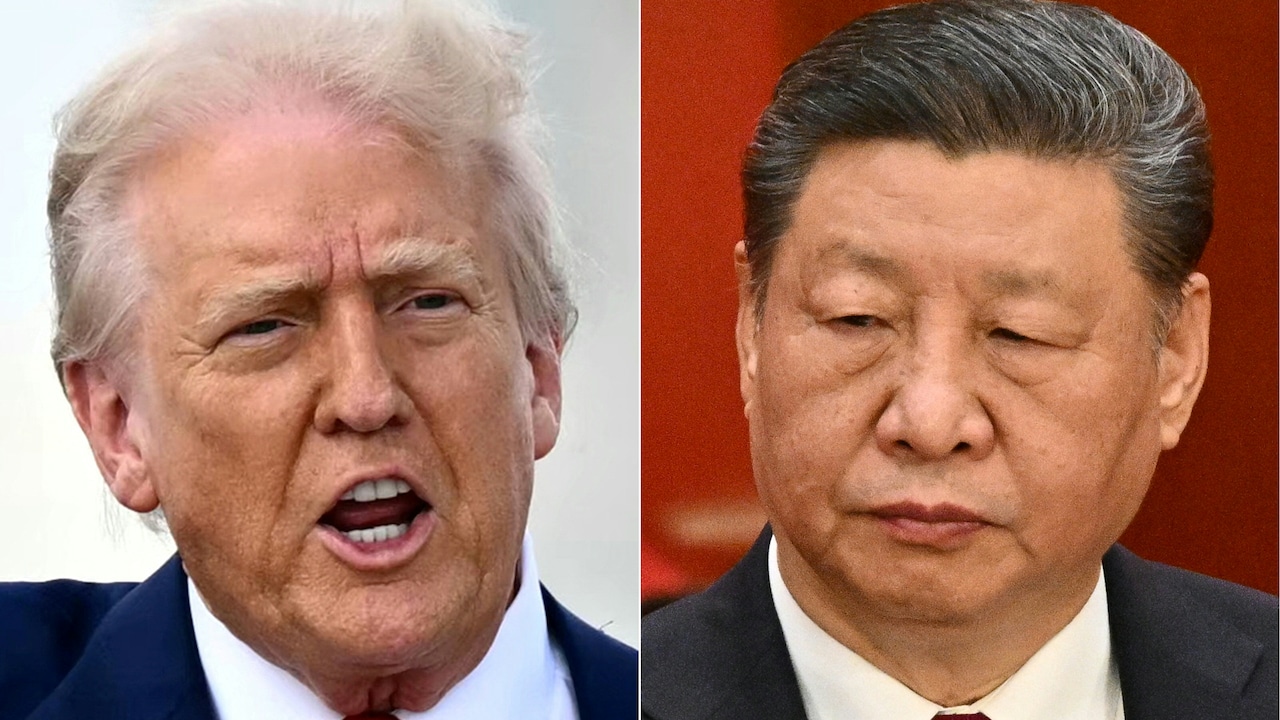
Donald Trump wants a brand-new, massive White House ballroom because he claims "everyone wants to see" Chinese President Xi Jinping on September 24. The media is already playing its designated role, treating this rumored autumn summit as a tectonic shift in global economics. Analysts are breathlessly speculating about tariff rollbacks, tech ceilings, and post-Iran war stability.
They are missing the entire point.
This announced visit is not a triumph of strategic diplomacy. It is a high-stakes theatrical production where Washington provides the stage and Beijing walks away with the real leverage. Xi Jinping is not crossing the Pacific to negotiate a grand bargain or bow to American economic pressure. He is using Trump’s obsession with grand spectacles to buy time, project global parity, and formalize a transactional relationship that costs China absolutely nothing.
The lazy consensus among political commentators is that face-to-face meetings between these two men yield systemic breakthroughs. Look closer at the mechanics of how these summits actually operate. The reality is far more transactional, cynical, and dangerously misleading for the global market.
The Myth of the Grand Autumn Breakthrough
Mainstream financial outlets love a predictable narrative arc. They frame the proposed September 24 meeting—carefully timed alongside the United Nations General Assembly—as the natural continuation of the May summit in Beijing. They want you to believe that because both leaders are talking, the structural foundations of US-China conflict are being quietly resolved.
This is pure fiction.
I have watched administrations spend years preparing for bilateral summits, obsessing over commas in joint statements while completely ignoring the structural reality on the ground. Xi Jinping has only attended the UN General Assembly once since taking office in 2012. He does not do casual drop-ins. If he is aligning a potential Washington visit with his UN schedule, it is a logistical convenience, not a diplomatic concessions tour.
By floating a precise date while bragging about building a new venue to hold thousands of people, Trump has committed the cardinal sin of negotiation: he showed how desperately he wants the meeting to happen. In the rigid, protocol-driven world of Chinese foreign policy, an American president publicly clamoring for a massive crowd to witness a visiting autocrat is viewed as a positioning victory before anyone even sits down at the table.
Dismantling the People Also Ask Echo Chamber
The standard questions filling search engines and cable news chyrons right now are fundamentally flawed. They ask the wrong things because they assume both nations are playing the same game.
Will a September summit end the trade war?
No. To believe this is to misunderstand the core objective of modern trade policy. The tariffs are not bargaining chips waiting to be traded away for a few billion dollars in soybean purchases. They are permanent fixtures of a containment strategy. China knows this. Beijing is not planning to dismantle its industrial overcapacity or abandon its state-subsidized electric vehicle and battery sectors just because Trump builds a larger ballroom. They will offer superficial agricultural buying pledges—much like the ones signed after the May summit—to give the American president a domestic victory he can market to his base. In exchange, China secures a predictable operating environment for another six months while continuing its internal push for technological self-reliance.
Can Trump and Xi stabilize the Taiwan Strait?
This is the most dangerous misunderstanding of all. During the May talks in Beijing, Xi explicitly stated that Taiwan independence and cross-Strait peace are as irreconcilable as fire and water. The media interpreted the subsequent creation of a "normalized stability" framework as a win. It was a tactical retreat. Beijing uses these diplomatic intervals to alter the status quo through gray-zone warfare, coast guard patrols, and economic encirclement. Agreeing to "normalized stability" simply means China promises not to launch an outright invasion this month, provided the US ignores the slow, systematic squeeze Beijing applies every single day.
The Ballroom Economy vs. Structural Reality
Imagine a scenario where a corporate CEO spends millions remodeling the executive suite specifically to impress a rival company's founder, announcing to shareholders that the upgrade is justified because the rival is finally visiting. Shareholders would immediately question the CEO's priorities. Yet, when the same logic is applied to the White House grounds, commentators praise it as visionary statecraft.
The focus on physical infrastructure—the new ballroom, the granite helipad on the South Lawn funded by corporate interests—highlights the superficiality of the current diplomatic track. While Washington prepares a physical stage for a photo-op, Beijing is executing a hard-nosed, structural economic strategy.
- Asymmetrical Commitments: The United States offers highly visible, politically charged platforms that legitimize China's status as an equal global superpower. China offers vague, easily reversible purchasing targets.
- The Tariff Illusion: American businesses operate under the assumption that tariffs will eventually ease if diplomacy succeeds. The reality is that the tariff walls are permanent. The supply chain decoupling is happening regardless of how many toasts are made in Washington.
- The Illusion of Deterrence: High-profile summits create a false sense of security. They make the global financial system believe the risk of conflict has dropped to zero, masking the ongoing, aggressive cyber and maritime gray-zone operations that happen beneath the surface.
I have seen multi-billion-dollar corporations stall their supply chain diversification strategies for months because executives genuinely believed a single presidential handshake would magically reverse five years of structural decoupling. It never does. The macro trends are set in stone: domestic supply chains are fracturing, localized manufacturing is mandatory, and the geopolitical risk premium is a permanent cost of doing business.
The Trap of Bilateral Flattery
The core vulnerability of the current American approach is the belief that personal relationships can override institutional ideologies. Trump frequently praises Xi, calling him a great leader and emphasizing their personal friendship. While this makes for compelling television, it ignores how decisions are actually made within the Chinese Communist Party.
Xi Jinping does not operate on sentiment. He operates on historical destiny and cold, calculated state power. Every smile, every shared toast, and every agreement to attend a dinner banquet is vetted through a rigorous institutional framework designed to maximize China's global positioning. When an American leader emphasizes personal bonds, it signals to Beijing that the administration can be managed through ego strokes and symbolic gestures rather than hard, verifiable concessions.
The downside to point this out is obvious: it sounds deeply pessimistic, and it offers no easy solutions for corporate planners who want a return to the frictionless global trade of the early 2010s. It is far more comfortable to buy into the narrative that a grand September summit will fix everything. But comfort is a liability in a fragmented global economy.
The upcoming September 24 meeting will produce incredible visuals. There will be grand dinners, statements about mutual respect, and potentially a massive gathering in a newly minted White House venue. The stock market will likely rally for forty-eight hours on the news of "historic cooperation."
But when the banners are taken down and the Chinese delegation boards their flight back to Beijing, the fundamental realities will remain entirely unchanged. The tariffs will stay. The technology restrictions will tighten. The gray-zone provocations in Asia will resume. Trump may get his packed ballroom, but Xi will leave Washington with exactly what he wanted: another block of time secured, another American administration managed, and the illusion of stability intact while the underlying conflict marches steadily forward. Stop looking at the guest list and start looking at the structural ledger.
Trump Invites China's Xi to White House in September
This video documents the moment President Trump extended the invitation to President Xi Jinping, highlighting the exact rhetoric and staging that drives the superficial diplomatic narrative analyzed above.