Every time a teenager pulls someone from the water, the media machine scrambles for the same cheap script. Camera crews descend. Politicians draft press releases. A White House invite materializes on cable news before the chlorine has even dried on the kid's swimsuit.
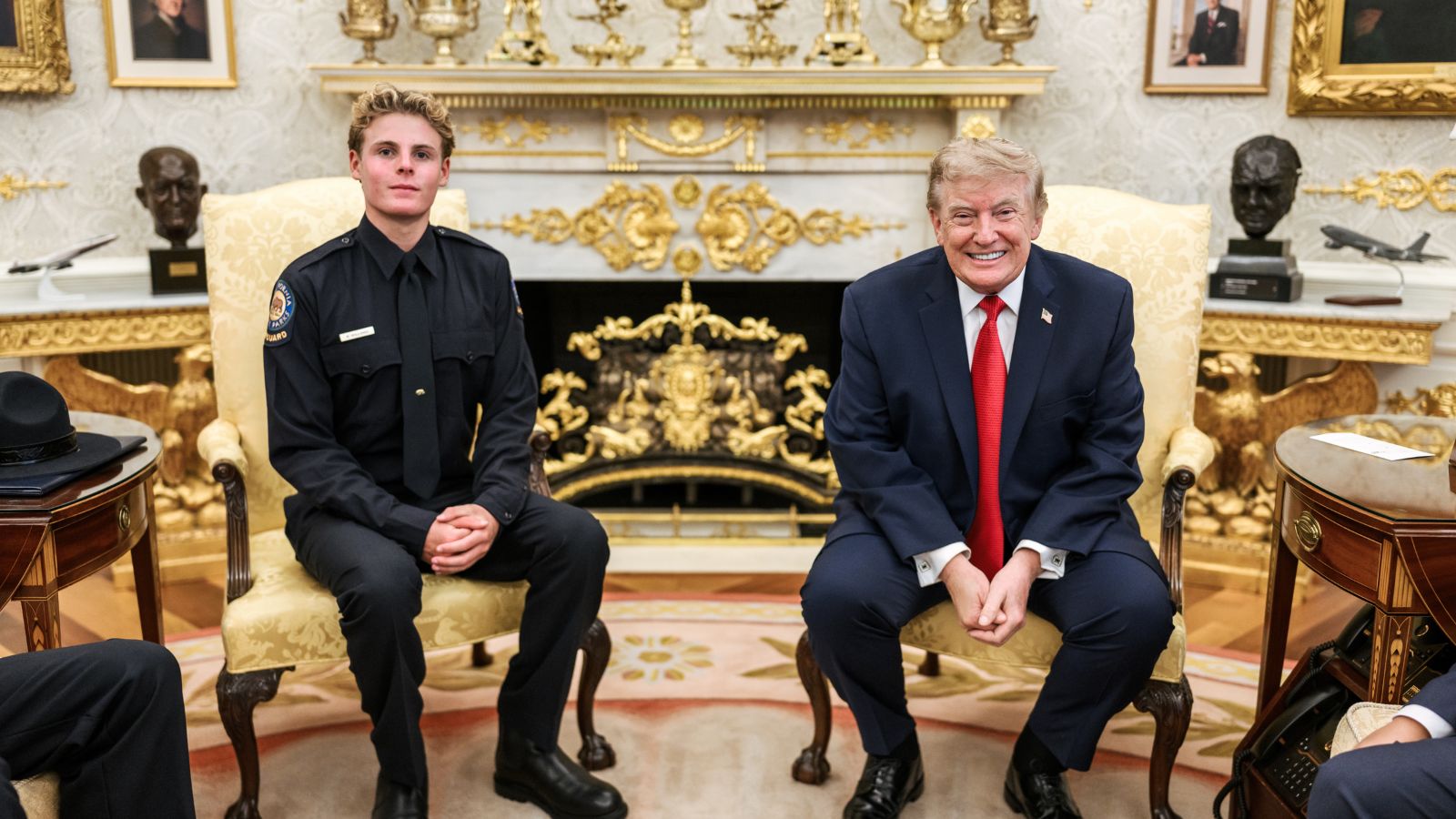
We love the narrative because it requires zero cognitive effort. A local lifeguard spots danger, acts on raw instinct, saves a life, and gets whisked away to Washington for a photo op with the President. It wraps human tragedy and adrenaline in a neat, patriotic bow.
It is also completely toxic to the actual culture of public safety.
When a young US teen lifeguard saves a struggling boy, the immediate rush to nationalize the event turns a localized act of competence into a celebrity audition. We are transforming standard emergency response into a lottery for political pageantry. By treating baseline professional competence like a miracle worthy of presidential fiat, we cheapen both the profession and the act itself.
Stop treating every routine rescue like a miracle. Start examining why we need national fairy tales to distract from systemic infrastructural failures.
The Lazy Consensus of Mediocrity
The standard media coverage of these rescues follows a predictable, exhausted formula. A headline drops noting the nationality of the victim, the hometown of the savior, and the eventual stamp of approval from the highest office in the land. The comment sections overflow with sentimental platitudes about faith in humanity restored.
This is the lazy consensus. It assumes that heroism is an accidental lightning strike rather than a drilled, repeatable outcome of physical conditioning and protocol.
Lifeguarding is not an amateur hobby practiced by well-meaning volunteers. It is an operational security role. A municipal pool or a public beach is a high-liability zone. When a lifeguard enters the water to extract a drowning victim, they are executing the exact job description they were hired, trained, and certified to perform.
Imagine a scenario where a commercial airline pilot lands a plane safely during an engine malfunction, and instead of a debrief with the FAA, they get flown to Washington to stand behind a podium while a politician takes credit for their calm demeanor. We would rightly call that absurd. We would recognize that the pilot was just doing the job they trained thousands of hours to execute.
Yet when a teenager drags a swimmer to safety, we strip away their professional agency and turn them into an emotional prop for a administration looking for a cheap win on the evening news.
The Danger of Political Parasitism
Politicians do not issue invitations to the White House out of pure civic gratitude. They do it for the optics of proximity. Aligning an administration with youth, diversity, and instantaneous courage is public relations armor.
When a young lifeguard gets pulled into the orbit of presidential photo ops, a transactional shift occurs. The rescue ceases to belong to the community where it happened. It becomes property of the political class.
I have watched local officials spend more time lobbying Washington for a mention than investing in better flotation assets, higher wages to retain experienced guards, or modern training regimens for municipal pools. The obsession with top-tier national validation masks a rotting base. If you pay your guards minimum wage, cut their hours, and leave them understaffed, you do not get to cash in on their heroics when someone nearly drowns on your watch.
The White House invite is a distraction technique. It tells the public that individual acts of grit can compensate for institutional decay. If a teenager has to save a life because safety ratios were stretched to the breaking point, a presidential handshake is not a reward. It is a cover story.
Dismantling the Rescue Myth
Let us look at the mechanics of water rescue without the emotional varnish. Drowning does not look like television. There is no flailing, no shouting, no dramatic splashing. It is silent. It is fast. It is an upright struggle against terminal exhaustion that lasts anywhere from twenty to sixty seconds before the victim slips beneath the surface.
A competent lifeguard scans a zone using a grid system, identifies passive or active distress, and initiates an entry within seconds. The physical extraction relies on cross-chest carries, tired swimmer rescues, or board deployments.
None of this relies on magic. It relies on muscle memory, situational awareness, and oxygen debt management.
When we label a teenager who executes this protocol a "hero," we imply that the outcome was improbable. We suggest that most teenagers would have frozen, panicked, or failed. That is a damning indictment of our expectations for youth, and it is empirically false. Thousands of lifeguards execute similar extractions every summer across thousands of municipal pools and ocean fronts. Most of them go home, wash the smell of chlorine out of their hair, and show up for their next shift without a camera crew in sight.
By elevating one specific teenager because their demographic makeup or the circumstances of the rescue fit a convenient media cycle, we demoralize the thousands of other guards who did the exact same thing that weekend and received a nod from an unimpressed pool manager.
The Economics of Underpaid Vigilance
If we actually cared about water safety, we would stop obsessing over Washington guest lists and start looking at payroll ledgers.
The average municipal pool in the United States faces a chronic staffing shortage. Why? Because cities refuse to pay competitive wages. When you can make more money folding sweaters at a retail chain with air conditioning and zero liability for human life, smart teenagers stop applying for pool jobs.
The result is a thinning of the ranks. Pools open late. Sections get closed off. Supervision ratios climb to dangerous levels where a single guard is expected to monitor eighty people thrashing around in chlorinated water.
When a rescue happens under those conditions, it is often not a triumph of the system; it is a miracle born of sheer luck that a capable kid happened to be looking in the right direction.
Inviting that kid to the White House costs the government zero dollars in structural reform. It is a brilliant arbitrage of emotional capital. Spend nothing on infrastructure, pay minimum wage to front-line staff, and then throw a parade for the survivors when things go right.
The Uncomfortable Truth About Recognition
True recognition is boring. It looks like hazard pay. It looks like mandatory double-staffing. It looks like continuous, rigorous in-service training rather than a once-a-year certification course taught by a bored instructor reading out of a 1990s manual.
We do not want boring solutions because boring solutions require budget appropriations and political friction. We want cinematic moments because cinematic moments fit into a two-minute segment between commercial breaks.
The teenager who saved that boy deserves praise for executing a high-stress task with a clear head. But they also deserve better than being used as a prop for a political system that treats public safety as an afterthought until someone nearly dies on camera.
The next time a local lifeguard makes the national news, do not look at the politicians smiling beside them. Look at the budget of the park district they came from. Check the hourly wage. Count the open positions on the hiring board.
The heroics are real. The infrastructure is failing. And no amount of hand-shaking in Washington is going to keep anyone afloat.