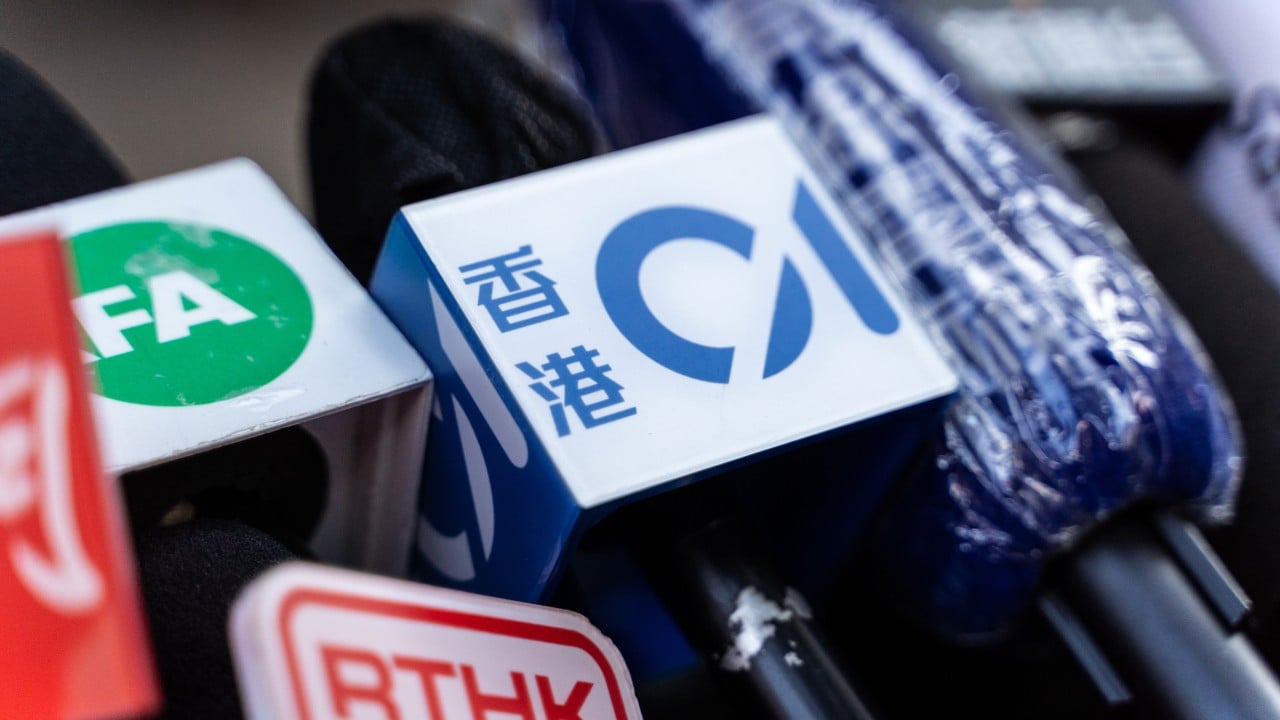
Two Hong Kong newsrooms get envelopes with white powder. Instantly, the conventional coverage turns into a predictable loop. Hazmat crews. Cordon tape. Lab tests. Boilerplate quotes from officials urging calm and condemning threats to press freedom.
That coverage misses the point.
When white powder arrives in a newsroom envelope, treating it first and foremost as a biological or chemical weapon story is a lazy consensus. Most of the time, the powder is harmless. Cornstarch. Baking soda. Chalk. Talc. Drywall dust. The real payload is not inside the envelope. The real payload is inside the newsroom.
Panic is cheap to manufacture. Attention is expensive to buy. A few grams of everyday kitchen or construction powder can shut down a floor, clear desks, stall publication cycles, and dominate headlines across the city for days. You do not need anthrax to disrupt a media organization. You only need a convincing prop and a predictable institutional reaction.
The Lazy Consensus Around Powder Threats
Standard reporting on white powder letters follows a worn script. First comes the dramatic scene description. Then comes the timeline of police arrival, protective suits, and laboratory screening. Finally comes the solemn framing about intimidation against journalists.
None of that is invented out of thin air. Threats against reporters and editors in contested media environments are real, and physical security lapses deserve scrutiny. Yet focusing almost exclusively on the substance inside the envelope mistakes the stage prop for the play.
In risk assessment and crisis management, professionals separate toxicity from utility. A substance can have near-zero biological toxicity and still carry massive operational and psychological utility for someone trying to rattle an institution. When commentators treat every powder scare as an attempted poisoning until proven otherwise, they hand the sender the exact drama the sender wanted.
Consider the math of disruption. A real chemical or biological attack requires sourcing, handling, containment, and delivery expertise, and still carries high operational risk for the sender. A hoax envelope requires a stamp, an address, and a pinch of harmless powder. Yet the immediate visible disruption in the target building can look remarkably similar during the first few hours before lab results come back.
That asymmetry explains why powder scares keep recurring whenever tensions rise. They are low-cost theater with high-visibility fallout.
Defining the Terms Before Anyone Panics
Precision matters here because sloppy language fuels fear. When a suspicious letter containing white powder arrives at a workplace or newsroom, people routinely conflate four distinct concepts:
- Hazard: The inherent potential of a substance or act to cause harm. Sugar has a hazard profile; ricin has a very different one.
- Exposure: Whether anyone actually inhaled, ingested, or absorbed a harmful dose through broken skin or mucous membranes. A sealed or lightly handled envelope often produces zero meaningful exposure even if a dangerous agent were present.
- Disruption: The stoppage of normal operations, evacuation of staff, loss of broadcast or print momentum, and diversion of police and emergency resources.
- Intimidation: The psychological pressure placed on reporters, editors, and support staff to self-censor, alter coverage, or feel unsafe at work.
News coverage routinely merges all four into a single ominous cloud. A headline about a suspicious white powder letter sent to media outlets makes the average reader picture a lethal toxin slipping through the mail slot. In reality, the disruption and intimidation often happen at full volume while the biological hazard turns out to be zero.
I have spent years advising organizations through high-stress security incidents, crisis communications, and operational continuity planning. I have seen companies and institutions blow millions of dollars overreacting to theatrical threats while ignoring basic vulnerabilities. I have watched leadership teams buy elaborate emergency gear, hire expensive consultants after a scare, and hold marathon crisis meetings over a substance that turned out to be inert powder, while leaving simple mailroom intake rules, visitor access, and digital security half-baked.
Fear makes smart people spend money on the most visible threat rather than the most probable one.
What the "People Also Ask" Questions Get Wrong
When a story like this breaks, search engines fill up with predictable questions. Most of them start from a flawed premise.
"How dangerous is white powder in a suspicious letter?"
That question treats "white powder" as if it were a single substance with a single risk level. It is not. In real-world mail incidents globally, the overwhelming majority of white powders turn out to be benign household or industrial materials. Dangerous agents like anthrax spores are far rarer, and even when a hazardous material is involved, actual harm depends on concentration, aerosolization, containment, and exposure.
Asking how dangerous white powder is without distinguishing between hoax material, chemical irritants, and biological agents is like asking how dangerous a mysterious liquid in a bottle is. It could be water. It could be bleach. Pretending those are interchangeable only inflames anxiety.
"Why do people send white powder to media outlets?"
The surface answer is intimidation. The deeper answer is leverage through spectacle.
A newsroom is not a random office building. Its business is attention, narratives, and public visibility. Sending a threatening or suspicious package to a media outlet targets a place that already amplifies events into public stories. Even if the sender's name never appears in the paper or broadcast, the event itself becomes a story about pressure on the press.
In strategic communication, scholars and security analysts—from Thomas Schelling's work on coercion and brinkmanship to modern crisis communication researchers—have long pointed out that intimidation works best when the target's reaction is visible and costly. A sender does not just want to frighten a desk clerk. The sender wants the whole city to see the police vans outside and feel the tension inside.
"How can newsrooms protect themselves from powder letters?"
If your answer is "install full airport-style screening and hazmat protocols on every piece of mail," you are solving yesterday's headline at today's expense. Most modern newsrooms receive very little high-risk physical mail compared to the volume of digital tips, calls, and legal or regulatory notices. Over-engineering physical mail screening can slow down legitimate deliveries and create false alarms that train staff to either panic or tune out warnings.
Real protection starts with boring basics: separating incoming mail from main editorial floors, training staff on calm containment rather than shaking or opening suspicious items, keeping clear backup workflows so a localized evacuation does not kill a news cycle, and refusing to hand the sender front-page hysteria.
A Thought Experiment in Newsroom Psychology
Imagine a scenario where two competing Hong Kong media outlets receive nearly identical envelopes containing an unknown white powder on the same morning.
At Outlet A, an intern tears the envelope open at a central desk, white dust puffs onto a keyboard, someone shouts, half the newsroom bolts for the stairs, and the editor rushes out a dramatic live update before lab tests finish. For the next forty-eight hours, Outlet A runs nonstop coverage of the threat, turning itself into the main character of the story.
At Outlet B, a mail handler follows a quiet protocol: no tearing, no shaking, place the item in a secondary containment bag in a designated intake area, notify building management and police calmly, and shift reporters to a remote or secondary workspace while emergency responders do their job. Outlet B reports the incident factually without turning its own staff's nerves into a soap opera.
In both cases, police still investigate. Responders still check the powder. Press freedom groups still pay attention.
Yet the psychological return to the sender is radically different. Outlet A gave the sender maximum chaos and maximum spotlight. Outlet B absorbed the shock, kept the journalism moving, and denied the stunt its biggest payoff.
The Uncomfortable Nuance About Press Pressure
Taking a hard-nosed look at theatrical tactics does not mean pretending media outlets operate in a vacuum. In Hong Kong, the media environment has faced intense structural, legal, and political pressure over recent years. Journalists and editors there work under scrutiny that many outsiders underestimate.
Ignoring that context would be just as lazy as treating every powder envelope like a lethal bioweapon.
When intimidation happens in an environment where press freedom is already strained, even a harmless powder can feel heavier. A prank or a warning shot does not need to be lethal to remind staff that someone knows their address and wants them off balance. That context explains why newsrooms take threats seriously—and why outsiders should look closely at the broader climate rather than stopping at the lab report.
Still, there is a sharp difference between taking threats seriously and falling for theatrical escalation. Serious security is quiet, methodical, and proportional. Theatrical reaction is loud, reactive, and easy to manipulate.
Where This Contrarian Approach Can Go Wrong
Every sharp strategy has a blind spot, and pretending otherwise is bad analysis.
The biggest risk of downplaying powder scares as "usually harmless theater" is complacency. Hoaxes are common, right up until the rare moment a substance is not a hoax. If a newsroom or building crew gets cynical and treats a real hazard casually because the last five scares were flour or chalk, one mistake can cause real harm.
There is also a reputational trap. If an editor or commentator dismisses a suspicious package too quickly, critics or staff may accuse leadership of minimizing genuine threats to journalists' safety. In sensitive environments, tone matters almost as much as substance.
The answer is not carelessness. The answer is disciplined calm: treat any unknown powder as potentially hazardous until cleared by proper authorities, while refusing to treat every scare as an existential catastrophe before the facts are in.
What Newsrooms and Readers Should Do Instead
If you run a newsroom, manage operations, or simply read the news with a critical eye, stop letting the white powder distract you from the mechanics of the event.
- Separate containment from coverage. Have a strict, practiced physical response for unknown mail—do not shake it, isolate the area, call the right authorities—and keep editorial decision-making separate from the initial adrenaline rush.
- Build frictionless continuity. Make sure reporters and editors can file, edit, and publish from outside the primary building without waiting hours for a facility clearance. Resilience beats heroics every time.
- Audit real vulnerabilities, not just dramatic ones. A suspicious letter grabs cameras. Weak source protection, sloppy digital hygiene, or burnout among reporters causes far more lasting damage over a full year.
- Read threat stories with a cold eye. When a white powder letter hits the news, watch two things: what the lab actually finds, and who benefits from the fear in the room.
Envelopes with white powder are a classic intimidation prop because they borrow authority from real danger without always paying real danger's price. Do not give the prop the steering wheel.


