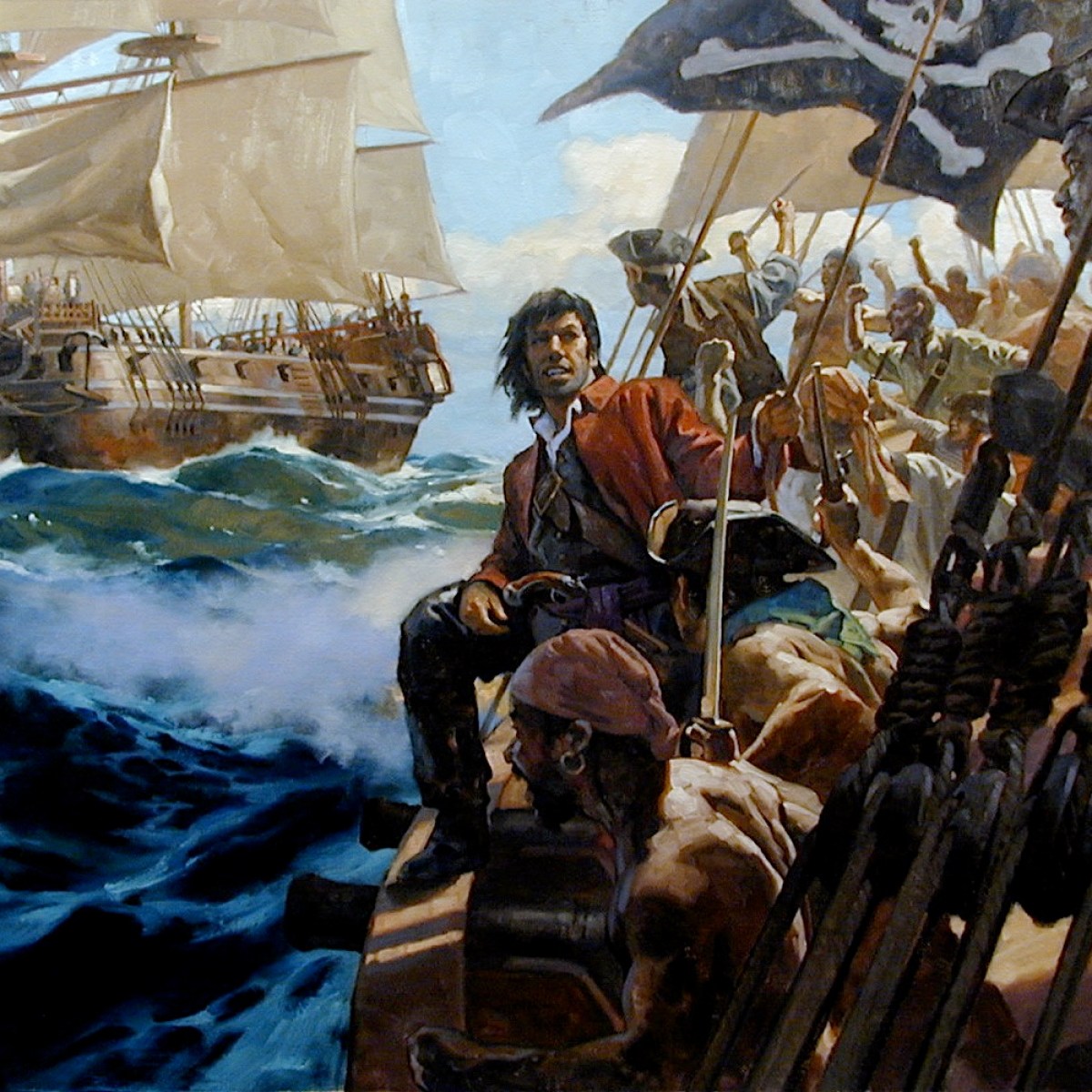
History is written by the victors, but it is curated by the romanticists. For decades, the discovery of the Whydah Gally—the only fully authenticated Golden Age pirate shipwreck—has been treated like a feel-good archaeological blockbuster. The narrative is simple: Barry Clifford finds a ship, the ship contains Akan gold jewelry, and suddenly, the "myth" of African gold being a rare commodity in the Atlantic trade is shattered.
It is a neat, tidy story. It is also a massive oversimplification that ignores how global liquidity actually worked in the 18th century.
The Whydah Gally didn’t "correct" a myth about African gold. It merely highlighted our modern obsession with shiny objects while ignoring the brutal, calculated financial systems of the 1717 Atlantic world. We are looking at a few melted-down beads and calling it a paradigm shift. In reality, the gold on the Whydah wasn’t a symbol of African wealth; it was the residue of a hyper-efficient, devastatingly cold extraction machine.
The Illusion of the Pirate Robin Hood
Let’s burn the "Pirate Utopia" trope first. Sam Bellamy, the "Prince of Pirates," is often portrayed as a democratic rebel, a man who treated his crew of former slaves and outcasts as equals. It’s a compelling image for a Netflix documentary, but it’s historically hollow when you look at the ledger.
Bellamy was a predator. The Whydah was a state-of-the-art galley built for the Royal African Company. When Bellamy captured it in the Windward Passage, he didn't just inherit a fast boat; he inherited a floating warehouse of human misery and concentrated capital. The gold jewelry found at the site—specifically the Akan gold—wasn't "discovered" by pirates in some egalitarian exchange. It was stolen from the very people the ship was designed to transport.
To suggest the Whydah "corrects" a myth implies that historians previously thought Africa was devoid of gold. No one with a pulse and a history book thought that. Mansa Musa’s 14th-century pilgrimage had already crashed the Egyptian gold market through sheer oversupply centuries before the Whydah hit the seabed. The "myth" being busted is a straw man. The real story isn't that the gold was there; it’s that the gold was already being systematically commodified into a portable, global currency that could be liquidated in any port from Ouidah to London.
The Akan Gold Standard
The jewelry recovered from the wreck—small, delicate, often twisted bits of gold—is frequently cited as proof of a sophisticated African craftsmanship that "surprised" the Western world. If you are surprised by the sophistication of 18th-century West African metallurgy, you haven't been paying attention to the Asante Empire.
The Asante didn't just make jewelry; they ran a gold-backed economy that would make a modern central banker sweat. They used Abrammuo (gold weights) for every transaction. This wasn't "primitive" bartering. It was a precise, standardized system of weights and measures.
When the Whydah went down off the coast of Wellfleet, Massachusetts, it carried a massive amount of this gold. But here is the nuance the "status quo" articles miss: The gold on the Whydah was likely "scrap."
In the eyes of the European traders and the pirates who robbed them, those intricate Akan designs weren't art. They were bullion. The value wasn't in the craftsmanship; it was in the carats. The Whydah Gally represents the moment African art was forcibly converted into Western liquidity. Calling its recovery a "victory for African history" is like finding a stolen, melted-down Rolex and celebrating the recovery of Swiss engineering. The form was destroyed to facilitate the flow of capital.
The Myth of Pirate Equality
Critics love to point to the diverse crew of the Whydah—roughly 30 to 50 men of African descent—as proof of a proto-socialist meritocracy. "Look," they say, "the gold belonged to everyone."
I’ve spent years looking at how decentralized organizations (DAOs) and modern startups fail, and the "pirate democracy" is the ultimate failed startup. Yes, black pirates on the Whydah were technically free men under the "Pirate Code," but let’s look at the survival rates. When the ship hit the sandbar during that Nor’easter in April 1717, the ocean didn't care about your voting rights.
Out of 146 men, only two survived. One was Thomas Davis, a white carpenter. The other was John Julian, a Cape Cod Indian. The black crew members? They are skeletons in the sand, buried under the same "liberated" gold that was supposed to be their ticket to a new life.
The gold didn't provide freedom. It provided a target. The Whydah wasn't a ship of fools; it was a ship of high-risk speculators who lost the ultimate gamble. To frame this as a story of "African gold correcting history" is to ignore that the gold was the bait in a trap that snapped shut on everyone involved.
Artifacts vs. Economics
The Discovery Museum and various exhibitions focus on the 15,000 coins and the "treasures." This is where the public gets distracted. If you want to understand the 18th century, stop looking at the coins. Look at the manillas.
Manillas were horseshoe-shaped pieces of bronze or copper used as currency in West Africa. The Whydah was loaded with them. This is the "nuance" the competitor articles ignore. The presence of gold tells you Africa was rich; the presence of manillas tells you how the West controlled that richness.
European powers flooded West African markets with these low-cost, mass-produced copper "tokens" to extract high-value gold and human labor. It was an early form of currency manipulation. The gold on the Whydah is the output of an economic war. When we obsess over the gold jewelry, we are looking at the 1% of the cargo and ignoring the 99% of the economic machinery that made the voyage possible.
The Problem with "Pirate Archaeology"
Barry Clifford is a polarizing figure in archaeology for a reason. He is a treasure hunter who transitioned into a "salvor-explorer." While his work has provided invaluable artifacts, the framing of these finds is always geared toward the spectacular.
- The "Bellamy's Gold" Narrative: It sells tickets. It suggests a lost treasure found.
- The "Cultural Correction" Narrative: It provides academic cover for what is essentially a commercial salvage operation.
We need to be brutally honest: The Whydah Gally is a gravesite of an international crime scene. Treating the gold as a "myth-buster" regarding African wealth is a way to sanitize the reality. The gold wasn't there to showcase African culture; it was there because it had been stripped from its cultural context to pay for the next round of rum, gunpowder, and human lives.
Imagine a scenario where a modern billionaire’s yacht sinks with a collection of looted antiquities and a suitcase of Bitcoin. If someone finds it in 300 years, does the Bitcoin "correct the myth" of 21st-century digital poverty? No. It just confirms who had the power to centralize wealth at that specific moment.
Stop Looking for "Lost" History
The "People Also Ask" sections of search engines are filled with queries like "How much gold was on the Whydah?" or "Was Sam Bellamy a good person?"
These are the wrong questions.
The right question is: Why did it take a shipwreck in Massachusetts for the Western public to acknowledge the economic complexity of 18th-century West Africa?
The obsession with the Whydah’s gold reveals a deep-seated bias. We require physical "treasure" to validate the existence of sophisticated civilizations. We need the "pirate" filter—the grit, the cannons, the rebellion—to make African economic history palatable to a mass audience.
The gold on the Whydah isn't a revelation. It’s a receipt.
It’s a receipt for a transaction that began in the gold fields of the Akan, passed through the brutal hands of the Royal African Company, was hijacked by a desperate crew of outlaws, and was finally claimed by the Atlantic.
The False Comfort of Discovery
There is a certain smugness in modern reporting on the Whydah. We act as if we are "giving back" history to Africa by identifying the origins of the gold.
"See?" the articles suggest. "Africa was wealthy all along!"
This is the ultimate "lazy consensus." It’s a way for the West to pat itself on the back for being "inclusive" while ignoring the fact that the gold is still in a museum in Provincetown or a private collection, rather than in the hands of the descendants of those who mined and fashioned it.
The gold didn't correct a myth. It confirmed a reality we are still too uncomfortable to face: The global economy was built on the violent conversion of African skill and resources into European and American capital. The Whydah Gally isn't a story of discovery; it's a story of a heist that was interrupted by a storm.
We aren't looking at "corrected history." We are looking at evidence that hasn't been returned yet.
The pirates didn't liberate the gold. The ocean didn't preserve the history. We just found the loot, and we are still trying to figure out how to tell the story without admitting we are the heirs of the people who bought the ship in the first place.
Stop romanticizing the wreck. Start counting the cost.