Structural Deficits in Initial Response Protocols
When municipal emergency response frameworks fail to establish containment perimeters within the initial operational window, the physical burden of suppression frequently shifts to local civilian populations. Recent wildfire proliferation across Southern France demonstrates a recurring systemic vulnerability: the friction between centralized deployment speeds and hyper-localized fire expansion rates. To evaluate this phenomenon, we must deconstruct the operational variables governing wildfire escalation, resource allocation bottlenecks, and the structural mechanics of ad-hoc civilian intervention.
The standard operational timeline for wildfire mitigation relies on three sequential phases: detection, dispatch, and containment. In standard deployments, aerial assets and specialized ground crews must engage a fire front before thermal updrafts exceed the threshold of direct suppression capability. When geographic dispersal of fire starts exceeds the density of prepositioned assets, a coverage gap emerges. For a deeper dive into this area, we suggest: this related article.
This gap is defined by the formula:
$$T_{gap} = T_{arrival} - T_{critical}$$ For additional context on this development, extensive reporting can also be found at NBC News.
Where $T_{arrival}$ represents the elapsed time from ignition to professional resource deployment, and $T_{critical}$ marks the transition point where a surface fire breaches the canopy and establishes independent crown fire dynamics. When $T_{gap}$ is positive, professional suppression assets arrive post-transition, rendering defensive perimeters obsolete and forcing a retreat to secondary fallback lines.
Locals operating in wildfire zones do not engage the fire under optimized parameters. Instead, they act as localized stopgaps within the $T_{gap}$ window. Their intervention is characterized by high risk, low equipment standardization, and localized geographic intelligence that formal command structures often lack.
The Operational Anatomy of Citizen Intervention
Civilians engaging in wildfire defense operate outside institutional incident command systems. This creates both tactical advantages and severe systemic liabilities.
[Ignition Event]
       │
       ▼
[Detection & Latency] ──► [Resource Dispatch Bottleneck]
       │                               │
       ▼                               ▼
[Civilian Engagement]           [Professional Arrival]
(High Local Intel / Low PPE)    (High PPE / Delayed Transit)
       │                               │
       └───────────────┬───────────────┘
                       ▼
            [Conflicting Directives]
Information Asymmetry and Terrain Mastery
Professional fire management teams rely on telemetry, satellite imaging, and regional meteorological data. While accurate at a macro level, these tools often fail to capture micro-topographical fire behavior—such as localized wind tunneling through specific agricultural valleys or combustible load distribution within neglected private acreage. Residents possess high-resolution, empirical knowledge of these micro-features. They know which water cisterns are functional, which dirt tracks can support heavy vehicle transit, and how local brush density varies across property lines.
Equipment Deficits and Material Friction
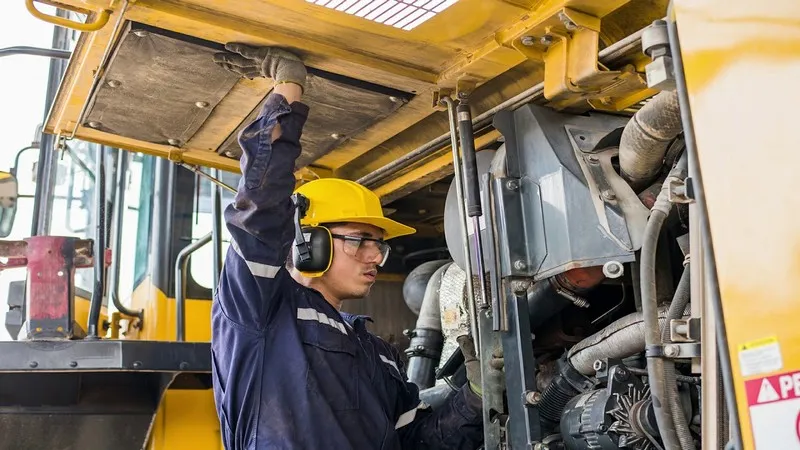
Unlike professional units equipped with self-contained breathing apparatuses, flame-resistant aramid textiles, and high-pressure pumping systems, civilian responders rely on ad-hoc tools: agricultural tractors with water tanks, garden hoses, shovels, and leaf blowers. This equipment creates severe material constraints:
- Hydraulic Limitations: Domestic pumps lack the pressure required to penetrate dense thermal columns or project water against erratic wind drafts.
- Thermal Protection: Standard clothing offers zero resistance to radiant heat fluxes, restricting civilians to defensive positioning rather than proactive line-cutting.
- Communication Friction: Operating outside the radio frequencies of emergency services, civilian groups often rely on cellular networks that are vulnerable to tower destruction or network saturation during crisis events.
Economic and Structural Drivers of Spread
The proliferation of wildfires in regions like the Mediterranean basin cannot be attributed solely to meteorological anomalies. It is driven by structural shifts in land management economics and rural depopulation.
The Abandonment of Agropastoral Fuel Management
Historically, extensive grazing by sheep and goats served as a natural biological firewall, suppressing the accumulation of fine surface fuels (dead grasses, dry shrubbery, and low-hanging branches). As rural demographics shifted toward urban centers, vast tracts of agricultural land transitioned into unmanaged scrubland, specifically garigue and maquis biomes.
These vegetative complexes are exceptionally combustible due to high concentrations of volatile organic compounds (such as essential oils in rosemary, cistus, and eucalyptus). When unmanaged, these lands function as contiguous fuel ladders. A surface fire originating in dry grass easily transitions into the canopy of maritime pines, accelerating the energy release rate exponentially.
Infrastructure Vulnerability and Water Grid Failure
Municipal water grids in rural French communes are engineered for domestic consumption baselines, not simultaneous high-volume industrial suppression. When dozens of residents simultaneously tap into local municipal lines to wet down properties, network pressure drops precipitously. This deprives professional fire engines of the high-flow hydrants required for continuous foam and water application.
Furthermore, rural electrical distribution networks are highly vulnerable to high-velocity winds accompanying extreme heatwaves. When wooden utility poles ignite or snap under thermal stress, localized power grid failures disable electric water pumps situated on private wells, removing the primary off-grid water source just as suppression demands peak.
Evaluating the Cost Function of Delayed Suppression
To understand why local interventions become necessary, we must analyze the economic and ecological cost function of delayed response times. Total loss is a function of fire propagation speed multiplied by asset vulnerability, offset by intervention efficiency.
$$\text{Loss} = \int_{0}^{t} (\text{Energy Release Rate} \times \text{Asset Exposure}) , dt - \text{Suppression Efficacy}$$
When professional assets are geographically overextended—a common failure mode during multi-front regional heatwaves—the suppression efficacy term approaches zero during the critical propagation phase.
Cost Metrics of Wildfire Escalation:
1. Direct Infrastructure Damage: Destruction of residential and agricultural capital.
2. Suppression Expenditure: Escalation from local engines to national aerial water-droppers (Canadair fleets).
3. Ecological Degradation: Soil sterilization and the permanent loss of organic carbon sinks.
4. Economic Contraction: Disruption of tourism, viticulture, and rural commerce.
The reliance on civilian populations acts as an informal subsidy for under-resourced public safety budgets. However, this subsidy is paid in human capital and safety risks. When untrained individuals commit to direct-action suppression, the probability of entrapment increases due to sudden shifts in wind vectors—a phenomenon frequently exacerbated by the thermal drafting effects of large forest tracts.
Strategic Optimization for Regional Resilience
Mitigating the reliance on reactive civilian intervention requires structural reforms in regional land management and initial-attack asset distribution. Incremental improvements to emergency dispatch will yield diminishing returns if fuel loads and water infrastructure remain unaddressed.
Decentralized Water Cache Deployment
Municipalities must transition away from centralized municipal grids for emergency supply. Establishing hardened, off-grid subterranean water cisterns powered by independent solar generators in high-risk zones ensures a reliable supply for both incoming professional units and equipped local volunteers prior to grid failure.
Mandated Fuel Break Corridors
Enforcing strict perimeter clearance regulations around rural habitations is economically more efficient than scaling suppression fleets. Property owners must be held accountable for maintaining a non-combustible buffer zone, systematically interrupting the horizontal continuity of surface fuels and vertical fuel ladders.
Institutional Integration of Local Knowledge
Rather than treating civilian interventions as a dangerous liability to be managed or prohibited, regional command structures should establish formal auxiliary protocols. By integrating vetted local operators into communication loops and providing baseline safety training and standardized portable PPE caches, emergency management agencies can harness local geographic expertise without incurring unacceptable casualty rates.
The containment of extreme wildfire events in rural European landscapes will continue to test the limits of centralized response models. Resolving the systemic vulnerabilities exposed by these events requires shifting capital from reactive aerial suppression back toward proactive landscape management and infrastructural hardening at the local level.