Ink is dry. But decisions cast long shadows over the desert tarmac.
Consider a cold morning in Baghdad. The air smells of dust and burnt fuel. A mechanic runs a gloved hand along the aluminum hull of a Boeing 737. For months, that plane has been a ghost. Grounded by bureaucracy, paralyzed by a designation that linked its turbine engines to the shadowy machinations of Iran's Islamic Revolutionary Guard Corps. To the United States Treasury, this aircraft wasn't just metal and seats. It was classified as a conduit for regional proxy warfare. A transport for fighters and logistics across fractured borders in Iraq, Syria, and Lebanon.
Then came Wednesday.
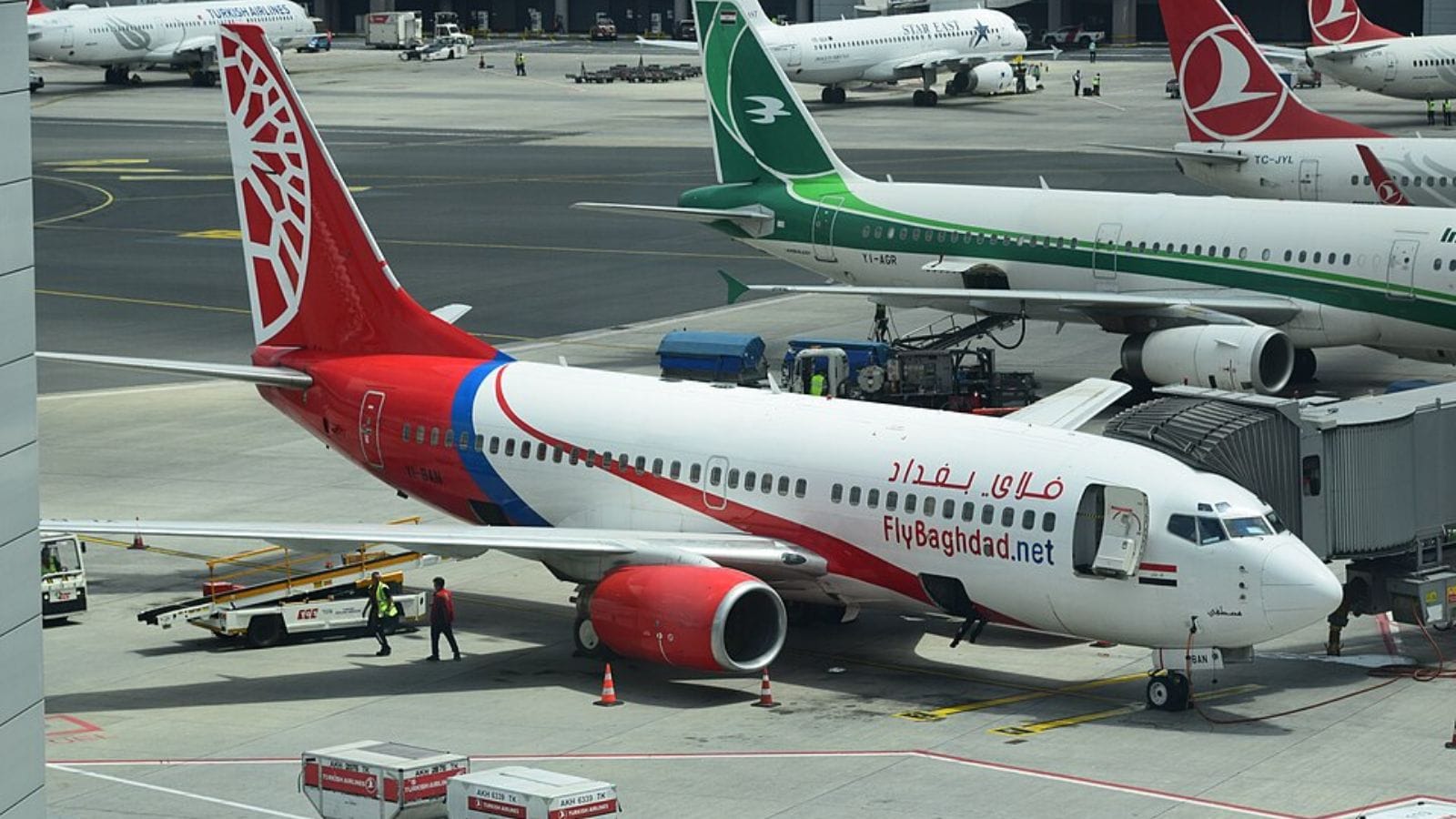
The Office of Foreign Assets Control quietly updated a digital ledger. A few keystrokes in Washington erased Fly Baghdad Airlines and two specific jets from the Specially Designated Nationals list. Just like that, the legal lightning bolt of January 2024 was undone.
Planes do not care about geopolitics. They care about physics, thrust, and clearance. But the people who fly them, finance them, and rely on them live entirely at the mercy of distant decrees.
When the original sanctions struck, they hit like an invisible earthquake. Financial accounts froze. International airspace closed its doors. Maintenance parts became impossible to source legally. Imagine running an airline where every transaction is a potential federal crime. The company’s assets were locked behind a wall of total economic isolation. At the center of it stood Basheer Abdulkadhim Alwan al-Shabbani, the airline's owner, whose personal blacklisting remains firmly etched in the registry, a reminder that corporate redemption does not automatically wipe clean a human record.
Sanctions are often discussed in pristine conference rooms as diplomatic tools. Clean. Precise. Clinical. They sound like surgical instruments.
They are actually bludgeons.
They disrupt entire ecosystems of commerce, stranding travelers, killing expansion plans, and forcing companies into a desperate choice: adapt or perish. Behind the corporate entities of Fly Baghdad and its alias, Iraq Express, were hundreds of employees watching their livelihoods evaporate over accusations they could neither verify nor easily fight.
Why did the Treasury relent?
Official statements offer little poetry. Bureaucracy rarely sings. A spokesperson for the administration maintained that the airline went through an administrative reconsideration process. They pointed to major changes in operational behavior. The company demonstrated that it cleaned house, altered its trajectory, and addressed the conduct that got it blacklisted in the first place.
Yet, timing in the Middle East is never accidental.
This administrative reversal arrives precisely as high-stakes diplomacy dances around the Strait of Hormuz. Rumors of fragile truces, backchannel talks mediated through Oman, and delicate maneuvers to keep vital maritime shipping lanes open form a heavy backdrop. Washington insists the two events are entirely separate. Officials are quick to state that lifting restrictions on a commercial carrier signals no broader softening toward Tehran. It is treated as an isolated administrative bookkeeping adjustment, completely divorced from the looming shadow of regional peace deals.
Skeptics raise an eyebrow. In the theater of international relations, coincidences are rarely what they seem.
When a piece of economic armor is suddenly unbuckled, someone usually wants to see greater flexibility on the horizon. Even if the text of the treasury waiver denies any grand bargain, the message sent to the region is layered and complex. It shows that compliance is a two-way street. If you alter your behavior drastically enough, the heavy iron gate can open.
Back on the tarmac, the engines turn over. The dual-jet fleet cleared by the stroke of a pen prepares to rejoin the crowded skies of the Middle East. The passengers boarding these flights will not think about the legal gymnastics of international counter-terrorism policy or the intricate dance of Gulf diplomacy. They want to get to their destination.
The sanctions are gone. But the underlying currents of suspicion remain, waiting to see what happens next in a sky where freedom of movement is always conditional.