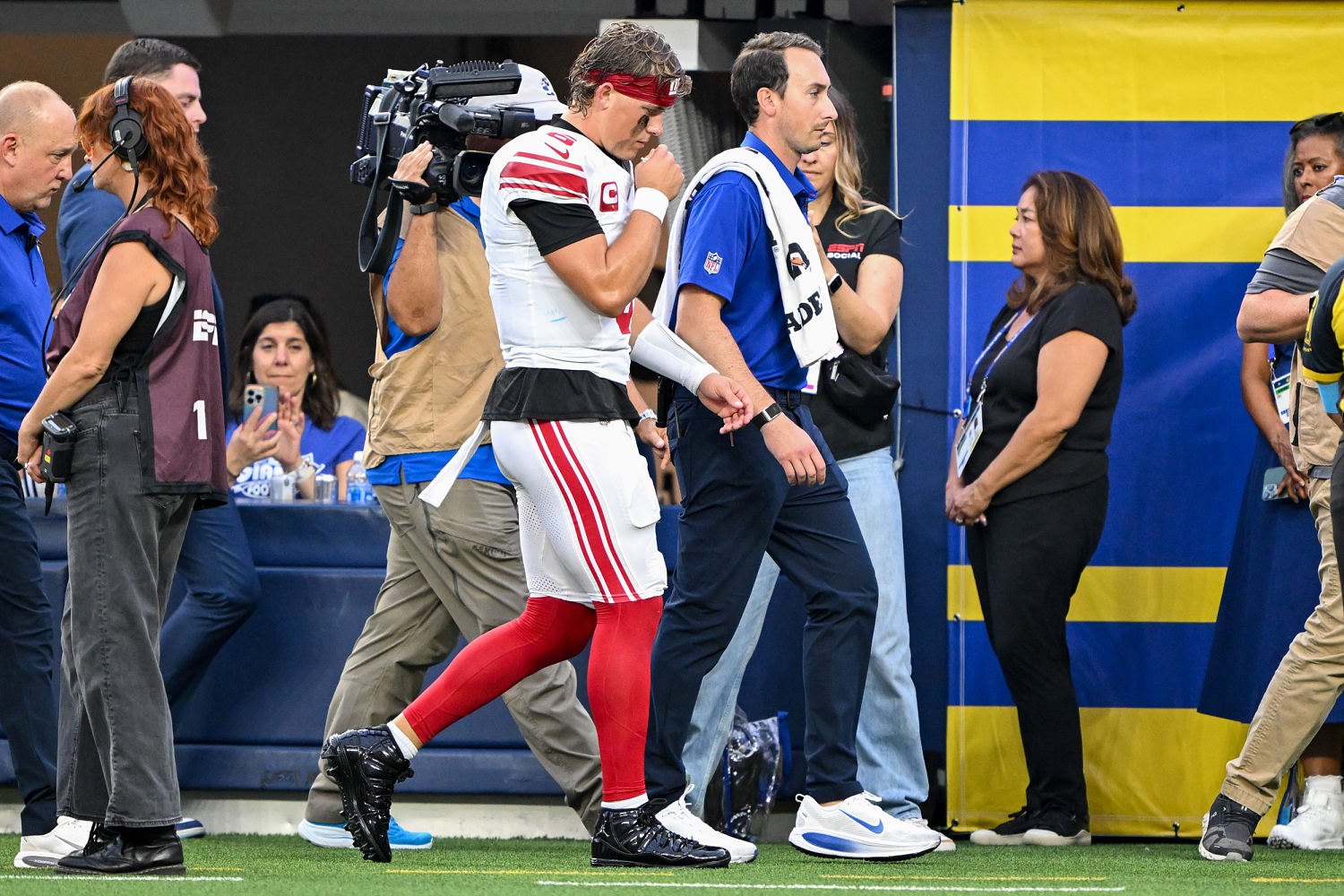
The operational stability of a professional football franchise depends on the functional redundancy of its primary signal-caller. When a franchise quarterback misses a training session during a critical preparatory window, the impact cascades well beyond basic roster management, altering play-calling variances, timing structures, and risk profiles. The recent absence of Winnipeg Blue Bombers quarterback Zach Collaros from the opening practice following a bye week exposes the systemic dependencies inherent in modern offensive design and forces an immediate tactical reassessment across multiple operational layers.
Evaluating the consequence of a missing veteran quarterback requires deconstructing the preparation cycle into three distinct functional pillars: cognitive synchronization, physical calibration, and systemic stress-testing.
The Cognitive Synchronization Vector
An elite offensive system relies on rapid post-snap information processing, route convergence timing, and protection adjustments dictated by defensive fronts. Zach Collaros operates as the primary cognitive processor for the Blue Bombers offense, translating pre-snap defensive indicators into run-pass checks and spatial distribution targets.
When a starter misses practice repetitions, the efficiency penalty manifests in the timing delta between receiver breaks and pass delivery. Professional route-running is a precise geometric exercise where spatial leverage evaporates within tenths of a second. Without synchronized repetitions between the quarterback and his receiving corps, the margin for error narrows dramatically. Backup signal-callers, while technically proficient within the playbook, execute within a different baseline of spatial-temporal assumptions. The resulting friction increases interception exposure and reduces third-down conversion probabilities.
The Cost Function of Practice Interruption
In professional sports analytics, practice time is a finite, highly valued asset governed by strict collective bargaining agreements and fatigue management parameters. A bye week is designed to serve as a strategic recovery window, allowing physical regeneration paired with tactical self-scouting. However, missing the immediate return-to-work session disrupts the physiological re-acclimation curve.
The cost function of this disruption includes:
- Neuromuscular De-synchronization: The neural pathways required for high-velocity, high-accuracy throwing mechanics degrade slightly during multi-day rest periods without high-intensity load application.
- Install Integration Deficit: Game-specific tactical adjustments introduced at the start of the week fail to receive live-action validation against simulated defensive looks.
- Tempo Degradation: Offensive line cadence and silent-count mechanics suffer without the primary voice establishing rhythm.
Systemic Vulnerability and Tactical Mitigation
Opposing defensive coordinators exploit perceived quarterback limitations or preparation deficits through targeted pressure packages and disguised coverages. When a team faces uncertainty regarding the availability or sharpness of its starting quarterback, the defensive play-calling paradigm shifts toward maximum disruption. Blitz rates increase, and coverage shells rotate post-snap to force rapid, high-uncertainty decision-making.
To mitigate this structural vulnerability, the offensive coaching staff must implement a risk-averse tactical posture. This operational pivot involves several structural shifts:
- Compressed Route Trees: Shortening depth horizons to minimize the time the ball spends in flight and reduce the window for pass-rush penetration.
- Max Protection Schemes: Keeping running backs and tight ends in the backfield to absorb extra blitzers, sacrificing route receiver numbers for quarterback protection.
- Expanded RPO Integration: Utilizing run-pass options to simplify the quarterback’s read progression from a complex post-snap multi-defender scan to a single-key conflict defender isolation.
Strategic Execution Framework
The overarching objective during a preparation disruption is maintaining baseline offensive efficiency rather than attempting high-variance explosive plays. Teams that successfully navigate the temporary absence of a foundational asset do so by leaning into structural predictability, relying on established run-game efficiencies to dictate the terms of engagement and establishing a rhythm through high-percentage completions early in the game script.
The immediate strategic play for the coaching staff is establishing a binary decision threshold based on medical clearance and functional velocity metrics by the final walkthrough, immediately locking the game plan into the structural tier that matches the active quarterback's demonstrated capacity.