You drive thirty minutes outside the capital city of Yerevan, pull up to a dusty construction yard in the village of Zovuni, and there he is. Or rather, pieces of him.
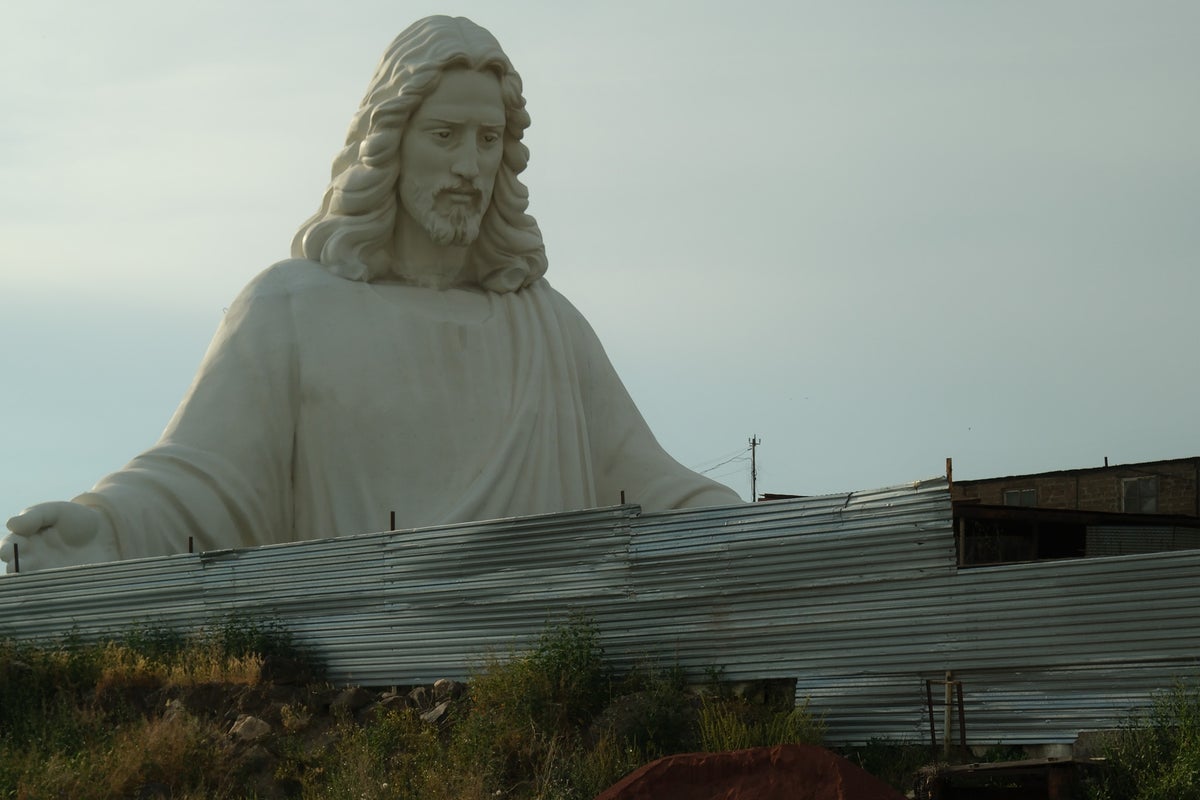
Right now, a colossal aluminum head of Jesus Christ peeks over the roof of a mundane shed. Nearby, a massive hand sits idly on the ground. A giant torso rests behind a corrugated iron fence. This fragmented figure is slated to become the world's tallest statue of Jesus Christ. For now, it's a bizarre, accidental tourist attraction where locals pull over to snap photos of a savior in assembly mode.
This isn't just a quirky construction project. It's the center of a fierce national argument that pits a billionaire tycoon against the country's ancient church, environmentalists, and archaeologists.
If you think this is just about building a giant religious landmark, you're missing the real story.
The Man Behind the Monument
To understand why this giant Christ is lying in pieces in a village yard, you have to understand Gagik Tsarukyan. He's a former armwrestling champion turned tycoon and politician. He's one of the wealthiest people in Armenia. He's also incredibly controversial.
Tsarukyan launched this project in early 2022. His plan is ambitious. The aluminum figure of Jesus will stand 33 meters tall, symbolizing the years Jesus lived on earth. But it won't just sit on the ground. It's going on top of a massive 44-meter pedestal. Combine those numbers, and the total structure hits 77 meters. That easily crushes Rio de Janeiro's iconic Christ the Redeemer, which stands at 38 meters.
Tsarukyan claims the statue is exactly what the country needs. Following the devastating losses in the 2020 Nagorno-Karabakh conflict, he pitched the monument as a beacon of hope and a symbol of national renewal. He wants it to be a "guardian of our country and people" that is visible from across the nation.
But critics aren't buying the altruism. Many see it as a massive vanity project designed to buff his public image, especially since state prosecutors have targeted his wealth under laws targeting illegally acquired assets.
The Ancient Church Says No
You'd think a deeply Christian nation like Armenia would welcome a massive tribute to Jesus. It was, after all, the very first nation to adopt Christianity as a state religion back in 301 AD.
Yet, the Armenian Apostolic Church is absolutely furious about it.
Church leaders have publicly denounced the project multiple times. Why? Because monumental statues of Jesus aren't part of Armenian Christian tradition. For centuries, Armenians have expressed their faith through khachkars—intricately carved stone crosses.
The church council explicitly stated that installing a massive statue of Christ goes completely against their historical iconographic traditions. To them, this isn't an act of devotion. It's a flashy, foreign concept imported to serve a billionaire's ego.
A Dormant Volcano and Bronze Age Ruins
The drama gets worse when you look at the chosen location. The statue isn't staying in that Zovuni yard. The plan is to transport the pieces via helicopter to the summit of Mount Hatis, a dormant volcano located about 30 kilometers northeast of Yerevan.
The problem is that Mount Hatis isn't just an empty rock. It's an active archaeological site.
In 2019, an Armenian-Italian team discovered the ruins of an ancient Bronze Age fortress right at the summit. There are about two dozen state-protected historical and cultural monuments scattered across the mountain's slopes.
When construction crews started carving out roads and preparing the site in 2022, the Ministry of Education, Science, Culture, and Sports ordered an immediate halt. The initial work had already damaged parts of the ancient fortress site. While Tsarukyan later claimed he adjusted plans to protect and even restore some of the ruins, scholars and environmentalists remain highly skeptical.
Environmental groups are also sounding the alarm. Mount Hatis is a recognized geological monument. Ramming a heavy industrial concrete pedestal, a café, an exhibition hall, and a cable car system onto a pristine volcano summit will permanently alter the landscape and threaten local wildlife.
The Economic Gamble
Prime Minister Nikol Pashinyan and tourism advocates have offered a different take. They're backing the project because they smell economic opportunity.
Armenia is actively trying to position itself as a major destination for international spiritual tourism. With new direct flights opening up from places like Western Europe, government officials believe a record-breaking monument will put the country on the global tourism map.
Local business owners in the surrounding villages hope the influx of pilgrims and curious travelers will create jobs and boost a struggling economy. They look at how Rio de Janeiro benefits from its Christ statue and want a piece of that action.
But regular citizens are divided. Many wonder why millions of dollars are being poured into a giant metal statue when the country faces severe security threats, bad roads, and struggling hospitals. Even though Tsarukyan is footing the bill through his family foundation, critics argue these vast resources could be used for actual human welfare instead of a mountain-top spectacle.
What Happens Next
If you're planning to visit Armenia to see the finished product, don't pack your bags just yet.
The project is technically moving forward, and workers are busy on the Mount Hatis pedestal. The sculptor, Armen Samvelyan, and his team of 20 workers have nearly finished the aluminum sections. But assembling a 20-ton hollow aluminum statue on top of a windy, high-altitude volcano summit is an engineering nightmare. It requires precise helicopter airlifts and complex structural framing to ensure the statue can survive earthquakes.
When will it actually be lifted into place? Tsarukyan hasn't given a firm deadline. He recently told reporters that the timeline "depends on the will of God."
If you want to see this phenomenon for yourself, your best bet right now is to bypass the mountain entirely. Head straight to the village of Zovuni. You can stand right outside the workshop fence and see the giant face of Christ staring back at you from the ground. It's a surreal testament to a modern-day clash between billionaire ambition, ancient religious traditions, and historical preservation.
Skip the official tourist trails and check out the Zovuni yard while the statue is still in pieces. It's easily the most honest, unfiltered view of Armenia's current cultural tug-of-war.