Global leaders congratulated Luiz Inácio Lula da Silva on his reelection in Brazil with remarkable speed because his victory immediately stabilizes international climate treaties, reopens Mercosur trade negotiations, and restores a predictable diplomatic counterweight in South America. For capitals from Washington to Beijing and Brussels, the celebratory statements issued within minutes of the final tally were less about ideological affection for the veteran leftist and more about institutional relief. After four years of combative bilateralism under Jair Bolsonaro, foreign ministries saw an opportunity to reset relations with Latin America’s largest economy and primary ecological steward.
Most coverage of diplomatic congratulations treats them as polite formalities. That is a mistake. In international relations, the speed, vocabulary, and framing of a congratulatory dispatch function as a real-time ledger of geopolitical anxiety. When the White House, the Élysée Palace, and Zhongnanhai all race to validate an election result before domestic legal challenges can even coalesce, they are signaling a coordinated effort to lock in an outcome. They are drawing a perimeter around a fragile democratic transition. Learn more on a connected topic: this related article.
The Anatomy of Rapid Recognition
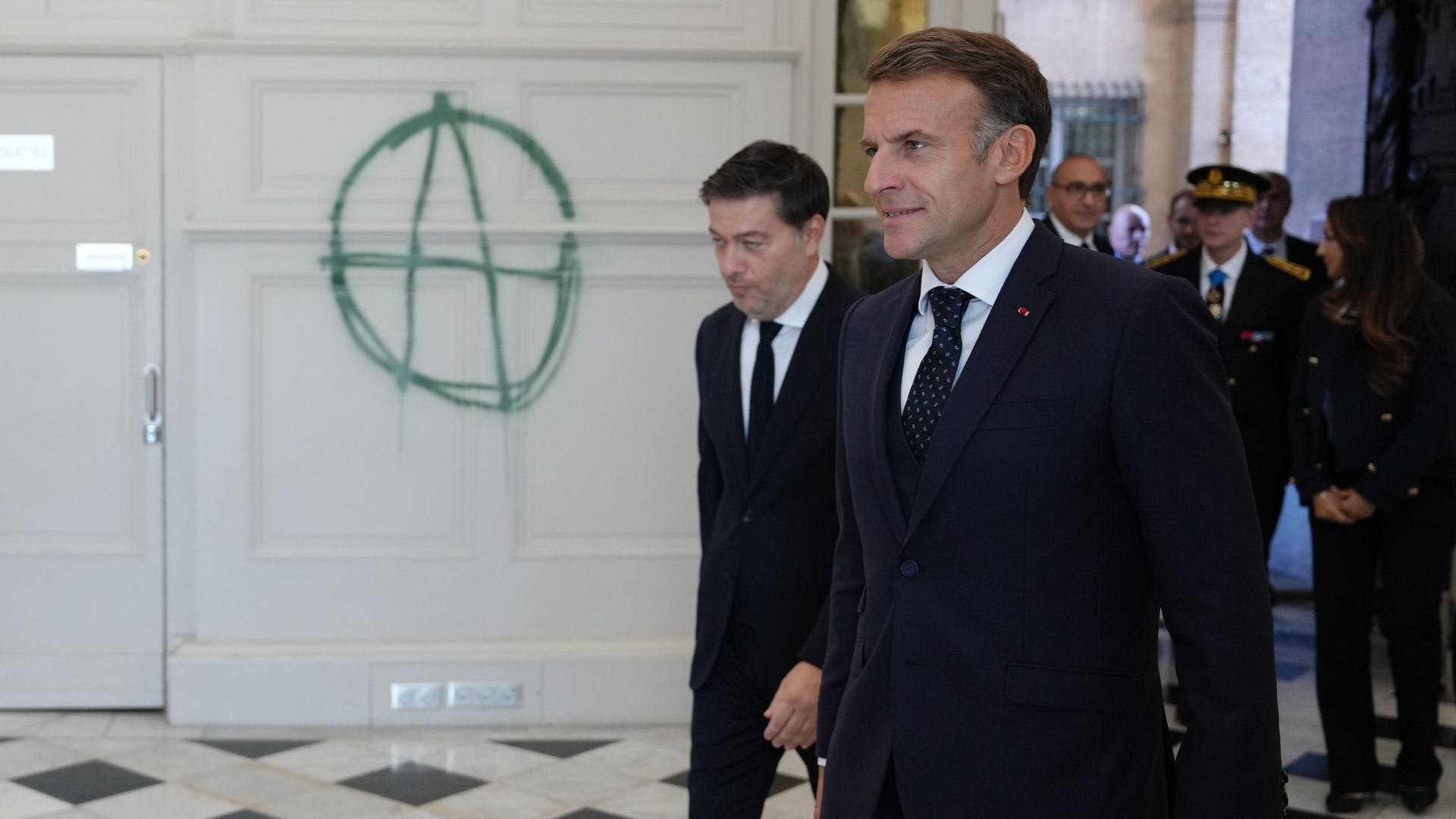
Diplomatic protocol usually moves at a glacial pace, especially when an incumbent has spent months questioning the integrity of electronic voting machines. Yet in the Brazilian election, the usual caution vanished. President Joe Biden issued a statement praising Brazil’s free, fair, and credible elections less than an hour after the Superior Electoral Court declared Lula the winner. French President Emmanuel Macron followed almost immediately, declaring that together they would join forces to take up the many common challenges and renew the bond of friendship between their two countries.
This velocity was engineered. Foreign diplomats stationed in Brasília had spent months quietly consulting with electoral court judges, military officials, and congressional leaders to assess the risk of a contested outcome. By flooding the zone with immediate international recognition, Western democracies effectively foreclosed the space for any domestic faction to claim the vote was illegitimate. Recognition became a preemptive shield. More journalism by BBC News delves into related views on the subject.
Look closely at the phrasing used by different blocs, and the underlying transactional motives come into sharp focus. Washington emphasized democratic institutions and hemispheric stability, an implicit rebuke to Jair Bolsonaro’s alignment with Donald Trump and the broader populist right. European leaders zeroed in on the Amazon rainforest and stalled trade deals. Meanwhile, Chinese President Xi Jinping highlighted long-term strategic partnership and agricultural supply chains, reminding the world that Beijing remains Brazil’s largest trading partner regardless of who occupies the Palácio do Planalto.
Why Washington Needed a Counterweight
The relationship between Lula and the American political establishment has always been complicated, defined by mutual necessity rather than natural alignment. Lula has never hesitated to criticize United States foreign policy, from the invasion of Iraq to economic sanctions on Venezuela and Cuba. He openly positions himself as a champion of the Global South, advocating for a multipolar world order that dilutes American hegemony and challenges the dominance of the US dollar in international trade.
Yet the Biden administration viewed Lula’s return as an urgent strategic necessity. Under Bolsonaro, Brazil had become an unpredictable outlier in the Western Hemisphere, often echoing the rhetoric of Trump-era nationalism and isolating itself from regional consensus. Washington needed a partner in Brasília who believed in multilateral institutions, even if that partner intended to argue with the State Department inside those institutions.
A critical distinction separates an ideological rival from an institutional partner.
When Lula criticizes Washington, he does so within the established grammar of international diplomacy, seeking concessions on climate finance, multilateral bank reform, and trade access. That is a dynamic American diplomats know how to manage. By contrast, populist nationalism rejects the underlying rules of the system itself, making long-term treaty negotiation nearly impossible. For the White House, dealing with a vocal critic who respects the rulebook is infinitely preferable to dealing with an ideological ally who threatens to burn the rulebook down.
The Trump Factor in Bilateral Relations
The shadow of Donald Trump hung over every diplomatic cable sent to Brasília. Bolsonaro’s political brand was explicitly modeled on Trump’s, complete with attacks on the judiciary, skepticism of mainstream media, and preemptive claims of election fraud. For European and North American leaders, Brazil’s election was viewed as a stress test for whether right-wing populism could successfully entrench itself across the Americas.
When global leaders congratulated Lula, many were subtly addressing an audience back home. The subtext was unmistakable. Democratic norms could survive a sustained populist challenge, and the international community would rally instantly to validate the result. However, this framing also exposed a vulnerability. By tying Lula’s victory so closely to the defeat of Trump-style politics, Western leaders risked overestimating how much Lula would align with their broader foreign policy agenda.
Europe and the Amazonian Bargain
If Washington’s primary concern was institutional stability, Europe’s obsession was environmental and commercial. During Bolsonaro’s tenure, deforestation in the Brazilian Amazon surged to its highest level in fifteen years, turning Brazil into a diplomatic pariah across European capitals. The European Union froze ratification of the massive EU-Mercosur trade agreement, citing environmental destruction and a lack of enforceable climate commitments.
Lula’s reelection instantly unlocked that gridlock. Within days of the vote, Norway and Germany announced plans to unfreeze hundreds of millions of dollars for the Amazon Fund, a conservation mechanism established during Lula’s earlier presidency that had been suspended due to policy disputes. European leaders understood that global climate targets are mathematically impossible to achieve without the preservation of the Amazon basin, which acts as one of the planet’s most vital carbon sinks.
Yet this renewed environmental honeymoon carries steep expectations that Lula may struggle to meet. European capitals expect rapid, measurable drops in deforestation rates alongside a swift conclusion to the Mercosur trade deal. Inside Brazil, however, Lula faces a deeply conservative Congress heavily influenced by the powerful agribusiness lobby, known as the bancada ruralista.
Environmental enforcement requires money, personnel, and political capital. Lula inherited a weakened environmental agency and a polarized electorate where millions of farmers and rural workers view European environmental standards as thinly veiled protectionism. European leaders cheered Lula’s return because it gave them someone to negotiate with, but the hard work of reconciling free trade with forest preservation has barely begun.
Beijing’s Quiet Pragmatism
While Western leaders framed Lula’s victory as a triumph for democracy and the environment, Beijing approached the transition with cold, commercial precision. China has been Brazil’s largest trading partner since 2009, absorbing vast quantities of Brazilian soybeans, iron ore, and crude oil. During the Bolsonaro administration, anti-China rhetoric from Brazilian officials occasionally strained diplomatic ties, even as bilateral trade continued to grow out of sheer economic necessity.
Xi Jinping’s congratulatory message to Lula focused on elevating the China-Brazil Comprehensive Strategic Partnership. For Beijing, Lula is a familiar, reliable interlocutor who helped build the BRICS bloc—comprising Brazil, Russia, India, China, and South Africa—into a prominent platform for emerging economies. China sees Brazil under Lula as an essential partner in reshaping global governance, expanding infrastructure investment, and reducing reliance on Western financial systems.
Unlike Washington or Brussels, Beijing does not attach governance or environmental conditions to its diplomatic outreach. China needs Brazil to feed its population and fuel its factories, and Brazil needs Chinese capital to modernize its aging ports, railways, and energy grids. Lula’s return removes the ideological friction that complicated Chinese state-backed investments during the previous administration, opening the door for deeper integration into Beijing’s global economic orbit.
The Illusion of Diplomatic Consensus
The chorus of international praise greeting Lula’s reelection created a misleading impression of global unity. In reality, each major power was projecting its own strategic desires onto a leader whose primary loyalty is to his own domestic political survival and a fiercely independent vision of Brazilian sovereignty.
Consider the fault lines that quickly emerge when moving beyond congratulatory press releases to actual policy execution:
- Ukraine and Global Security: Western powers hoped Brazil would join the coalition isolating Russia over its invasion of Ukraine. Instead, Lula has consistently advocated for a negotiated settlement, argued that both sides share blame for the conflict, and refused to send ammunition to Kyiv, frustrating Washington and European capitals alike.
- Regional Autocracies: While Biden praised Lula as a defender of democracy, Lula immediately moved to normalize relations with Nicolás Maduro in Venezuela, arguing that isolating Caracas had failed and that regional integration required engaging with all neighbors regardless of regime type.
- Trade Protectionism: European leaders viewed Lula’s win as a green light for the EU-Mercosur trade deal, only to find Lula demanding the reopening of government procurement chapters to protect Brazilian domestic industry.
- Dollar Hegemony: Lula has repeatedly questioned why emerging economies must settle bilateral trade in US dollars, championing alternative currency mechanisms within BRICS that directly challenge American financial dominance.
Diplomacy is rarely about finding a leader who agrees with you on everything; it is about finding a leader whose disagreements are predictable.
The Domestic Reality Behind the Global Applause
Foreign ministries tend to view national leaders as singular actors who can effortlessly translate international agreements into domestic policy. That perspective ignores the brutal arithmetic of Brazilian politics. Lula won reelection by the narrowest margin in Brazil’s modern democratic history, capturing 50.9 percent of the vote against Bolsonaro’s 49.1 percent.
He returned to office leading a broad, unwieldy coalition that stretches from socialists to center-right pragmatists, all while facing an opposition-dominated Congress. Every major promise Lula makes on the international stage—whether pledging zero deforestation by 2030 or reforming tax structures to attract foreign investment—must pass through a legislature where his party holds a minority of seats.
Global leaders rushed to congratulate Lula because they wanted Brazil back at the negotiating table. They got their wish. Brazil is once again an active, influential voice in climate summits, G20 meetings, and regional forums. What foreign capitals are slowly realizing is that a reengaged Brazil is not a compliant Brazil, and the applause that greeted Lula’s victory was merely the opening bell for a much tougher negotiation over who actually sets the rules in the twenty-first century.