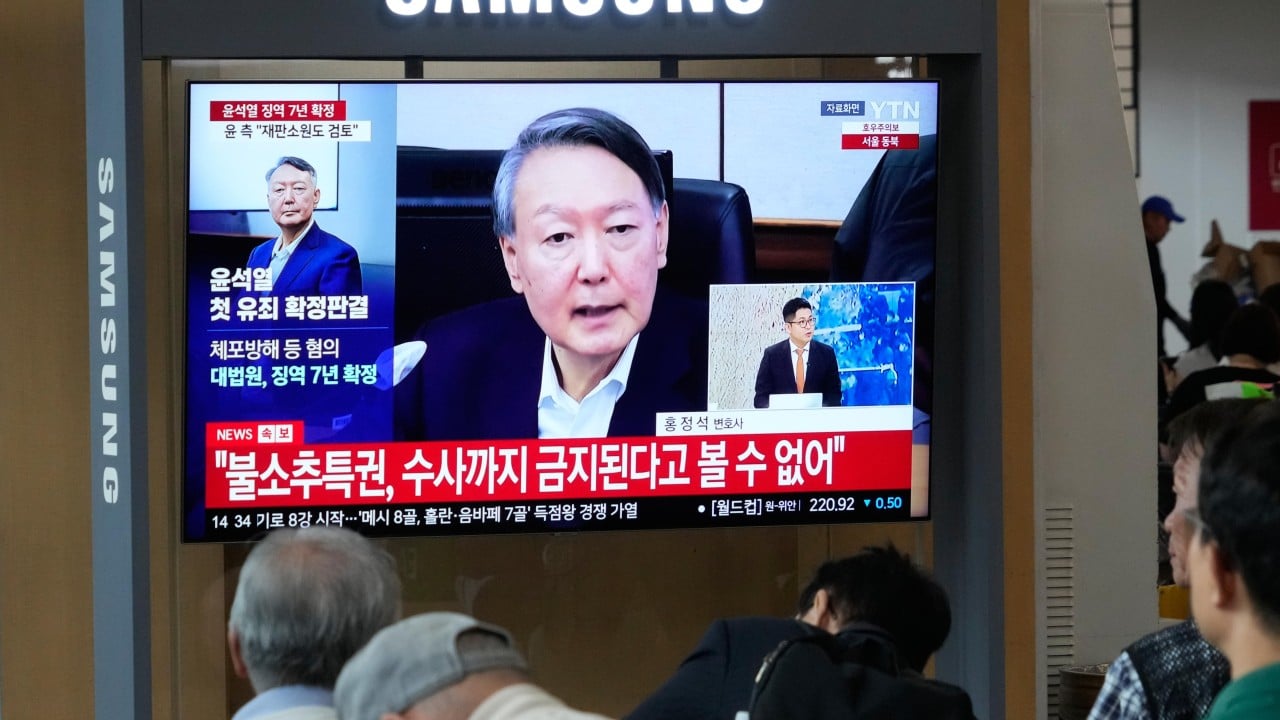
Western coverage of former South Korean President Yoon Suk Yeol’s two-year prison sentence for illegal polling operations follows a predictable, lazy narrative. Media outlets frame the verdict as a triumph of judicial independence, a clear signal that no public official stands above the law. They treat the court's decision as a stabilizing milestone that cleanses the political system.
They are completely misreading the situation.
Handing down a short prison sentence to a former head of state over illegal polling does not demonstrate political health. It exposes an environment where electoral manipulation is treated as an inevitable cost of doing business, punished with a light tap on the wrist long after the damage is done. Viewing this trial as a victory ignores how political machinery actually operates under the hood.
The Illusion of Judicial Accountability
The media loves a courtroom drama because it offers a neat, moralistic narrative: wrongdoer breaks rule, court enforces rule, order returns. Real political power does not work that way.
When a former president gets hit with a two-year sentence for illegal polling practices, it is not a structural cleanup. It is a calculated compromise. In political operations, illegal polling is rarely a rogue act by an isolated figure. It is an organized attempt to distort public perception, direct campaign capital, and manufacture artificial momentum during critical election cycles.
A short custodial sentence years after an election takes place does not fix the distorted outcome. The policy choices, administrative appointments, and institutional shifts enacted during a disputed term remain baked into the system. The court sentence functions as an afterthought—a post-hoc adjustment that leaves the core incentives of political deception untouched.
- The Real Incentive Structure: Operatives evaluate risk versus reward. If manipulating polling data yields a presidential administration, a minor jail sentence years later is a manageable operational cost.
- The Information Leakage: By the time judicial proceedings finish, the public has moved on to new political crises, diluting the deterrent effect.
- The Selective Enforcement Problem: Legal battles against former leaders often turn into political tools for the incoming administration rather than impartial constitutional guardrails.
Dismantling the "Polls Are Just Data" Fallacy
To understand why this verdict fails to fix the underlying issue, you have to throw out the naive idea that political polling is merely an objective measurement of public opinion.
Polling in modern politics is an active weapon used to shape reality, not reflect it. Political strategists use skewed or outright illegal internal polling to accomplish three specific tactical goals:
- Suppressing Competitor Campaign Funding: Donors back candidates who look like winners. Artificially suppressed numbers paralyze a rival's ability to raise money.
- Bandwagon Effect Creation: Voters naturally lean toward candidates who appear to have momentum. Falsified polling data creates a self-fulfilling prophecy before the first ballot is cast.
- Media Agenda Control: Major newsrooms assign coverage based on polling brackets. A manipulated poll forces mainstream media to treat a marginal candidate as a frontrunner, granting millions in free broadcast time.
When courts treat polling infractions as administrative or minor electoral misdeeds, they fail to recognize the structural sabotage taking place. Manipulating electoral intelligence strikes at the heart of public consent. Treating it like an accounting mistake shows a profound misunderstanding of modern political mechanics.
Why Institutional Reform Keeps Failing
Notice what happens every time a high-profile political scandal hits the courts. Commentators demand tighter regulations, heavier fines, and new oversight committees.
These proposals miss the point entirely.
Adding regulatory layers to political operations simply raises the cost of entry for newcomers while established political cartels adapt seamlessly. The institutions charged with oversight are designed by the very political parties they are supposed to monitor. Expecting internal political systems to eliminate political corruption is like asking a corporation to audit its own tax returns without external oversight.
Consider how political campaigns operate across major democracies. Campaign finance rules, media restrictions, and polling guidelines are constantly bypassed using third-party PACs, digital dark money, and proxy communications. A two-year sentence for an ex-president does not change the operational toolkit of the advisors running current campaigns. It simply teaches them to hide the trail better.
The Uncomfortable Truth About Political Rehabilitation
If jail time for former heads of state actually deterred future corruption, South Korea would be the cleanest political environment on earth.
Look at the historical record. Over the past several decades, multiple former South Korean presidents have faced prosecution, conviction, and imprisonment after leaving office. Yet, the same systemic patterns recur cycle after cycle.
The cycle repeats because prosecution is treated as an end state rather than a diagnostic starting point. Locking up a former leader creates a temporary illusion of justice while leaving the incentives that created the behavior entirely intact. It satisfies the public's immediate demand for punishment without altering the structural mechanics of party nomination systems, state-aligned media amplification, or opaque campaign finance networks.
Punishing the individual without dismantling the machinery guarantees the exact same outcome in the next political generation.
Beyond the Courtroom Window Dressing
Real accountability requires moving past symbolic judicial wins. If a democratic system wants to eliminate electoral fraud and polling manipulation, it cannot rely on retroactive prison terms handed down long after the political power has already been exercised.
It requires structural friction:
- Immediate Financial Nullification: Polling organizations caught fabricating or illegally coordinating data must face total corporate asset forfeiture, not minor fines.
- Decentralized Audit Networks: Electoral data cannot be verified by centralized government bodies subject to executive influence. Verification must be distributed across open, audited platforms.
- Mandatory Transparency Timelines: Raw polling methodology, raw sampling data, and funding sources must be publicly released in real-time, stripping operatives of the ability to use proprietary data as a dark-money weapon.
Until these structural changes occur, high-profile sentences remain nothing more than political theater. They give the public a sense of closure while leaving the machinery of political manipulation fully operational for whoever takes power next.


