The Skeletons Sitting In Museum Drawers
Dust accumulates quietly in the archives of natural history institutions. For twenty-seven years, a collection of fossilized fragments sat cataloged and largely forgotten in a storage drawer, unearthed in 1999 and subsequently pushed aside by more pressing acquisitions. Paleontology is often romanticized as a discipline of dramatic field discoveries, dusty Indiana Jones archetypes scaling cliffs, and dynamic excavations under a blistering sun. The reality involves a vast amount of administrative triage. Museums are perpetually underfunded, understaffed, and overwhelmed by literal tons of rock that require preparation, stabilization, and endless comparative anatomy.
When a fossil lacks an immediate, obvious head-turner quality like a complete skull or intact teeth, it gets shelved. It becomes a permanent resident of the backlog.
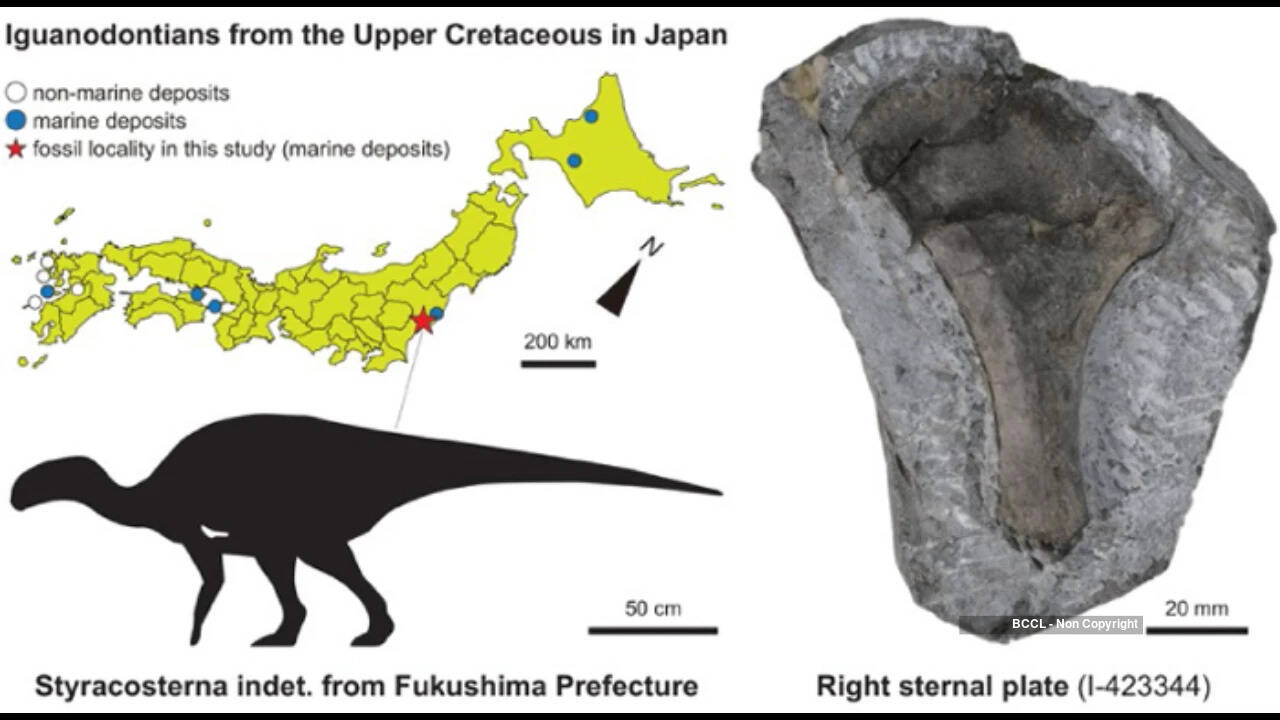
That specific dinosaur bone found in 1999 waited nearly three decades for someone to look closely enough to realize what it actually represented. Now identified as a three-meter species, this specimen highlights a quiet crisis in modern paleontology. The field does not necessarily suffer from a lack of discovery. It suffers from a severe bottleneck in description. Thousands of specimens sit in institutional limbo, waiting for graduate students, grant money, or serendipitous re-examinations to bring them out of the dark.
Why The Backlog Threatens Scientific Progress
The pipeline from rock face to published paper is grueling. Finding a fossil is merely step one. Preparation technicians must spend hundreds of hours using microscopic pneumatic chisels and acid baths to free fragile bone from stubborn matrix without destroying microstructures. Once the bone is exposed, the comparative work begins. A researcher must travel to dozens of repositories or rely on high-resolution photogrammetry to compare the new specimen against every known relative.
This is where the system breaks down.
Institutions frequently lack the specialized staff required to process these incoming materials. Curators wear too many hats, juggling teaching loads, grant writing, public outreach, and administrative committees. Consequently, specimens linger.
- The Storage Crisis: Major museums routinely report that up to eighty percent of their fossil collections remain unstudied.
- The Funding Gap: Grants favor charismatic megafauna like Tyrannosaurus or Triceratops, leaving obscure three-meter ornithopods or unknown theropods fighting for scraps.
- The Publication Bottleneck: Peer-reviewed journals face severe backlogs, delaying the formal naming of new species for years even after the research is complete.
When a specimen like the 1999 find finally gets its proper classification, it serves as a stark reminder of how much data remains locked away. Every unstudied drawer is a missing chapter in the history of vertebrate evolution.
Anatomical Detective Work After Decades
Identifying a fragmented post-cranial fossil requires surgical precision and deep anatomical literacy. Without a skull, researchers must rely on subtle markers: muscle attachment scars, pneumatic foramina, internal trabecular patterns, and unique proportions of the limb elements.
The 1999 specimen presented unique challenges because it did not belong to an apex predator or a colossal sauropod whose bones are instantly recognizable by sheer scale. At three meters in length, this animal occupied a middle tier of the prehistoric ecosystem. It was neither large enough to dominate the landscape nor small enough to easily evade notice, occupying an ecological niche that often leaves sparse fossil evidence.
Researchers applied modern micro-CT scanning techniques that were entirely unavailable when the bone was first pulled from the ground in 1999. This technological leap changed everything. By peering inside the fossil without destroying it, the team reconstructed internal vascular canals and bone density metrics that revealed the animal's developmental stage. It was not a juvenile of a known giant, but a fully mature adult of a distinct, previously unknown lineage. Technology saved a specimen that human eyes alone had misclassified for a generation.
The Economics Of Institutional Neglect
Behind every forgotten fossil lies a systemic economic failure within cultural heritage management. Governments and private donors love ribbon-cutting ceremonies for new dinosaur wings and flashy animatronic exhibits. They rarely endow the quiet, unglamorous labor of basic curation and repository maintenance.
When budgets tighten, fossil prep labs are often the first to face budget cuts. This creates a bizarre paradox where institutions aggressively fund field expeditions to dig up more fossils, even though they lack the infrastructure to process what they already own.
The 1999 find embodies this institutional schizophrenia. Expeditions are sexy. Cataloging, stabilizing, and researching obscure middle-sized dinosaurs in a windowless basement is not. Until funding models shift to prioritize the entire lifecycle of a scientific specimen from dirt to publication, thousands more bones will sit in darkness, waiting twenty-seven years or longer for someone to notice what they are telling us.
The Clock Is Ticking For Unstudied Archives
As climate shifts and development threatens fossil-bearing strata worldwide, the pressure on existing museum collections intensifies. We are collecting faster than we can study, creating an archaeological debt that future generations will struggle to pay. The successful identification of this three-meter species proves that our historical archives are goldmines of biodiversity data. Yet it also serves as a warning. If institutions cannot clear their backlogs, we risk losing the historical context of these specimens to bureaucratic decay, shifting priorities, and lost institutional knowledge. The bones are waiting. The question is whether anyone will open the drawers before the institutional memory fades completely.