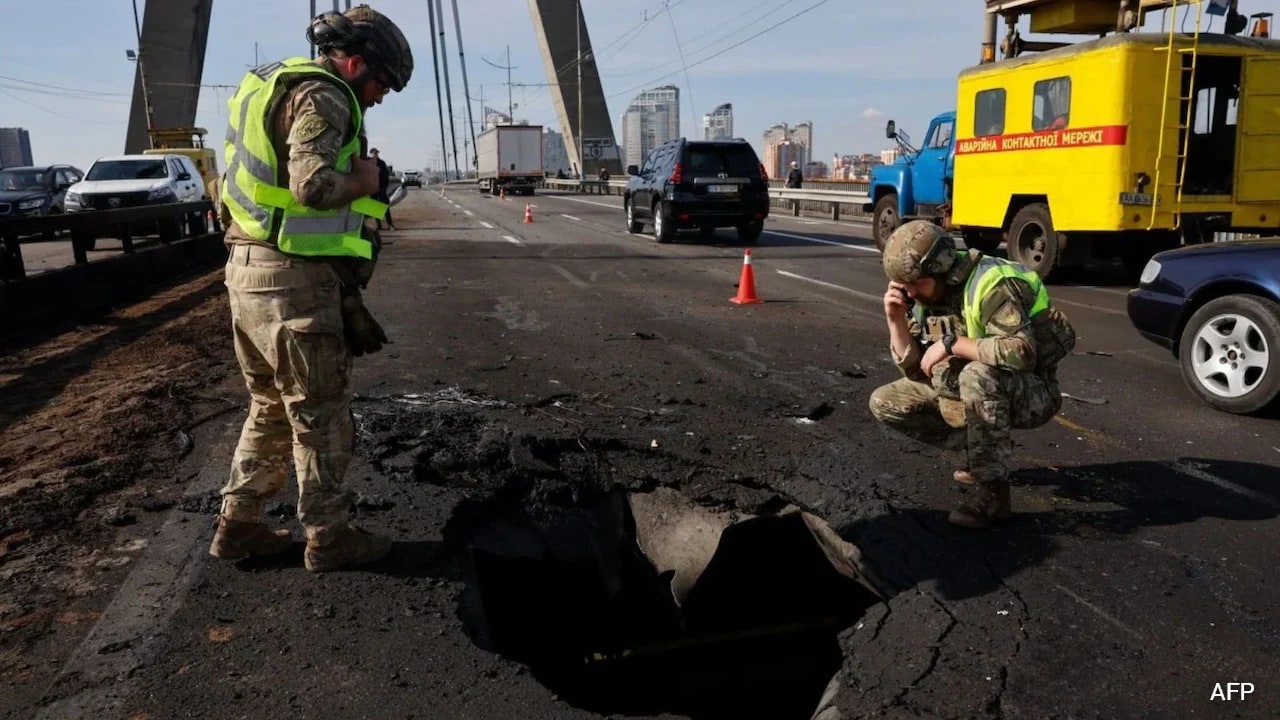
Air raid sirens wailed across Kyiv moments after the German Chancellor touched down on Ukrainian soil, punctuating diplomatic protocol with the harsh reality of modern aerial bombardment. While air defense batteries engaged incoming explosive munitions overhead, high-level talks proceeded behind reinforced concrete walls. This juxtaposition of high-stakes statecraft and coordinated drone strikes exposes a calculated military-political rhythm that has defined the Eastern European conflict for years.
Understanding this dynamic requires looking past the immediate drama of intercepted projectiles and examining the structural mechanics of wartime diplomacy. When leadership delegations arrive in the Ukrainian capital during heavy aerial assaults, it is rarely a coincidence. The timing exposes operational vulnerabilities, tests alliance resilience, and sends distinct signals to domestic and international audiences alike.
The Operational Mechanics of Wartime Statecraft
Transport logistics into a war zone require absolute secrecy, yet intelligence leaks or routine surveillance often tip off opposing forces long before a train crosses the border. Moscow possesses sophisticated signals intelligence and human networks capable of tracking high-value passenger movements through western Ukraine. When a foreign head of state arrives, the frequency and intensity of long-range drone and missile salvos frequently spike.
This phenomenon serves a dual purpose for the striking force. First, it exerts psychological pressure on visiting dignitaries, forcing them into subterranean shelters and demonstrating the constant peril faced by the civilian population. Second, it serves as a public messaging tool. By launching waves of long-range loitering munitions during a high-profile diplomatic visit, military planners telegraph a clear defiance of western security guarantees.
The German Chancellor's journey to Kyiv carried immense weight given ongoing debates surrounding military aid delivery, specifically regarding long-range cruise missiles and heavy armor maintenance. Berlin has historically moved with cautious deliberation, balancing domestic political sensitivities against the urgent demands of eastern flank security. Each visit by the head of government acts as a pressure valve, releasing tension or accelerating policy shifts under the direct observation of frontline conditions.
Strategic Calculations Behind the Drone Barrages
Long-range autonomous and remote-piloted aircraft have transformed the attrition calculus of this conflict. Systems like the Iranian-designed Geran series, widely utilized in these saturation attacks, are inexpensive to manufacture compared to traditional ballistic or cruise missiles. They are deployed in swarms designed to saturate air defense grids, exhaust interceptor missile supplies, and inflict psychological exhaustion on urban populations.
When these swarms coincide with major diplomatic events, the intent shifts from pure infrastructure destruction to political theater. The synchronization of drone launches with the arrival of western leaders highlights the limitations of existing air defense umbrellas. Even the most advanced western-supplied systems, such as the IRIS-T units provided by Berlin, face immense mathematical challenges when hundreds of incoming vectors approach simultaneously at low altitudes.
This operational reality forces visiting leaders to confront the attrition problem firsthand. Sitting in a shelter while interceptors detonate outside shifts abstract budget numbers and defense appropriations into visceral, immediate priorities. For the German delegation, experiencing the defensive response firsthand reinforced the urgency of expanding domestic production lines for anti-air ammunition and radar components.
The Alliance Pressure Point
Berlin occupies a central, often uncomfortable position within the broader western coalition. As Europe's largest economic engine, Germany bears a disproportionate share of the financial burden for humanitarian and reconstruction efforts, while constantly navigating domestic friction over weapons transfers. The political landscape inside the governing coalition remains fragile, with various factions pulling in opposing directions regarding escalation risks versus decisive support.
When air strikes target infrastructure across multiple oblasts precisely as bilateral agreements are being signed in government corridors, the symbolic contrast is stark. It lays bare the widening gap between diplomatic declarations of long-term partnership and the brutal, hourly demands of tactical survival on the ground.
Critics argue that incremental aid packages fail to alter the strategic stalemate, leaving Ukrainian forces vulnerable to sustained aerial campaigns. Proponents of the current approach contend that steady, managed escalations prevent wider regional destabilization while slowly re-industrializing European defense manufacturing. The reality lies in the messy middle, where bureaucratic procurement cycles clash with the relentless tempo of daily drone salvos.
Beyond the Sirens
The diplomatic theater in Kyiv is ultimately a negotiation over time and endurance. Every drone intercepted over the Dnieper River represents millions of dollars in defensive expenditure, matched against cheap combustion engines and fiberglass airframes. As long as this asymmetry persists, diplomatic visits will continue to play out against a backdrop of intermittent explosions and emergency alerts.
The true test of these high-level engagements is not found in the joint press conferences or the formal communiques issued after hours of closed-door meetings. It is measured in the subsequent delivery schedules, the speed of spare parts distribution, and the willingness of allied capitals to absorb economic friction for long-term security gains. Until those supply chains match the velocity of the threat, the sirens will keep sounding, and leaders will continue to draft policy beneath the concrete arches of wartime shelters.