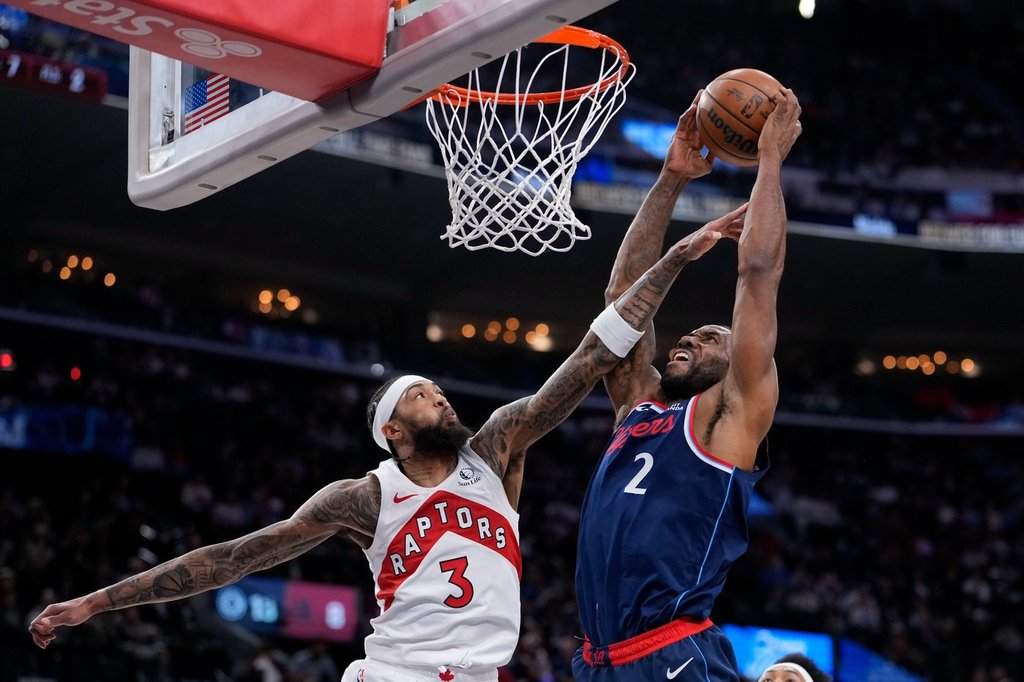
Franchise-altering trades in the modern National Basketball Association are rarely simple exchanges of basketball infrastructure. They are complex multi-variable transactions dictated by financial risk, long-term asset accumulation, and regulatory compliance. The transaction sending Kawhi Leonard from the Los Angeles Clippers back to the Toronto Raptors, finalized in the wake of a league investigation into salary cap circumvention, provides a textbook study in roster optimization under structural duress.
Deconstructing this trade requires looking past the surface-level star power to analyze the underlying mechanics: the cost function of aging elite talent, the valuation models of draft capital, and the legal constraints imposed by the league office.
The Cost Function of Elite Aging Assets
Evaluating a trade involving a player of Leonard's caliber requires balancing peak on-court productivity against systemic injury risk and financial depreciation. Last season, Leonard posted elite offensive metrics, averaging 27.9 points per game while converting at a high clip from beyond the arc. Yet, his availability remains the primary variable in any team-building equation. Over his tenure in Los Angeles, durability fluctuated significantly, creating an unpredictable variance in team performance.
From an operational standpoint, acquiring a 35-year-old wing on a massive contract introduces a severe amortization problem. Front offices must calculate the expected games played against the salary cap expenditure. For Toronto, the acquisition is justified by a specific window of competitiveness alongside Scottie Barnes. The defensive ceiling of pairing Leonard and Barnes creates a multi-positional containment matrix that few teams can match. However, the cost function dictates that if the games played metric drops below an optimal threshold, the return on investment collapses entirely, leaving the franchise with limited flexibility due to the outgoing assets.
Asset Valuation and the Clippers Pivot
The return package sent to Los Angeles—featuring Brandon Ingram, Gradey Dick, two unprotected first-round picks (2031 and 2033), a 2037 swap, and secondary draft capital—reflects a classic front-office pivot from contention to asset accumulation. When a franchise decides to exit a competitive cycle, the objective shifts to acquiring young, controllable talent and draft equity to hedge against future uncertainty.
The inclusion of Ingram supplies the Clippers with immediate half-court shot creation, ensuring the team remains competitive in a brutal Western Conference without bottoming out entirely. Concurrently, securing distant unprotected first-round picks introduces long-term optionality. Draft picks far into the future carry a higher variance, meaning they possess an elevated probability of landing in the lottery if the trading partner's infrastructure decays. This strategy mirrors historical rebuild models where current production is traded for future probability distributions.
Regulatory Risk and League Enforcement
The transaction could not proceed in a vacuum. The prolonged delay between the initial agreement and final execution stemmed from an investigation into historical salary cap circumvention by the Clippers. The league's subsequent penalties—stripping the franchise of five first-round picks, imposing heavy financial sanctions on ownership, and penalizing key executives—demonstrate the strict enforcement of roster-building boundaries.
For Toronto, risk mitigation was the governing priority. The front office correctly refused to absorb any collateral regulatory penalties or financial liabilities intended for Los Angeles. By withholding final sign-off until the league concluded its probe and levied punishments directly on the offending parties, the Raptors insulated themselves from unexpected asset forfeiture. This situation establishes a modern precedent for trade contingencies: incoming structural penalties tied to prior front-office behavior must be legally isolated before asset transfer can safely occur.
Execute the medical staff protocol to monitor soft-tissue workload metrics during the first thirty games, and immediately transition the scouting department's focus toward maximizing the evaluation of high-variance 2031 draft assets.