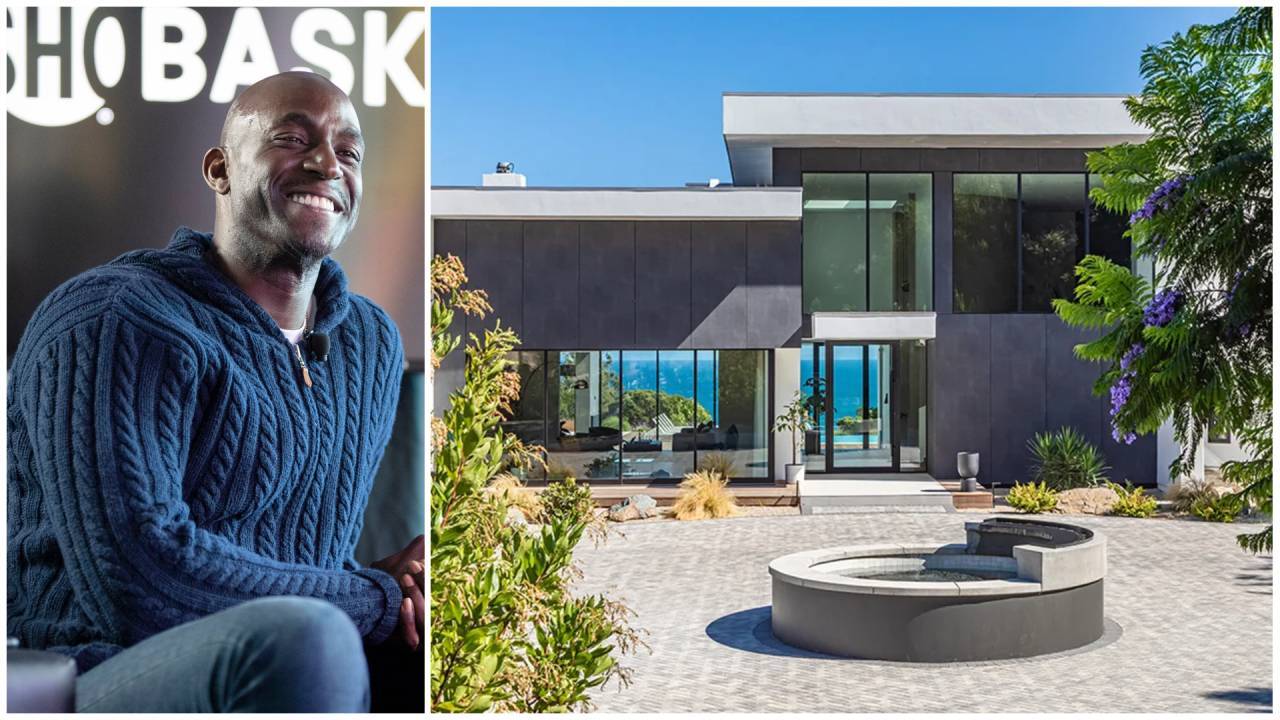
Every real estate pundit in Los Angeles is drooling over Kevin Garnett’s old Malibu pad. They see a freshly minted forty-eight-million-dollar price tag, a massive modern overhaul, and a legendary NBA name attached to the deed, and they lose their minds. They call it a masterclass in luxury flipping. They point to the square footage, the ocean views, and the designer fixtures as proof that high-end real estate only goes in one direction.
They are dead wrong.
I have spent two decades watching high-net-worth individuals burn generational wealth because they listen to interior designers instead of structural economists. What happened to this property isn't a success story. It is a cautionary tale of over-improvement in a micro-market that actively punishes excess. The lazy consensus is that slapping modern gray hardwood and floor-to-ceiling glass onto a coastal fortress prints money. The brutal truth is that forty-eight million dollars buys you a liquidity trap wrapped in Pacific views.
Let us look at the mechanics of what actually happens when you pump millions into a celebrity-owned compound.
The Myth Of Celebrity Value Addition
The market operates on a simple premise: utility dictates price. When a player of Garnett’s caliber customizes a home during active playing years, those choices reflect personal psychology, not broad market demand. Garnett was an absolute terror on the court—intense, loud, suffocatingly physical. People assume that energy translates into grand architectural statements. But when you remodel a property to match the ego of an MVP, you alienate ninety-nine percent of the actual buyer pool.
Buyers at the fifty-million-dollar tier do not want a monument to someone else's career. They want a blank slate where they can project their own identities.
When this property hit the market with its heavy-handed makeover, the listing agents tried to sell the pedigree. Here is what they leave out of the glossy brochures: customization is a depreciating asset. Every dollar spent ripping out functional luxury to install hyper-trendy aesthetics is a dollar erased from the net liquidation value.
I have seen developers sink five million into custom Italian marble kitchens only to watch the eventual buyer bring in a sledgehammer on day one because the layout disrupted the natural flow of light. Malibu luxury isn't about how much gold-plated nonsense you can cram into a perimeter wall. It is about spatial exclusivity and privacy friction.
The Coastal Liquidity Trap
Let us address the elephant in the room that every luxury broker ignores: coastal insurance markets and topographical vulnerability.
Malibu is not a safe haven for capital; it is a high-stakes casino. Between escalating wildfire risks, tightening coastal commission regulations, and astronomical insurance premiums that make monthly payments look like small-business loans, holding a forty-eight-million-dollar asset here requires an aggressive defensive strategy.
When you price a property at this tier, your buyer pool shrinks to a microscopic fraction of the global population. You are fishing in a pond filled with tech founders, hedge fund managers, and foreign billionaires. None of them care that a Hall of Fame power forward used to shoot jumpers in the driveway. They care about cap rates, maintenance overhead, and exit liquidity.
By pushing the asking price to forty-eight million, the sellers are testing a ceiling that the current macroeconomic environment simply refuses to support. Luxury real estate at the top tier is experiencing a severe liquidity contraction. Buyers are demanding discounts, parking capital in safer debt instruments, or looking at markets with lower tax friction like Florida and Texas.
The Economics Of The Flip
Imagine a scenario where a buyer actually meets the asking price of forty-eight million. Strip away the agent commission, the luxury transfer taxes, the holding costs during a multi-year sales cycle, and the initial acquisition plus renovation capital. The margin on these trophy flips is often razor-thin or deeply negative, masked entirely by clever public relations campaigns designed to keep local property values artificially inflated.
The real winners in this transaction are the listing agents collecting millions in commission and the contractors who billed by the hour during the overhaul. The seller is left holding an illiquid asset in a cooling market, hoping a tech billionaire with more money than sense decides they need a view of the Pacific.
Stop treating celebrity real estate as an economic indicator. It is entertainment dressed up as commerce. When a house sits on the market at an astronomical valuation, the market is sending a clear, unambiguous signal: the math does not work.
The next time you see a headline celebrating a multi-million-dollar celebrity markup, look past the PR fluff. Check the days on market. Look at the price cuts. Real estate does not care about your championship rings. It only cares about what the next guy is willing to pay when the cameras turn off.