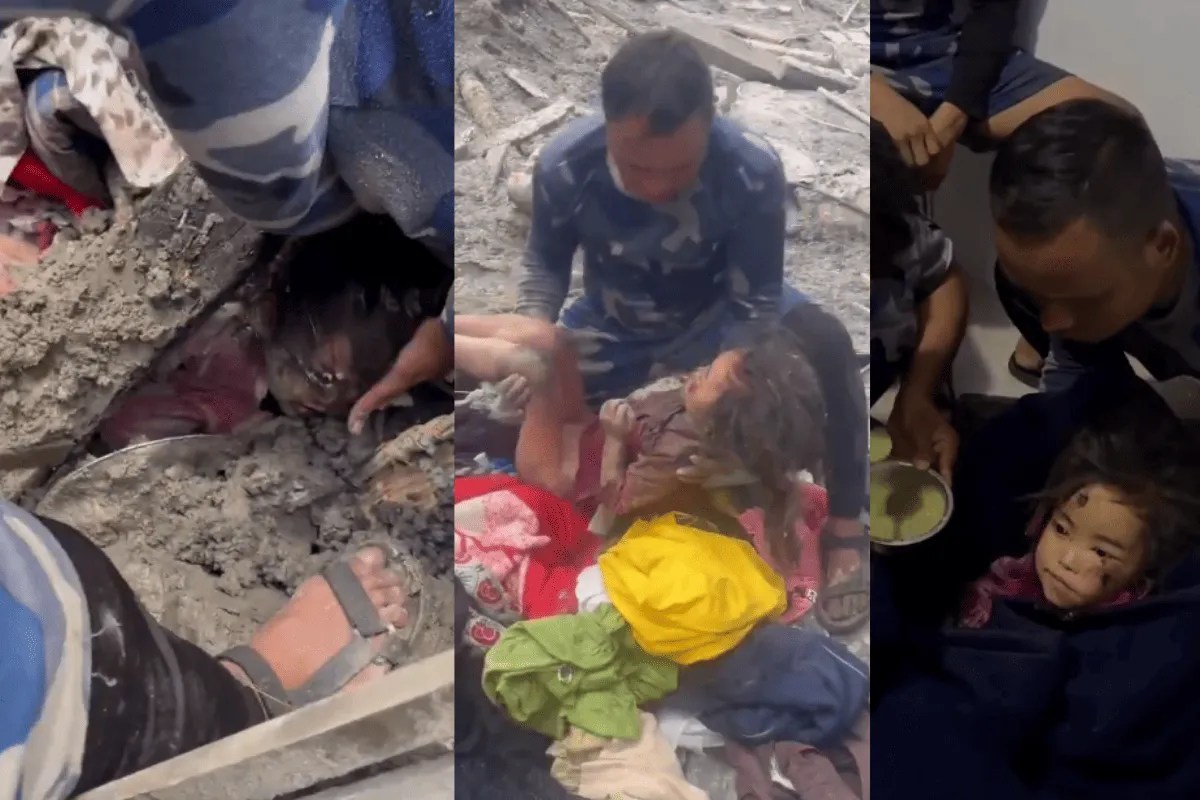
The operational window for surviving a high-energy flash flood event is measured not in hours, but in immediate structural positioning and baseline physical resilience. When torrential monsoon rainfall overwhelms Himalayan river basins, the resulting debris flows exhibit non-Newtonian fluid dynamics, turning water into a dense slurry of mud, boulders, and organic timber. This material increases the bulk density of the flood wave, transforming kinetic energy into a destructive force capable of compromising reinforced concrete and trapping occupants under impenetrable alluvial deposits.
Evaluating the survival of a five-year-old child trapped beneath structural debris for forty-eight hours requires a rigorous examination of environmental micro-climates, physiological endurance limits, and localized search-and-rescue response functions. Rather than viewing such an incident through the lens of anomalous fortune, tactical analysis demands a breakdown of the variables governing structural entrapment, air pocket retention, and extraction mechanics in low-resource disaster zones.
The Mechanics of Structural Entrapment and Void Formation
When a flood wave breaches a residential perimeter, the collapse of interior partitions and exterior walls rarely results in total compaction. Instead, debris settles according to particle size and kinetic dissipation, frequently generating irregular void spaces beneath heavy furniture, fallen lintels, or partial roofing slabs.
In the documented case from the Sindhuli and Mahabharat range river systems of Nepal, survival hinged entirely on the creation of a micro-void. A stable air pocket protects the occupant from hydrostatic pressure and crushing loads while establishing a localized thermal barrier against hypothermia—the primary cause of mortality in sub-surface flood entrapment.
- Hydrostatic Compression: Saturated mud exerts uniform omnidirectional pressure on the human thorax. If the substrate is completely fluid, chest expansion becomes mechanically impossible, leading to rapid asphyxiation. Structural solids must bear the overburden weight to prevent compression asphyxia.
- Thermal Preservation: Sub-surface earthen materials possess high specific heat capacity. Without active movement, core body temperature drops rapidly. The boundary layer between the trapped individual and structural fragments dictates the rate of convective and conductive heat loss.
- Acoustic Transmission: Dense wet sediment heavily dampens high-frequency sound waves. Vocalization is frequently suppressed or misinterpreted as environmental noise, necessitating acoustic vibration transmission through solid substrates to signal human presence to surface search teams.
The Economics of Disaster Response and Extraction Latency
Emergency response frameworks in rural and semi-urban Himalayan terrain operate under severe resource constraints. The latency period between structural collapse and professional extraction is governed by three primary variables: logistical accessibility, asset availability, and triage prioritization.
[Rainfall Event]
       │
       ▼
[Basin Saturation & Landslide]
       │
       ▼
[Infrastructure Disruption (Road/Bridge Failure)]
       │
       ▼
[Extraction Latency Expansion (48-Hour Window)]
When trunk roads are compromised by secondary landslides, heavy mechanical excavation equipment cannot be deployed to the site. First responders are restricted to manual extraction methodologies, relying on hand tools, canine units, and acoustic locators. Manual digging in dense, water-saturated silt requires meticulous pacing to prevent secondary collapses of the void space sheltering the survivor.
The forty-eight-hour threshold observed in this event pushes the limits of human survivability without exogenous hydration. At age five, metabolic rates and surface-area-to-mass ratios accelerate dehydration timelines compared to adults. Survival across this duration indicates that the micro-environment maintained a high relative humidity, minimizing respiratory water loss, and that the subject remained in a state of metabolic conservation, effectively reducing oxygen demand and caloric expenditure.
Systemic Vulnerabilities in Flood-Prone River Valleys
The recurrence of catastrophic alluvial events in South Asian river systems highlights persistent failures in regional zoning and early warning architecture. Traditional settlements frequently occupy historic floodplains and alluvial fans, zones that appear stable during dry periods but function as high-velocity deposition channels during extreme precipitation anomalies.
Mitigating future loss of life requires a shift from reactive rescue operations to proactive exposure reduction. This entails the implementation of decentralized community-level sensor networks capable of measuring upstream precipitation gradients and river stage velocities in real-time, bypassing centralized communication failures during grid blackouts. Furthermore, residential construction standards in high-risk riparian zones must mandate elevated foundational pilings and reinforced concrete core structures designed to maintain structural integrity under lateral hydrodynamic loads.
Deploy elevated structural foundations utilizing reinforced concrete pilings in all riparian construction zones, and mandate community-managed manual extraction tool caches within every high-risk Himalayan settlement to eliminate transit delays during initial emergency response phases.